
As the dust settles from the last two weeks of mobile madness, one question remains unanswered: Which of the new generation of smartphones should you actually buy? We've collected everything you need to know.
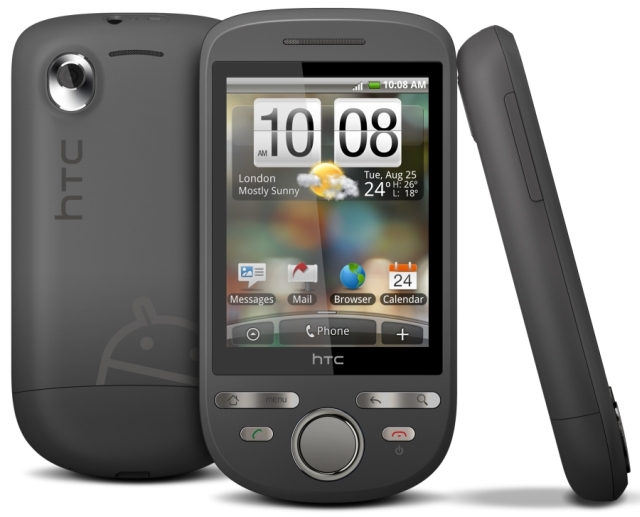
We've selected the five phones that most feel like modern handsets to us�the iPhone 3G, iPhone 3G S, the Palm Pre, the HTC Magic (or, as we soon expect, the T-Mobile G2) and the BlackBerry Storm�and broken them down by hardware, software and cost. This is a guide in the strictest sense, meaning we aren't declaring winners or losers, just giving you the information you need to make your own choice. So! On with the matrices.
Phones' hardware specs tend to dominate carriers' marketing, but in many cases they just don't mean much, with a few exceptions: screens, storage, graphics performance and input.
The iPhones and Pre hold a sizable advantage in the screen department, trumping the G2, which doesn't have multitouch, and the Storm, which has an ill-conceived pseudo-multitouch clickscreen that left most reviewers at best underwhelmed, and at worst downright frustrated.
In terms of storage, our phones take two fundamentally different approaches. The iPhone and Pre include healthy amounts of nonremovable storage�in the case of the iPhone 3G S, up to 32GB�which makes sense: if we're going to use our phones as they're marketed (as multimedia devices), we need space. The G2, like the G1 before it, depends on a removable microSD card for file storage, since its inbuilt memory is measured in megabytes. So does the Storm. This is fine if the carrier bundles the handset with a capacious card; Verizon is good about this. T-Mobile, on the other hand, shipped the G1 with a pitifully small 1GB card, so we'll just have to hope they're more generous with the G2.
Technical 3D ability is actually fairly uniform across this hardware, with the exception of the iPhone 3G S, which is, in this area, a next-gen product. Only Apple and HTC, though, give developers any meaningful kind of access to their handsets' graphics accelerators, meaning the G2 and iPhones (particularly the bulked-up 3G S) will be the sole options for would-be gamers. And of the two platforms, iPhone OS has amassed plenty of serious gaming titles, while Android, let's be honest, hasn't.
The Pre is an obvious standout in that it has a hardware keyboard in addition to its touchscreen. The hardware QWERTY/onscreen keyboard debate is all about personal preference, so whether this is a boon or a burden is up to you. Typing on a screen is an acquired skill�but much more so on the Storm than the iPhone or G2.
Battery life would seem to be a valuable metric; it's not. The differences in capacity and claimed endurance don't really matter much, since realistically, they all need to be charged nightly.
Note: the Storm is due a minor hardware refresh, possibly quite soon. The main change, it's been rumored, is a different touchscreen.

The greatest hardware in the world couldn't save a phone with shitty software, and your handset's OS is the single largest determining factor in how you'll enjoy your phone. We've explored the differences between the major smartphone platforms at length here, and there's no point getting too far into the specific differences right now.
To summarize: iPhone OS claims advantages in ease of use, its burgeoning App Store, and a respectable core feature set, but falters on multitasking and its lack of ability to install unsanctioned apps. The Pre's WebOS is extremely slick and friendly to multitasking, but its App Catalog is light on content, and its development SDK is somewhat restrictive. Android and BlackBerry OS are both more laissez-faire, letting users install apps from whatever source they choose. Neither of their app stores is spectacular, but Android's is markedly less anemic. More on app stores here.

Carrier preferences will often override prices, but here they are anyway. The Pre and G2 are the most economic options, and the Storm roughly ties the 3G S as the most expensive. (It's easy to underestimate how much a small monthly cost difference can add up over two years.) But again, carrier loyalty (or more likely, disloyalty) and coverage quality is as important as cost. If Sprint's killing your Pre buzz, it could be worth waiting until next year, when Verizon is rumored to pick it up. Likewise, if T-Mobile coverage in your area is patchy, don't worry: by the time T-Mobile actually offers the G2, we'll probably have at least another functionally identical handset lined up for release elsewhere.
So there you have it: everything you need to know about the latest crop of consumer smartphones. Go forth, and be gouged.




 Judging from the strangely complete specs and believable photos leaked from a Russian retailer, it may well be. Called the S8000, and carrying an OLED screen and 5-megapixel camera, it's a (theoretical) powerhouse.


