Showing posts with label hybrid. Show all posts

Sunday, July 31, 2011

2011 Ferrari 599 SA Aperta

The Ferrari 599 SA Aperta is a true roadster which allows its occupants to enjoy the superlative emotions afforded by our signature front-engined V12 architecture in a completely open-top setting. In fact, it has just a light soft top designed to be resorted to only if the weather gets particularly bad. A low-slung windscreen and the fact that it crouches lower to the ground than our other models lend the SA Aperta an exceptionally aerodynamic sleekness. Its profile arches back from the A-post to two aerodynamic fins beautifully integrating the two roll-bars which themselves cleverly mimic the outline of the seats.


Thanks to the 670 CV engine beneath its bonnet, the SA Aperta beautifully embodies the sporty spirit of the Ferrari 599, incorporating Ferrari�s most advanced technology to deliver absolutely benchmark performance and superb driving pleasure. Its interior too is stylishly sporty with particularly sophisticated materials, trim and colours used throughout. The virtually endless combinations available guarantee that each and every SA Aperta is absolutely unique.
The Ferrari 599 SA Aperta is a special series model of which a strictly limited number of just 80 will be built. All have already been sold. Ferrari chose to build 80 SA Apertas in celebration of Pininfarina�s 80th anniversary. The SA nomenclature also pays homage to both Sergio and Andrea Pininfarina whose company and work have been linked to the most successful road-going cars ever built at Maranello.

BMW X5

2011 BMW X5 will write the latest chapter in the story of the world's first Sports Activity Vehicle� in the spring of 2010. Originally launched for the 2000 model year in late 1999, the BMW X5 permanently changed the automotive landscape. It proved that the driving dynamics, responsiveness, and linear control signature to every BMW could be compatible with utility, versatility, and other-roads capability. For 2011, the BMW X5 models are enhanced with new powertrains and updated design. The new BMW X5 will make its North American debut at the 2010 New York International Auto Show.
Innovative new design elements and powertrains are the result of over 4,000 new parts created by BMW designers and engineers for the 2011 BMW X5. Two of the X5's powertrains will be all-new for 2011, creating the new BMW X5 xDrive50i and BMW X5 xDrive35i, in addition to the familiar BMW Advanced Diesel X5 xDrive35d. All models receive a design update that enhances the brilliant focus and aesthetic appearance of the X5 brand.


Fresh Design. Well-Balanced Proportions.
The body design of the 2011 BMW X5 is characterized by well-balanced proportions that accentuate the vehicle's powerful presence and agility. A long wheelbase, short front and rear body overhangs, and large light-alloy wheels provide a visual balance between the front and rear of the vehicle. Square-shaped, carefully flared wheel arches hint at the BMW X5's all-wheel drive traction and other-roads capability. The body lines sweep upwards from the front and rear wheels, communicating BMW's near-perfect 50-50 front-rear weight distribution which is so essential to the BMW X5's legendary driving dynamic.

Jaguar XJ

The original XJ was the last car designed by Jaguar founder Sir William Lyons and the latest car to wear the nameplate is as innovative, beautiful and desirable as its famous forebear.
Revolutionary, not evolutionary, the Jaguar XJ is truly a product of the 21st century and is the clearest indication yet of the singular sense of purpose behind Design Director Ian Callum's vision for the future of Jaguar.
The unique full-length panoramic glass roof that floods the cabin with natural light allows the Jaguar XJ to offer an unrivalled sense of spaciousness and occasion for driver and passengers and at the same time retain the sleek coup�-like profile and lithe stance for which Jaguars are famous.
Lightweight aluminium architecture

The mould- breaking styling is matched by similarly impressive construction techniques pioneered by Jaguar. The lightweight aluminium structure - 50 percent of which is made from recycled materials - offers improved fuel consumption and reduced emissions. In conjunction with a lifecycle approach to design and manufacture this allows the Jaguar XJ to minimise its carbon footprint.
The weight saved by the use of aluminium - an average of 150kg compared to its rivals - also has benefits for performance and agility and is complemented by the most advanced, powerful and efficient Jaguar powertrains ever. The choice of engines has been enlarged for the 2012 range with the fitment of a 3.0-litre V6 petrol engine (market specific). All engines are coupled to a shift-by-wire, six-speed automatic transmission controlled by the JaguarDrive Selector or steering wheel-mounted paddles.

The cabin of the Jaguar XJ blends elegant, contemporary design with the comfort, luxury and unmistakable sporting style of a Jaguar. Chrome and piano black detailing provides an eye-catching contrast to the beautifully-crafted leather and wood veneer surfaces. Both standard and long-wheelbase models are available, for an even more sumptuous and refined experience for rear seat passengers.
Advanced new technology has allowed Jaguar's interior designers to create an environment more akin to a state-of-the-art living space than a car cabin. Stunning 12.3-inch high-definition virtual instruments complement an innovative Dual-view 8-inch Touch-screen that allows the passenger to view DVD movies or TV programmes while the driver is provided with vehicle functions or satellite-navigation directions.
Premium surround sound options include the top-of-the-range 1200W Bowers & Wilkins system that is comparable in audio quality to the best in-home entertainment. Advanced infotainment features also include hard-drive based audio and navigation systems and comprehensive connectivity for portable audio and video devices via the powerful Media Hub.
2012 enhancements

Subtle enhancements to the cabin are now available for the 2012 XJ range to allow greater personalisation and flexibility of use. A new Rear Comfort Pack offers seats that now feature electric adjustment of the backrest recline angle, four-way lumbar support and a massage function. Increased comfort is also provided by new winged headrests, footrests and the ability for the front passenger seat to be stowed away forwards when unoccupied to increase legroom even further.
On the long-wheelbase Portfolio derivative a new 'Executive Pack' transforms the rear of the Jaguar XJ into a high-speed mobile office space with the provision of fold-down laptop trays and an electric rear sunblind for increased privacy. The package also includes upgraded carpeting, combination wood and leather steering wheel, gloss wood veneer choices and chrome mirror housings.
Jaguar has always listened closely to customer feedback and in the case of the Jaguar XJ, this has led to a new interior colour combination. Available with the Premium Luxury and Portfolio trim levels the Jet/Ivory option features ivory seating with contrast jet stitching, piping and upper surfaces while the headlining is available in either colour, according to customer preference.
All Jaguar XJ variants are now available with an Illumination Package derived from that offered as standard on the Supersport model. This comprises illuminated treadplates, boot latch and front and rear air vents.
"An XJ should be the ultimate in comfort, design and refinement. The bespoke interior changes we have incorporated for the 2012 model make it an even more special car to drive or be driven in." Ian Callum, Design Director, Jaguar Cars

Tuesday, July 19, 2011

Chevrolet Camaro ZL1

The 2012 Chevrolet Camaro ZL1 debuted at the 2011 Chicago Auto Show. It is the highest-performing Camaro and the most technically advanced car ever developed in its class. The new ZL1 continues the momentum of Camaro, propelling it into an entirely new realm of leading-edge performance technology. It is planned to launch at the beginning of 2012.
Motivated by a supercharged V-8 engine producing an estimated 550 horsepower (410 kW), the Camaro ZL1 will be the fastest Camaro ever offered by Chevrolet. And more than just power, the ZL1 features technologically advanced and highly developed chassis and suspension systems that help it deliver balanced, track-ready handling and braking power to complement its high engine output. Rigorous development of the ZL1 is ongoing, and official estimates of the car�s capabilities will be released later in 2011, as testing nears completion.
�Camaro ZL1 is about high-tech performance and design, and is a type of car no one has ever brought to this segment previously,� said Rick Scheidt, vice president of Chevrolet marketing. �It�s the most technically advanced Camaro ever, so we�ve chosen a name from the most elite and exclusive Camaro in history.�
The ZL1 name is derived from the all-aluminum racing engine of the same name, which was developed in the late 1960s and installed into a handful of regular-production 1969 Camaros. Only 69 were built with the engine, but they�ve achieved mythical status among enthusiasts, as they represented the pinnacle in Camaro performance � until now. The 2012 ZL1 model is designed to be a major leap forward for the Camaro, bringing a new level of performance capability to the segment.

The central goal of the car�s development was creating something new � a Camaro intended to reach optimal lap times on top road-racing circuits and excellent driving dynamics on the street. To achieve that goal, engineers evolved many of the existing Camaro�s systems, as well as incorporated new technologies such as electric power steering and Magnetic Ride Control, the world�s fastest-reacting suspension system.
Camaro ZL1�s design communicates and supports its performance mission. Rather than using decorative elements, ZL1 is visually differentiated from other current Camaro models with elements vital to the car�s elevated capabilities.
�Everything about the ZL1�s design is directly related to its technology and serious performance, especially aerodynamics,� said Ed Welburn, vice president, Global Design. �Our designers� goal was to execute that function-oriented design with beautifully sculpted forms, creating an imposing, powerful persona. Function becomes the aesthetic. The intent is a car that delivers on the attitude it projects.�
Major elements of the ZL1�s design are a new front fascia and hood with air extractors, designed in tandem to create aerodynamic downforce to aid handling. The car�s hood includes a signature center section constructed of carbon fiber and rendered in satin black finish. New rocker panels, wide tires, 20-inch wheels and exhaust tips portray the car�s handling and power.
The ZL1 badge appears on the grille, hood and the brake calipers, all key areas portraying the technology within.
Tech overview.
Supporting the dynamic track and street performance of the ZL1 is the LSA 6.2L supercharged engine, which will produce an estimated 550 horsepower (410kW) and 550 lb.-ft. of torque (677 Nm), with specific features for the Camaro. Built on GM�s legendary all-aluminum, small-block V-8 architecture, the LSA features an intercooled supercharger system, premium heat-resistant aluminum-alloy cylinder heads and other details designed to ensure its exceptional performance is delivered with smoothness and refinement. Components and design elements that contribute to the LSA�s performance include:
� Balanced, lightweight reciprocating assembly
� High-strength hypereutectic pistons
� Sixth-generation Eaton supercharger with four-lobe rotors
� Piston oil squirters.
Because the Camaro ZL1 uses electric power steering, the engine does not incorporate a conventional hydraulic power steering pump on its accessory drive system. This enhances performance, because no engine power is used to turn a steering pump pulley.
Camaro ZL1 is a complete high-performance car, not just a Camaro with more power. Key technical highlights include:
Transmission � The high-performance Tremec TR-6060 six-speed manual is matched with the LSA engine. It is the �MG9� version of the transmission, with a higher torque capacity. It is used with a dual-mass flywheel and twin-disc clutch for easy operation and shift smoothness. A new, shorter-throw shifter actuates the gear changes.
Exhaust � ZL1 is equipped with a dual-mode exhaust system, which alters the sound level and character in response to engine rpm. First used on the legendary Corvette, and specifically tuned for Camaro ZL1, the dual-mode exhaust will give the car a signature sound.
Drivetrain � It is revised with a stronger driveshaft and rear axle system, featuring a larger and stronger cast iron differential housing, stronger axles and heavy-duty limited-slip differential. This patent-pending system is designed to ensure that ZL1�s tremendous power is delivered smoothly to the ground.
Suspension � The suspension features completely revised tuning and the inclusion of segment-exclusive Magnetic Ride Control. ZL1�s Magnetic Ride system will include driver selectable modes (Tour and Sport) tailored for the preferred style of driving. It uses advanced magneto-rheological science to produce shock damping with the highest level of precision, enabling body control optimized for excellent performance in everyday driving as well as track situations. This technology appears on only a small roster of some of the world�s finest performance cars. Other chassis elements are redesigned to support the car�s high-performance limits. Rear stabilizer bars have drop links repositioned outboard of the control arms. This makes the bars more effective in controlling body roll in turns, with crisp response to driver commands.
Brakes and Steering � Camaro ZL1 features an advanced track-capable braking system, developed in conjunction with experts from Brembo. The large 14.6-inch (370 mm) two-piece front rotors have six-piston calipers; the 14.4-inch (365 mm) rear rotors have four-piston calipers. ZL1 marks the entry of a new electric power steering system to Camaro. It is being developed to ensure precise control and feedback to the driver, with greater variability of effort for high-performance driving.
Exterior � ZL1�s signature from the front is the redesigned fascia and aluminum hood with a raised, carbon fiber insert. The fascia includes a front splitter and new vertical fog lamps. The fog lamp area includes air intakes designed for brake cooling. The hood features front-mounted air extractors that direct air precisely over the car. Visually, this center section, in satin black carbon fiber, communicates the car�s high-performance intent as a visual contrast to the car�s exterior color. Functionally, the air extractor is a key in connecting airflow closely to the bodywork, creating aerodynamic downforce. The carbon fiber center section reduces the mass of the hood. High-intensity discharge (HID) headlamps and fog lamps are standard. The rear of the car includes a diffuser and spoiler, also functional elements that enhance the car�s aerodynamics.
Wheels and Tires � New-design, 20-inch forged aluminum wheels, which are lighter than the 20-inch wheels used on the Camaro SS, are used with new Goodyear Supercar F2 ties developed specifically for the ZL1.
Interior � ZL1 is tailored for high-performance driving. The front seats feature microfiber suede inserts. Other enhancements include a redesigned steering wheel, alloy pedals, Head-Up Display with unique performance readouts and the �four-pack� auxiliary gauge system featuring a boost readout.
Production details.
All of the Camaro exterior colors will be offered with the ZL1, but black is the only interior color. The unique exterior features are complemented with a black center section on the hood. Inside, the Camaro ZL1 has heated leather seats with microfiber inserts and ZL1 logos embroidered on the front headrests. Microfiber suede is repeated as an accent on the instrument panel, adding a richer look to the interior. The ZL1 will include the same content as the current 2SS package and include the following new or unique features:
� Six-way power driver and passenger seats
� Unique instrument panel and door panel inserts; and ZL1-logo sill plates
� Steering wheel audio controls with Bluetooth capability
� Wireless PDIM and USB-port
� Boston Acoustics premium audio system
� Rear parking assist
� Rear camera system (displayed in the inside rearview mirror).
Engineers have already driven Camaro ZL1 prototypes extensively at demanding road courses in the U.S. and Germany, with final testing being completed through the balance of 2011.

Friday, July 1, 2011

Nissan Altima Hybrid Production Stop

Nissan decided to discontinue production of its hybrid sedan, Altima to the U.S. market. Although the Nissan Altima is actually just launched in 2007's last. Party considers Nissan production cars can not reach the consumer wants, in terms of prices offered to the American market.
 

Other factors causing the termination of this production, also due to intense competition car with the other competitors in the land of Uncle Sam. One of the production sedan competitor Nissan has a similar hybrid technology dengannnya, but the competitors are able to swing smoothly and achieve significant sales figures, which reached the range of 1 million units since its introduction, while the Altima sold 35 thousand units since its introduction 2007 ago.

In appearance as well as comfort and luxury features are presented Nissan Altima is not lost, but somehow automotive consumers in the United States less ignore the presence of the Nissan Altima in the market. Looking at sales figures from this Nissan decided to discontinue production of their first hybrid sedan in the United States. Let's wait if Nissan has a breakthrough with the existence of this?

Sunday, June 26, 2011

Ford Fusion Hybrid

For the 2010 model year, the Ford Fusion adds an all-new hybrid model. The Ford Fusion Hybrid and Mercury Milan Hybrid join the Ford Escape and Mercury Mariner Hybrids, doubling both the size and volume of Ford's hybrid lineup.
"Offering consumers more fuel-efficient vehicle choices, including improving and increasing our hybrid vehicle offerings, is part of Ford's broad plan to deliver technology solutions for affordable fuel economy for millions," Kuzak said.

"With the new Ford Fusion and Mercury Milan hybrids, we are now able to offer even better range of travel on battery power at a greater speed, thanks to a more efficient, seamless transition between the battery-powered motor and gasoline-driven engine," he said. "These new hybrids will exceed expectations on all fronts - fuel efficiency, comfort, convenience and drivability."

The Ford Hybrid team has developed a powertrain system that combines the best attributes of the gasoline engine and electric battery-driven motors to deliver the optimal experience for the customer in terms of driving performance and fuel economy. Additionally, the propulsion system for the Ford Fusion Hybrid and Mercury Milan Hybrid transitions between gas and electric power and back more efficiently and seamlessly.
The overall system upgrade allows the Ford Fusion Hybrid and Mercury Milan Hybrid to operate longer at higher speeds in electric mode. The hybrid vehicles can operate up to 47 mph in pure electric mode, approximately twice as fast as some competitors. Plus, the city driving range on a single tank of gas is expected to be more than 700 miles.
The next-generation hybrid system features:
  • New 2.5-liter 4-cylinder engine (155 horsepower/136 lb.-ft. of torque) running the proven Atkinson cycle mated to an electronically-controlled continuously variable transmission or e-CVT.
  • Intake Variable Cam Timing (iVCT), which allows the vehicle to more seamlessly transition from gas to electric mode and vice-versa. The spark and cam timing are varied according to the engine load to optimize efficiency and emissions.
  • Enhanced electronic throttle control reduces airflow on shutdowns, reducing fueling needs on restarts.
  • Wide-band lambda sensor analyzes the air-fuel ratio and adjusts the lean/rich mixture accordingly to keep the system in balance and to minimize emissions.
  • A new smaller, lighter nickel-metal hydride battery has been optimized to produce 20 percent more power. Improved chemistry allows the battery to be run at a higher temperature and it is cooled using cabin air.
  • An added variable voltage converter boosts the voltage to the traction battery to operate the motor and generator more efficiently.
  • A new high-efficiency converter provides 14 percent increased output to accommodate a wider array of vehicle features.
  • Smarter climate control system monitors cabin temperature and only runs the gas engine as needed to heat the cabin; it also includes an electric air conditioning compressor to further minimize engine use.
  • The regenerative brake system captures the energy normally lost through friction in braking and stores it. Nearly 94 percent energy recovery is achieved by first delivering full regenerative braking followed by friction brakes during city driving.
  • A simulator brake actuation system dictates brake actuation and delivers improved brake pedal feel compared to the previous generation braking system.
"Because our hybrid can run at a much higher speed in electric mode, you can do so much more in city-driving situations," said Gil Portalatin, Hybrid Applications Manager. "Under the right conditions, you can drive in your neighborhood or mall parking lots without using a drop of gasoline."
The Ford Fusion Hybrid also offers drivers a way to be more connected to the hybrid driving experience thanks to Ford's SmartGauge with EcoGuide, a unique instrument cluster execution that helps coach them on how to optimize performance of their hybrid.
SmartGauge with EcoGuide features two, high-resolution, full-color liquid crystal display (LCD) screens on either side of the analog speedometer that can be configured to show different levels of information, including fuel and battery power levels, average and instant miles-per-gallon.
EcoGuide uses a multi-layered approach to coach the driver to maximum fuel efficiency.
A tutorial mode built into the display that helps the driver learn about the instrument cluster and the hybrid in a whimsical way that does not overpower. Technical enthusiasts will love the detailed gauges that will help them learn to become more efficient in their driving. Everyday drivers will love another new feature in this same gauge cluster. Called "Efficiency Leaves," the system "grows" leaves and vines on-screen to reward customers for efficient driving.
Drivers can choose one of four data screens to choose the information level displayed during their drives. They are:
  • Inform: Fuel level and battery charge status
  • Enlighten: Adds electric vehicle mode indicator and tachometer
  • Engage: Adds engine output power and battery output power
  • Empower: Adds power to wheels, engine pull-up threshold and accessory power consumption
All levels can show instant fuel economy, fuel economy history, odometer, engine coolant temperature, what gear the car is in and trip data (trip fuel economy, time-elapsed fuel economy and miles to empty). The engine coolant temperature indicator turns green when engine conditions are warm enough to allow engine pull-down.
Several other elements help differentiate the Ford Fusion Hybrid from its gas-powered sibling, including unique hybrid "road and leaf" badging on both sides and the rear of the vehicle; unique 17-inch, eight-spoke wheels; eco-friendly seat fabric made from post-industrial 100 percent recycled materials; and a standard 110-volt power outlet.

Wednesday, June 15, 2011

Volvo V60 plug in Hybrid

At the 2011 Geneva Motor Show, Volvo Cars will be unveiling the Volvo V60 Plug-in Hybrid - a virtually production-ready car with carbon dioxide emissions below 50 g/km. The Plug-in Hybrid, which will be launched on the market in 2012, is the result of close cooperation between Volvo Cars and Swedish energy supplier Vattenfall.

"No industry or organisation can tackle the climate challenge all by itself. It is our mission to develop carbon dioxide-lean cars, but a sustainable future must be created jointly by everyone in society. This project shows how cooperation between experts in different areas brings us closer to the transition from individually carbon dioxide-lean products to a climate-smart lifestyle," says Stefan Jacoby, President and CEO of Volvo Cars.
In January 2007, Volvo Cars and Vattenfall launched an industrial partnership whose aim was to test and develop plug-in technology. This cross-border initiative resulted in the foundation of a jointly owned company - V2 Plug-in-Hybrid Vehicle Partnership,
Half the CO2 emissions, full driving pleasure
Development work has been jointly financed. Now the project is on the threshold of introducing the market's first diesel plug-in hybrid. It's an attractive car type that gives the user access to the very best properties of both an electric car and a diesel-powered vehicle: very low fuel consumption and CO2 levels, combined with long range and high performance.
"One important aspect of the project was to retain the Volvo V60's excellent driving pleasure, high safety standard and luxurious comfort. At the same time, average CO2 emissions and fuel consumption will be halved compared with what is available on the market today," says Stefan Jacoby, and adds:
When powered solely by electricity, the Volvo V60 Plug-in Hybrid has a range of up to 50 kilometres. The car's total operating range is up to 1200 km. Carbon dioxide emissions will be an average of 49 grams per kilometre (EU Combined) and fuel consumption will be 1.9 litres per 100 km.
The cost of the battery pack means the plug-in hybrid will be more expensive to buy than a Volvo V60 with a conventional combustion engine. On the other hand, fuel costs will be one-third compared with a conventional combustion engine. The cost of running on electricity in Sweden has been calculated at about 2.50 kronor per 10 km. The exact cost will vary from one market to another.
The plug-in hybrid can be charged via a regular household electricity socket at home or when parked somewhere else. Charging time is about five hours if the car is recharged at home.
Electric power offers a range of benefits
Electrification of the transport sector is an important step in the fight against climate change. Electricity is a highly beneficial fuel:
  • An electric motor is almost four times as efficient as a regular combustion engine. This means that an electrically powered car consumes less energy and thus produces lower emissions, even if it is powered by a blend of electricity sources that include fossil fuels.
  • European electricity production has an emission ceiling. This means that even if all vehicles were to run on electricity, electricity production itself is not allowed to produce more carbon dioxide. This emission ceiling will be gradually lowered over a period of time.
  • Electricity is an excellent source of energy. It does not risk running out, and it can be produced virtually without any CO2 emissions. For instance, Vattenfall is working towards halving the company's emissions by 2030 and becoming climate-neutral by 2050.
  • Emissions from millions of exhaust tailpipes are transferred to a small number of production facilities, which are easier to control and which will operate on the basis of the EU's trade in emission rights, something that does not apply to the transport sector at present.
  • Electric vehicles use relatively little electricity and the increase in consumption will be more than covered by ambitious expansion plans for renewable energy sources throughout Europe. A single wind-power station, for instance, produces sufficient renewable energy to power 3,000 electric cars. Vattenfall will offer buyers of the plug-in hybrid a contract including electricity from renewable sources.
Rapid expansion of renewable electricity production
Electricity production is undergoing rapid expansion. Wind-power is being commercially introduced on a large scale and is continuing to expand, biofuels will replace fossil fuels on a broad front, wave-power is expected to enter commercial operation within ten years, and new technology to clean CO2 emissions from coal-fired power stations is currently under development.
At Volvo Cars, work progresses on the Volvo V60 Plug-in Hybrid in parallel with development of the Volvo C30 Electric, which runs entirely on electricity.
"These two car types complement one another. With a plug-in hybrid the driver is entirely independent of recharging stations when driving long distances. The future electric-car market will feature a mixture of both all-electric cars and plug-in hybrids," says Stefan Jacoby.
The third leg in Volvo Cars' electrification strategy is empowering the upcoming engine generation with hybrid technology.

Monday, December 27, 2010

MARUSSIA B2 AND B1 HYBRID

MARUSSIA B2 AND B1 HYBRID
This is new MARUSSIA B2 AND B1 HYBRID, �that was show up �in motorshows. If you're activity to accomplish it in the alien supercar business, it helps to accept two things: a abundant calendar and an F1 team. The Ferrari case, aboriginal of all, goes after saying. McLaren has the closing covered,
Read more �

Monday, November 22, 2010

2012 Infiniti M35h Hybrid Pics

With the M35h, Infiniti duplicated Lexus' brainstorm of planning a hybrid framework for representation as opposed to hard and fast fuel economy. Thusly, the hybrid utilizes Infiniti's 3. 5 liter V 6 coupled to an electric engine to generate a joined together 360 horsepower. For what Infiniti calls a hybrid appearance sedan, fuel economy isn't horrible either at a gauged 25/30/27 mpg (city/hwy/combined).

The hybrid framework utilizes a lone, 50 kW (67 horsepower) electric engine powered by a lithium ion electric storage device to convey motive capacity straightforwardly to the seven speed programmed transmission.


2012 Infiniti M35h Hybrid


2012 Infiniti M35h Hybrid
As a result of the engine's in a split second unoccupied 199 pound feet of torque, it can be clutched in without kicking the motor on to propel the M35h for up to 1. 2 miles at speeds up to 62 mph. Doubtlessly the engine can do something greater than propel the auto also, becoming a generator when decelerating to charge the electric cell.
2012 Infiniti M35h Hybrid

2012 Infiniti M35h Hybrid

2012 Infiniti M35h Hybrid

2012 Infiniti M35h Hybrid


2012 Infiniti M35h Hybrid

2012 Infiniti M35h Hybrid

2012 Infiniti M35h Hybrid

2012 Infiniti M35h Hybrid

2012 Infiniti M35h Hybrid

2012 Infiniti M35h Hybrid

2012 Infiniti M35h Hybrid


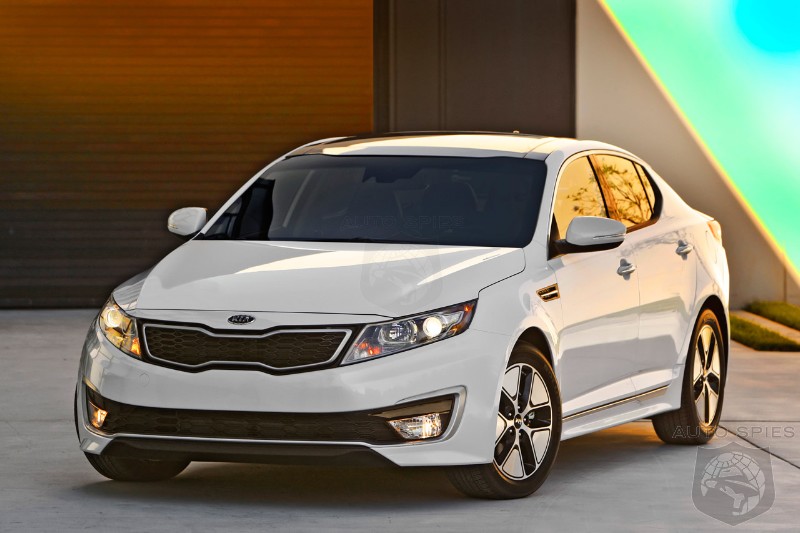
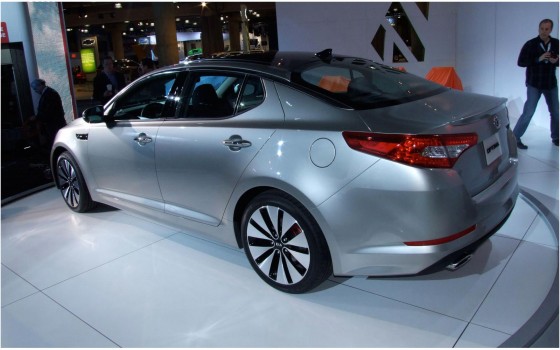
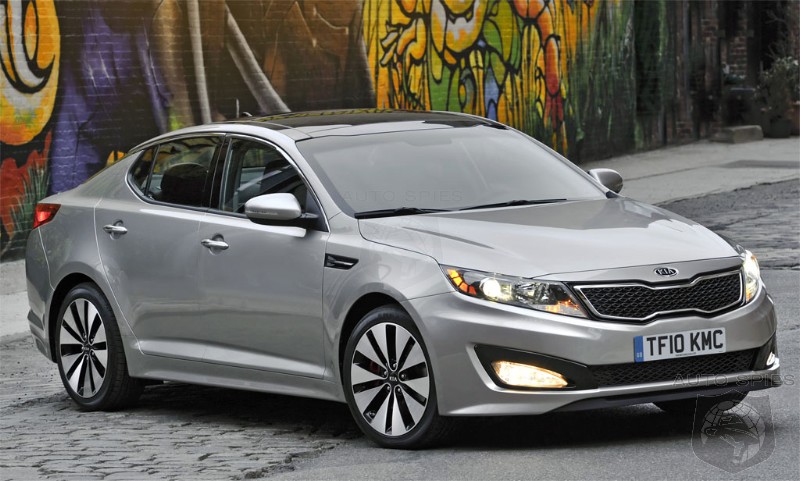
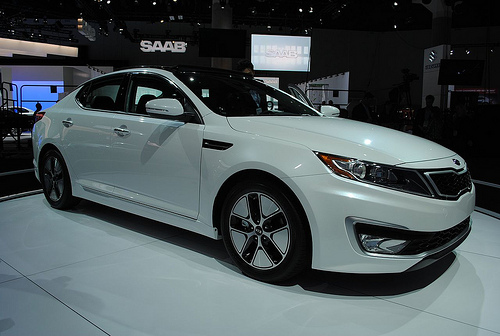
2011 Kia Optima Hybrid info

The Optima hybrid lands in showrooms in right on time 2011, with a cost looked for to be roughly $26,000 significance the Optima hybrid might go in as the most reduced estimated mid size gas electric sedan on the financial sector (the restrained openness Nissan Altima hybrid begins at $27,530, while the Ford Fusion hybrid costs $28,990). That situations the hybrid close the top of the Optima's go, with costs for the routinely powered poses stretching from $19,690 to $26,690.


2011 Kia Optima Hybrid

2011 Kia Optima Hybrid

2011 Kia Optima Hybrid

Kia and Hyundai can offer their hybrid poses at such easy costs, to a limited extent, on the grounds that their full parallel hybrid framework utilizes a modular go at, piggybacking the hybrid hardware onto existing motors and powertrains in this case, a 2. 4 liter four barrel motor, modified with Atkinson cycle operation for preferable effectiveness, and an off the ledge six speed mechanical. Consolidated output from the gas electric framework is 206 hp and 195 lb ft of torque.

2011 Kia Optima Hybrid

2011 Kia Optima Hybrid

2011 Kia Optima Hybrid

2011 Kia Optima Hybrid

2011 Kia Optima Hybrid

2011 Kia Optima Hybrid

2011 Kia Optima Hybrid

2011 Kia Optima Hybrid

2011 Kia Optima Hybrid

2011 Kia Optima Hybrid

2011 Kia Optima Hybrid

2011 Kia Optima Hybrid


Tuesday, June 1, 2010

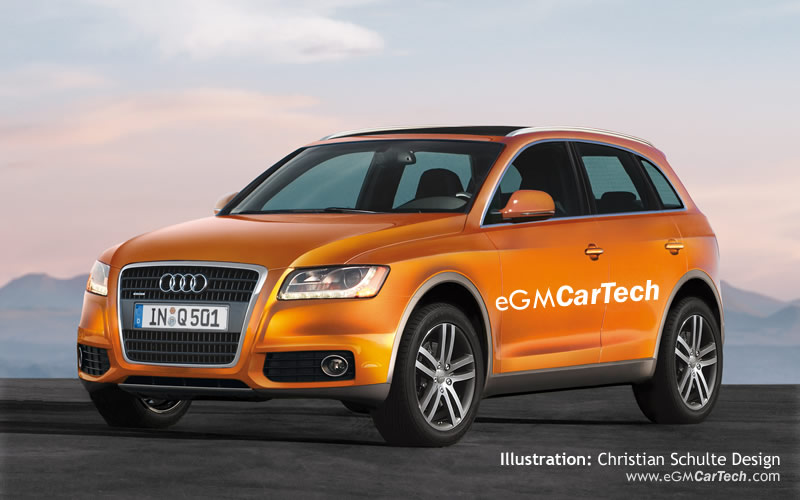
Audi Q5 Hybrid trouble

Audi was originally reported that it would offer Q5 hybrid as launch model, it was later reported that Audi suspended the plan because of unsatisfying crash test result for the nickel metal hydride batteries.


In 2009, Audi announced it would resume the Q5 hybrid development.

Production version would be on sale in 2012 for Japanese market.


Audi Q5 Hybrid
Audi Q5 Hybrid

Audi Q5 Hybrid
Audi Q5 Hybrid

Audi Q5 Hybrid
Audi Q5 Hybrid

Audi Q5 Hybrid
Audi Q5 Hybrid

Audi Q5 Hybrid
Audi Q5 Hybrid

Audi Q5 Hybrid
Audi Q5 Hybrid

Audi Q5 Hybrid
Audi Q5 Hybrid

Audi Q5 Hybrid
Audi Q5 Hybrid

Audi Q5 Hybrid
Audi Q5 Hybrid

Audi Q5 Hybrid
Audi Q5 Hybrid

Audi Q5 Hybrid
Audi Q5 Hybrid

Audi Q5 Hybrid
Audi Q5 Hybrid

Audi Q5 Hybrid
Audi Q5 Hybrid

Audi Q5 Hybrid
Audi Q5 Hybrid

Audi Q5 Hybrid
Audi Q5 Hybrid


All Review videos and more of:� Infiniti� Mitsubishi� Aston Martin� Isuzu� Nissan� Audi� Jaguar � Pontiac� Bentley� Jeep� Porsche� BMW� Kia� Rolls Royce� Buick� Lamborghini� Saab� Cadillac� Land Rover� Saturn� Chevrolet� Lexus� Scion� Chrysler� Lincoln� Smart� Dodge� Lotus� Subaru� Ferrari� Maserati� Suzuki� Ford� Maybach� Tesla� GMC� Mazda� Toyota� Honda� Mercedes-Benz� Volkswagen� HUMMER� Mercury� Volvo� Hyundai� MINI.and MORE....

Super Sport Car Evolution