Showing posts with label rolls-royce. Show all posts

Sunday, July 31, 2011

BMW X3 M in works, powered by tri-turbo straight 6

BMW has an M treatment in the works for its mid-sized X3, according to a report by CAR Magazine. With the exception of the X1, all upcoming X models will have M division treatment available. This model is expected to hit the road as of early 2012.
Starting with the M3 motor, the BMW X3 M will be a modified version that could include some exciting new upgrades. BMW is working on taking forced induction where it has never been before with a tri-turbo in development. It is possible that the X3 M will debut with three turbochargers, including two exhaust-gas driven and one electric, paired with the straight six. To accommodate the changes displacement will increase from 3.0 to 3.2 liters. That should help it produce somewhere around  449-hp.
The X5 M and X6 M�s next generation will keep the twin-turbo 4.4 liter V8 engine, and gain 9-hp, bringing it up to 564-hp. Fuel efficiency will also be improved at up to a 15% increase.

2011 Mercedes-Benz Viano Vision Pearl Concept

The design concept is takes its inspiration from that of modern sporting yachts, with the theme of travel as an experience. The onboard W-LAN connectivity caters for the needs of modern, mobile individuals. For ther exterior design, Mercedes-Benz has for the first time in the van sector used the paint finish �magno pearl grey�, a matt, pebble-grey colour. The stylistically revised front end of the Viano with its integrated LED daytime running lamps gives the van a more sporty, powerful appearance

The interior of the Viano Vision Pearl is not so much a functional space for passenger transport, but rather a living space. The name Vision Pearl emphasises both the design concept and the repositioning of the Viano: the Viano of the future is the perfect travelling companion, and in this version it conveys a modern, maritime theme.
The Viano Vision Pearl is rounded off by the Bang & Olufsen sound system. Mercedes-Benz has worked together with this world-renowned manufacturer of audio systems since 2009, and integrates the high-end sound systems into passenger cars such as the S-Class. Thanks to the very high output of 1320 watts (the S-Class has 1200 watts) and 18 integrated, specially hand-built loudspeakers, the vehicle occupants are treated to an outstanding listening experience. The Viano Vision Pearl is stylishly discreet where the outside world is concerned: as the loudspeakers are located in their own housings, very little sound volume escapes to the outside.

Tuesday, July 19, 2011

Citroen C5

Recognised as one of the best-styled models in its segment, the Citroen C5 has been subtly upgraded. The changes enable the car to keep all its character while making it immediately visible and recognisable out on the road.
LEDs have been added under the headlamps. Active day and night and combined with a light guide, they subtly strengthen the car's light signature. The headlamps retain all the existing functions, including xenon dual-function directional lights and corner lights.

The rear lights get a new "Dark Crystal" treatment with clear glass in the central section.
e-HDi MICRO-HYBRID TECHNOLOGY FOR SPECTACULAR RESULTS
The Citroen C5 inaugurates the new micro-hybrid technology that will be widely applied to numerous models in the range. Initially it will be available with the HDi 110 DPFS version equipped with the EGS6 electronic gearbox system with steering-wheel paddles and low rolling resistance tyres.
The micro-hybrid technology consists of a second-generation Stop & Start system, which retains an alternator-starter, or reversible alternator, boasting enhanced performance. Power has been increased on the first-generation system, by 70% to 2.2 kW, and now includes a power electronics unit. Fitting the system on a diesel engine constitutes a world first for a passenger car.
Start-ups take just 400 ms, half the time of a starter, and remain completely transparent for users. Noise is eliminated through the use of a timing belt rather than the gears of a conventional starter. Vibrations have been eliminated - at start-up and cut-out - by using a twin-mass engine flywheel and a sealed air regulator and by attaining slowdown speed faster.
An onboard network assistance system, called e-booster, boosts the electricity supply of the alternator using super-output, temporarily adding to the power of the battery. This set-up has several advantages, namely:
  • an increase in transmitted energy, improving start-up capacity for temperatures of as low as -5�C;
  • onboard network support via complete transparency on the energy required by the alternator, to maintain the performance of the lights, windscreen wipers and radio;
  • a function that optimises battery charge and super-output through energy recovery when drivers take their foot off the pedal or slow down, with a slight increase in the engine brake.

The Citroen C5 e-HDi is also equipped with an optimised watertight battery sized for up to 600,000 restart cycles. Engine suspension has been enhanced on the Citroen C5 for increased comfort during stops and re-starts.
The new equipment considerably reduces the Citroen C5's fuel consumption and CO2 emissions. Over a combined cycle, the diesel model consumes 4.6 l/100 km and emits 120 g/km of CO2. In an urban cycle, fuel consumption and CO2 emissions are up to 15% lower.
Citroen C5 HDi 200 DPFS, A BLEND OF POWER AND ECONOMY
A new engine is making its appearance in the Citroen C5 range, a new-generation 2.2 litre powerplant bringing across-the-board progress on power, torque, silence, fuel consumption and CO2 emissions. Upgrades made to this engine are in line with those already used on other diesel units in the range (4- cylinder, 1.6 l and 2 l, 3 l V6). They chiefly concern the common rail system, now third-generation, with maximum injection pressure up to 2,000 bars, combustion chambers retaining ECCS (Extreme Conventional Combustion System) technology, and a lower compression ratio (16 to 1), for enhanced operating silence and lower emissions. Engine feed is still via two turbochargers, whose parallel sequential set-up provides plentiful torque from the lowest engine speeds.
The Citroen C5 HDi 200 DPFS develops 150 kW EEC (204 bhp) at 3,500 rpm and maximum torque of 450 Nm to 2,000 rpm. Mated to a 6-speed automatic gearbox, the engine provides remarkable performance, with a top speed of 230 km/h (225 km/h for the Tourer), 0-100 km/h in 8.3 seconds (8.6) and combined-cycle consumption of 5.9 l/100 km (6.1). The saloon emits 155 g/km of CO2 and the Tourer 159 g/km. Like the Citroen C5 HDi 240 DPFS, the new version stands out visually with its chrome-finished double tailpipe.
Citroen C5 VTi 120 WITH EGS6, THE NEW PETROL POWERPLANT The Citroen C5 range is now available with a new petrol engine mated to the 6-speed electronic gearbox system (EGS6). Developed with the BMW Group, the 1.6 litre powerplant develops 88 kW EEC (120 bhp). Mated to the EGS6 gearbox, with wheel-mounted paddles, combined-cycle fuel consumption is 6.2 l/100 km and CO2 emissions are 144 g/km.
Citroen eTouch AVAILABLE ON C5
Citroen eTouch is now available on the C5. Comprising a package of services including the emergency and assistance calls, Citroen eTouch also proposes a virtual maintenance manual and an Eco-Driving service accessible via the MyCitroen personal area on the web. For calls, Citroen eTouch works completely independently. The system is equipped with a GPS module and a SIM card, with no need for a call plan and unlimited over time. The vehicles features two buttons, "SOS" for emergency calls (the call is also triggered automatically in the event of impact) and "Double Chevron" for assistance calls. The emergency call gets emergency services to customers faster, for accident victims and bystanders alike. The two services are free and available 24-7.

Saturday, July 16, 2011

Mercedes M-Class

he third generation of the Mercedes-Benz M-Class sets new benchmarks in the SUV world with its leading-edge automotive technology. The new M-Class boasts optimum energy efficiency, leading standards of passive safety, outstanding ride comfort combined with superb driving dynamics, as well as a completely revamped interior design offering excellent ergonomics among its key strengths.

The low fuel consumption and exemplary emissions figures make impressive reading - on average, the entire model range burns 25 percent less fuel than the predecessor. Never before has Mercedes-Benz succeeded in cutting fuel consumption by such a huge margin with an SUV model change. An ultramodern engine line-up, a class-beating Cd value of 0.32, extensive BlueEFFICIENCY measures, as well as new development tools such as the "energy-transparent vehicle" all play their part in delivering the good energy efficiency figures. The ML 250 BlueTEC 4MATIC is particularly outstanding in this respect: it is 28 percent more economical than its predecessor, consumes just 6.0 l per 100 km on the NEDC driving cycle (158 g CO2/km) and can cover as much as 1500 kilometres on a single tank of fuel.

In line with the Mercedes-Benz brand philosophy, the new Mercedes-Benz M-Class represents the embodiment of the Mercedes-Benz holistic safety concept of Real Life Safety, which is derived from what happens in a real accident situation. In combination with the front and rear deformation zones, the high-strength passenger cell of the M-Class provides a highly effective foundation for the occupant protection systems. Both active safety and driver-fitness safety in the new M-Class are further improved by assistance systems that will already be familiar, primarily from the S-Class and E-Class.

Wednesday, May 18, 2011

1926 Rolls-Royce Prototype Phantom 10EX

1926 Rolls-Royce  Prototype Phantom
Times change and so do trends. Today, everyone's clamoring for far more environmentally-friendly and fuel-efficient cars that even Rolls-Royce is tinkering with electric propulsion. The program is becoming carried out on the 102EX electric Phantom prototype. But go back almost a century and speed was the cause c�l�bre du jour. And then just as now, Rolls-Royce was keen to prove its mettle. This was the car with which it did so.
1926 Rolls-Royce �Prototype Phantom 10EX
Read more �

Saturday, April 23, 2011

Rolls Royce Phantom VI

The chauffeur of the Lord Mayor of London has been charged with drink-driving in a ceremonial Rolls-Royce.

Michael Dore, 55, was driving Lord Mayor Ian Luder�s �200,000 official Phantom VI when he was stopped by police.
He was breathalysed and his blood was allegedly found to contain 54mg of alcohol per 100ml. The legal limit is 35mg.
Mr Luder was not a passenger in the car at the time of the arrest, although Dore was only a short distance from the Lord Mayor�s historic official residence, Mansion House.
Dore has also been charged with not holding a valid driving licence.
The 6.25-litre Rolls-Royce has been owned by the Lord Mayor�s office since it was bought new in the Eighties.
It is 20ft long, weighs two-and-a-half tons and bears the number plate LM 0. Only 374 were made and the Queen has two in her fleet of cars.
Dore appeared in connection with the alleged offences at the City of London Magistrates� Court last week and was remanded on bail until next month.
When approached at his �300,000 home in Ashtead, Surrey, Dore said: �I am not prepared to talk about this.�
A spokesman for the Lord Mayor�s office said: �We cannot comment. This is a matter for the police.� But a source said that Dore has not been suspended from his post.

Tuesday, April 5, 2011

Rolls-Royce RR4, 2010

Rolls-Royce RR4, 2010


Rolls-Royce Motor Cars revealed the first design sketches of its next new model. Known as RR4, the car is due to be launched in 2010 and will sit alongside the Phantom model line-up. RR4 will be smaller than Phantom and powered by a new engine, unique to Rolls-Royce.

The design was signed off in 2007 and engineering development is now fully underway. The Goodwood manufacturing facilities are being completely reconfigured to accommodate the RR4, with extended paint, wood and leather shops as well as a second assembly line. The company will move to a two shift system next year as it gears up for full production of the new model.

Chief designer, Ian Cameron, said, "Effortless performance and standard-setting levels of comfort and efficiency, executed with the utmost care and attention, remain fundamentals of Rolls-Royce design. The RR4 has a more informal presence than the Phantom models with a greater emphasis on driving. In design terms this is expressed through its slightly smaller dimensions and more organic form, yet with powerful, purposeful proportions. It is a true and uncompromising Rolls-Royce in every sense."

"RR4 will mark a milestone in the history of Rolls-Royce Motor Cars", Chairman, Ian Robertson added. "The business continues to go from strength to strength and the introduction of this new model will expand the appeal of the brand. We look forward to this next chapter with anticipation and confidence."

Further design and engineering details will be announced during the course of 2009.

Thursday, February 17, 2011

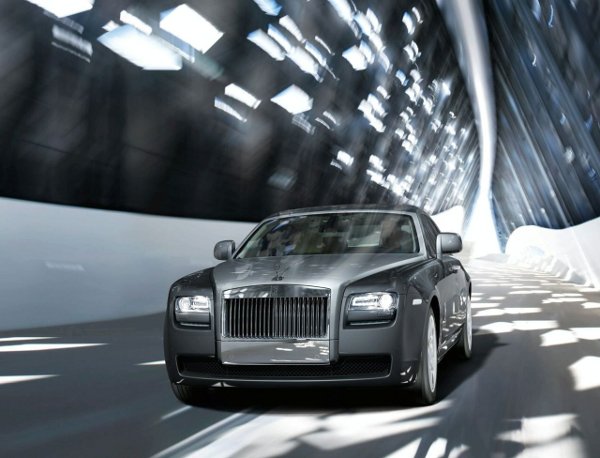
Rolls-Royce Ghost, 2010

Rolls-Royce Ghost, 2010


Rolls-Royce Ghost is the most powerful car that Rolls-Royce Motor Cars has ever produced. However, Rolls-Royce power is delivered in a very different manner to other cars. It arrives in an elegant, cosseting way that some have described as being designed to lower the pulse, not raise it.

The principle of simplicity extends to the act of driving Rolls-Royce Ghost. The host of complex engineering software and technologies beneath the surface serve to make driving easier and more enjoyable, not to intrude or confuse.

Rolls-Royce Ghost is more driver-focused than any Rolls-Royce car before it. The driver sits in a slightly elevated position behind the wheel, described as the authority position. This makes the view of the road much clearer. The fascia has been kept deliberately clear; it is spacious in design and has an intuitive layout. The controls are neatly sculpted, with the more important functions emphasised by accents of chrome. The soft light of the instrument panel glows through the familiar black-rimmed steering wheel, which in turn employs a number of violin keys as well as an ergonomic roller-ball control.

The control centre display is concealed behind a veneered panel until its services are called upon. All features such as satellite navigation, telephone, communication and entertainment functions are displayed here and managed via a central rotary controller, flanked by quick-access buttons on the front centre console.

The optional driver assistance systems and technologies in Rolls-Royce Ghost are notable for their discretion and ease of operation. From the moment the driver approaches the car, optional Comfort Entry allows easy access, unlocking the doors when the key fob is within 1.5 metres and the cool chromed handle is grasped. Once you are in the car, voice control allows you to select from the control systems menus without using the central controller.

For ease of manoeuvring, cameras located around the car serve a number of purposes. Rear, front side and top view cameras can combine to give a fish-eye view at blind junctions or provide ground images with obstacle recognition and reverse path prediction when parking.

Positioned discreetly within the grille is a Night Vision camera. When activated, this safety feature works with Pedestrian Recognition to detect objects up to 300 metres away and display them on the central screen in the dash. The car's control system receives infrared heat images from the camera and, taking into account the car's speed and direction, classifies them to assess imminent danger. It then determines what action, if any, needs to be taken and if necessary displays a warning to the driver.

The Head-up Display relays crucial information such as speed or navigation directions onto the windscreen directly in front of the driver. This information is visible only to the driver and can be tailored to show only the details required and at a position suitable to the driver.

Lane Departure Warning alerts the driver should the car start to drift out of its current lane. When activated, it uses an integrated camera, located just in front of the rear view mirror, to monitor road markings and the vehicle's position. The driver is warned by a discreet vibration through the steering wheel. If the driver uses the directional indicators before and after the lane change, the wheel will not vibrate.

High Beam Assistance automatically manages the operation of dipped and main beam lights while driving at night. When activated, the same camera used by the Lane Departure Warning system monitors the light from any source at the front of the vehicle and automatically dips or raises the headlights accordingly. Adaptive, directional headlights also improve illumination of the road ahead and adapt to the road conditions, be they rain or fog or simply when the car is making a turn.

Active Cruise Control with Stop & Go creates a relaxing driving experience, particularly on long cruising journeys, as action is not required when the car ahead speeds up or slows down, even when coming to a standstill. Active Brake Intervention also allows hill descent at a constant speed and the car's Curve Speed Limiter communicates with the car's Dynamic Stability Control systems to reduce speed on bends if safety and comfort may be compromised.

THE CONCEPT
Autumn 2006, Paris motor show: Rolls-Royce Motor Cars announced that work had begun on a new model series. The new car would be in production and on sale by the turn of the decade. The only other facts confirmed at that stage were that it would be smaller than the Rolls-Royce Phantom saloon and priced somewhere between �200,000 and �300,000 before tax. Speculation about its style and specification began almost immediately...

Little was seen of the new car, codenamed RR4, until the spring of 2008, when Rolls-Royce released the first official sketches. The styling was instantly recognisable as a Rolls-Royce, although less traditional than previous models. At the time Chief Designer, Ian Cameron, said, "The RR4 has a more informal presence than the Phantom models with a greater emphasis on driving. In design terms this is expressed through its slightly smaller dimensions, yet with powerful, purposeful proportions. It is a true and uncompromising Rolls-Royce in every sense."

As sightings of secret development models on the road increased, Rolls-Royce Motor Cars unveiled Rolls-Royce 200EX, the experimental forerunner to Rolls-Royce Ghost, at the Geneva motor show in March 2009. An instant hit, 200EX bore the trademark Rolls-Royce design cues but in altogether more compelling fashion. It was a clear statement of intent.

What the design team was seeking to create was a modern Rolls-Royce that achieved a new dynamism but remained true to its luxurious heritage. They had found inspiration in contemporary furniture, architecture and yachts but also in the spirit of the 1930s - that sense of adventure and endeavour - which they wanted to capture in the character of this new car.

TECHNICAL SPECIFICATIONS
    * Number of doors / seats: 4 / 5
    * Vehicle length: 5399 mm
    * Vehicle width: 1948 mm
    * Vehicle height: 1550 mm
    * Wheelbase: 3295 mm
    * Turning circle: 13.4 m
    * Overhang front: 867.5 mm
    * Overhang rear: 1236.5 mm
    * Track width front: 1622 mm
    * Track width rear: 1660 mm
    * Shoulder room front: 1510 mm
    * Shoulder room rear: 1418 mm
    * Elbow room front: 1540 mm
    * Elbow room rear: 1448 mm
    * Max headroom front: 1030 mm
    * Max headroom rear: 990 mm
    * Effective headroom front with sunroof: 995
    * Effective headroom rear with sunroof: 975 mm
    * Ground clearance: 150 mm
    * Width including mirrors: 2108 mm
    * Luggage compartment capacity (ISO3832): 490 l
    * Fuel tank capacity: 82.5 l
    * Unladen weight (DIN / EU): 2360 kg / 2435 kg
    * Axle load ratio, rear: 48.2 %
    * Gross axle weight / max payload: 2940 kg / 580 kg
    * Axle payload limit front / rear: 1445 kg / 1575 kg
    * Engine type: V12
    * valves: 48
    * Fuel management: Direct injection
    * Engine injector set-up / Aspiration: DI(VVT) / twin turbo
    * Displacement: 6592 cm3
    * Stroke / Bore: 88.3 mm / 89.0 mm
    * Power output: 563 bhp (420 kW) @ 5250 rpm
    * Max torque: 780 Nm (575 lb/ft) @ 1500 rpm
    * Compression ratio: 10.0
    * Fuel type: Super unleaded
    * Transmission type: 8 speed automatic
    * Transmission ratios 1st/2nd/3rd/4th: 4.717 / 3.143 / 2.106 / 1.667
    * Transmission ratios 5th/6th/7th/8th: 1.285 / 1.000 / 0.839 / 0.667
    * Transmission ratio reverse gear: 3.317
    * Final drive ratio: 2.813
    * Steering wheel revolutions lock to lock: 3.1
    * Brakes front / diameter x thickness: Ventilated discs / 410x36 mm
    * Brakes rear / diameter x thickness: Ventilated discs / 402x30 mm
    * Drag co-efficient cd / A / cd x A: 0.33 / 2.60 m2 / 0.863 m2
    * Top speed: 250 km/h (155 mph)
    * Acceleration 0-60 mph / 0-100km/h: 4.7 s / 4.9 s
    * 1km from standing start: 23.1 s
    * Power to weight (DIN-Unladen weight): 5.6 kg/kW
    * Power per litre: 63.7 kW/l
    * Consumption urban (EU): 20.5 l/100 km
    * Consumption extra urban: 9.6 l/100 km
    * Combined consumption: 13.6 l/100 km (20.8 mpg (imp. gal.))
    * Range: 605 km (376 miles)
    * CO2 Emissions (combined): 317 g/km
    * Exhaust emissions standard: EU5
    * Front tyres: 255/50 R19 103Y / 255/45 R20 101Y
    * Rear tyres: 255/50 R19 103Y / 285/40 R20 104Y
    * Front wheels: 8.5J x 19 EH2 / 8.5Jx20 EH2
    * Rear wheels: 8.5J x 19 EH2 / 9.5Jx20 EH2
    * Battery capacity / location: 90 Ah (AGM) / Luggage compartment
    * Alternator output rating: 210 A / 2900 W

Rolls-Royce Phantom Coupe, 2009

Rolls-Royce Phantom Coupe, 2009


In 2006, Rolls-Royce 101EX was unveiled, an experimental car hand-built to explore an exciting new design direction for a modern coup�. Wrapped in a sleek, rakish body, 101EX was an engineering-led study, showcasing the technical and architectural innovation inherent in the quintessential modern Rolls-Royce car. Both handsome and elegant, it encapsulated the essence of contemporary coup� style.

So positive was the worldwide reaction to 101EX that, in autumn 2007, Rolls-Royce Motor Cars announced that a series model would go into production in the summer of 2008. This coup� would complete the Phantom family, standing alongside the Rolls-Royce Phantom, Rolls-Royce Phantom Extended Wheelbase and Rolls-Royce Phantom Drophead Coup�.

Revealed at the Salon International de l'Automobile, Geneva in March 2008, the Rolls-Royce Phantom Coup� is the third new model from Rolls-Royce Motor Cars since BMW Group became custodian of the marque in 1998.

The Rolls-Royce Phantom Coupe is the most driver-orientated model in the Phantom line. A number of subtle but significant modifications have been made that change its character. It is noticeably more dynamic, whilst still offering incredible levels of comfort a balance not easily achieved.

The Rolls-Royce Phantom Coupe marries cutting-edge technology with a beautifully proportioned, muscular body that exudes power and style. Utterly contemporary in appearance, it nonetheless incorporates timeless Rolls-Royce design cues such as the long bonnet, large-diameter wheels, short front and long rear overhangs and the classic dynamic, rising profile.

Designed to cover great distances with the minimum of fuss, the Rolls-Royce Phantom Coupe is a sublime choice for a transcontinental trip, its effortless power provided by the Phantom's 6.75-litre V12, producing a phenomenal 453 bhp and 720 Nm of torque. Agile, fast, long-legged and virtually silent, the Rolls-Royce Phantom Coup� allows both driver and passengers to emerge unruffled, even after an all-day run.

EXTERIOR
The sleek lines of the Rolls-Royce Phantom Coupe suggest tremendous, effortless power. Designed to look like a moving form even at a standstill, the Rolls-Royce Phantom Coupe has the demeanour of a muscular animal, ready to be unleashed.

The front end, with its slim LED sidelights and larger, round driving lamps, has a gently raked, softer-edged appearance, sweeping back over the long bonnet to the strong line of the triangular A-frame. The front coach-doors are rear-hinged and were newly homologated for use on the Drophead Coup�. Enabling all passengers to enter and exit more gracefully, these doors also offer safety benefits: the rear hinging allows an uninterrupted A-pillar, which adds significantly to the car's overall torsional rigidity. For ease of operation, the doors may be closed at the simple touch of a button, housed discreetly inside the front quarterlight.

In classic Rolls-Royce style, the Phantom Coup� has a dynamic, rising profile, its high waistline tapering back to a contemporary take on a boat-tail. Sleek body panels create an uninterrupted visual flow, complemented by accents of stainless steel and aluminium.

The picnic boot, as seen on the Drophead Coup�, is a wonderfully sociable feature. When lowered, it provides a seating platform for two, with hinges substantial enough to hold a weight of 150 kg / 330 lb. At the same time, it also offers easy access to the luggage compartment, which has a volume of 395 litres / 13.9 cu ft - enough for four sets of golf clubs.

The mirror-like finish of the paintwork perfectly sets off the stunning lines of the Rolls-Royce Phantom Coupe. Each body receives five individual coats of paint and lacquer, with hand-finishing between each layer. It is then polished for five hours to create a lustre that is unsurpassed in the automotive world. A new palette of nine standard paint colours has been selected for the Rolls-Royce Phantom Coupe, including Darkest Tungsten, Anthracite and New Sable. However, through the Bespoke programme, customers can choose from more than 44,000 different hues. Like the Drophead Coup�, the new model is available with a brushed steel bonnet and A-pillar surround. These parts are machine-brushed to create a uniform grain and then hand-polished to a unique and flawless finish.

INTERIOR
An exquisite interior, hand-built using the finest materials, supremely comfortable and equipped with a studio-quality sound system, makes the Rolls-Royce Phantom Coup� the perfect car for all-day driving. Clean and contemporary, the cabin uses traditional materials in a modern way to create a tactile and visual feast: driver and passengers touch only leather, wood or chrome.

All the controls are intuitively and conveniently positioned, the simplicity of the facia belying the technology beneath. An analogue clock set in a bookmatched veneered panel hides the media screen, only to be revealed when called upon. The multi-zone climate control has chromed eyeball vents and traditional 'organ stop' controls, while additional features are accessed using beautifully crafted 'violin keys' - contemporary uses of long-established, and well loved, Rolls-Royce design features.

The Lexicon LOGIC7TM sound system can be controlled by just one dial. Unique in its use in the automotive industry, the Lexicon system has 15 metal-matrix speakers to deliver an unparalleled clarity of sound, regardless of where a passenger may be seated. A nine-channel amplifier powers these speakers - two sub-woofers fitted beneath the seats and 13 100 mm mid-range and 44 mm tweeter arrays carefully placed around the car - to an impressive 420 watts of sound. The Rolls-Royce Phantom Coupe is available with iPod connectivity as an alternative to the standard six-CD changer.

The commanding driving position affords the most inspirational view in motoring: straight down the long sweep of bonnet to the Spirit of Ecstasy. Closer fitting than those of the Phantom, the slim-line front seats offer outstanding comfort, ensuring that both driver and passenger remain fresh and relaxed after a day's drive.

The rear of the Rolls-Royce Phantom Coupe houses an inviting lounge seat, a curved sofa that interior designer Alan Sheppard describes as, "intimate for two yet superbly comfortable on long journeys". Boulevard lighting creates a gentle luminescence, an effect that can be heightened by the optional, full-length starlight headlining, which incorporates hundreds of tiny fibre optics to give the impression of a star-filled night sky. Adjustable to provide a quiet glow or ample light to read by, this beautiful lighting is complemented by discreet directional reading lights in the C-pillars.

ENGINEERING
At the core of the Rolls-Royce Phantom Coupe is a sophisticated, all-aluminium spaceframe, first seen in the Phantom. It provides an exceptional base for the car, offering great strength, a very high degree of torsional rigidity and low weight, all of which benefit dynamics. Manufactured to within a tolerance of just 0.1 mm / 0.004 in, each spaceframe is constructed by hand and then checked by computer to ensure total accuracy. The body's structure, comprised of box sections of aluminium, is painstakingly hand-welded by a team of experts. Every morning, each member of the team performs a 300 mm test weld to ascertain atmospheric effects on the metal with which they are working so that these can be taken into account. In all, more than 130 metres of weld are used to create the Rolls-Royce Phantom Coupe's spaceframe.

The Rolls-Royce Phantom Coup�'s lightweight and rigid structure, the most torsionally stiff in the Phantom line, provides the foundation for its excellent dynamic abilities, but it also offers safety benefits. The box sections are exceptionally strong and offer greater dispersion of energy in the event of a collision. Frontal impacts are absorbed by crumple zones that direct the force into Y-shaped chassis members and the main understructure, the strongest part of the chassis. Side impact intrusion is minimised by the double-skinned floor construction, side sills and integral side impact bars in each door.

The inherent safety of the spaceframe is enhanced by other safety systems controlled by ISIS (Intelligent Safety and Information System). This takes readings from sensors located throughout the car and, in the event of an impact, makes up to 4000 calculations a second to establish its severity, deploying safety systems as necessary. These include intelligent braking and restraint systems, such as Dynamic Stability Control and Dynamic Traction Control, seatbelt pre-tensioners and any of six airbags.

With the exception of the picnic boot, steel bonnet and A-pillar surround, all the Rolls-Royce Phantom Coupe's panels are created from aluminium, a material that delivers a substantial weight saving over steel. The large, single-piece front wings are made by a process called super plastic forming. The alloy is heated and then formed, without stress of the material, to the required shape and size in a process seen for the first time in the automotive industry.

Rolls-Royce 200EX Concept, 2009

Rolls-Royce 200EX Concept, 2009


 The Rolls-Royce 200EX is the latest experimental car from Rolls-Royce Motor Cars. It explores a design direction for a dynamic, modern, four-door Rolls-Royce engineered for the 21st century.

The PHILOSOPHY
The experimental models have always played a significant role in the history of Rolls-Royce Motor Cars, from the first - 1EX, built in 1919 - to the most recent - Rolls-Royce 101EX, built in 2006. Unlike a concept car, the experimental models developed by Rolls-Royce Motor Cars have always been fully functioning vehicles, residing in a tangible world of wood, leather and metals rather than clay and foam. EX cars offer designers and engineers the opportunity for real-world innovation and have been used to showcase new components and engineering techniques as well as exterior and interior designs. "Modern automotive engineering is a balance of creativity, innovation and application.
The Rolls-Royce 100EX was the first experimental car unveiled after Rolls-Royce Motor Cars was relaunched under BMW Group ownership in 2003. The two-door, four-seat convertible was built to mark 100 years of Rolls-Royce motor car design and engineering.

The DESIGN
The Rolls-Royce 200EX has a dynamic edge to its styling and is noticeably less formal than previous models. Its size, style and expression broaden the appeal of the car, making it more appropriate for a wider range of circumstances. "Rolls-Royce 200EX is a touring saloon with more than a little panache. 
"What you see is a modern car that is immediately recognisable as a true Rolls-Royce, even from angles that obscure the grille and Spirit of Ecstasy. Design elements such as the elevated prow, long bonnet, short front overhang, sharply raked A-pillar and elegant tail give Rolls-Royce 200EX an air of informal presence - powerful but unobtrusive."
The exterior design is dominated by large, uninterrupted surfaces, while finely sculptured horizontal lines add definition and geometric precision. In combination, the upward-sweeping sill line and low-cut roof create a powerful profile. The tapered rear is enhanced by powerful shoulders and flanks that draw in sharply, narrowing as they flow from the rear wings to the tail-lights.

The rear-hinged coach doors give the car a natural presence and sense of theatre. Revived in 2003 on the Rolls-Royce Phantom, this signature feature lends added functionality and style to the design. Opening through a generous 83 degrees, the coach doors offer the widest rear access in the car industry as well as providing the warmest of welcomes to those about to step inside.
At the front, a pair of LED headlamps flank the latest evolution of the world's most famous grille. "We wanted this to be less reminiscent of the traditional 'Parthenon' style and more like a jet intake," says Ian Cameron. The sides of the intake have been curved inwards and the vanes set back into the opening. It's a more dynamic form that moves on from the design first seen on the Rolls-Royce Phantom Drophead Coup�.

The exterior of Rolls-Royce 200EX is finished in Darkest Tungsten, which contrasts with the silver satin finish applied to the bonnet and A-pillar. Seven-spoke, 20-inch wheels complete the visual impact of the exterior.
Within Rolls-Royce 200EX, Interior Designer Alan Sheppard has accomplished a contemporary atmosphere, incorporating the Rolls-Royce Motor Cars principles of fine materials and peerless comfort. The space is filled with natural light, which brings in a real sense of the outside world. However, substantial doors and a high shoulder line ensure that occupants feel cosseted and protected. In the rear, the intimate ambience of the lounge seat is emphasised by its position behind the C-pillar, heightening the sense of privacy.
Naturally, the finest materials have been used. Elegant, frosted lamps and chrome door handles feature, while details include traditional violin key switches, eyeball air vents, opaque dials and refined instrumentation.
 
The dashboard has been kept deliberately clear; it is spacious in its design and has an intuitive layout. The controls are neatly sculptured, with more important functions emphasised by accents of chrome. The soft light of the instrument panel glows through the familiar black-rimmed steering wheel, which itself incorporates a number of violin keys as well as an ergonomic roller-ball control.
The interior of Rolls-Royce 200EX is finished in supple, natural grain Cr�me Light leather, with Cornsilk carpets and cashmere blend headliner. The featured wood veneer is Santos Palissander, chosen for its contemporary look and striking grain.

TECHNICAL SPECIFICATION
    * No. of doors/seats: 4/5
    * Vehicle length: 5399mm
    * Vehicle width 1948mm
    * Vehicle height: 1550mm
    * Wheelbase: 3295mm
    * Engine: V12
    * Wheel and tyre size: 20 inch, 255/45 R 20 front and 285/40 R 20 rear

Saturday, February 12, 2011

Rolls-Royce Phantom, 2009

Rolls-Royce Phantom, 2009


The Rolls-Royce Motor Cars announced details of a product update to the 2009 model year Rolls-Royce Phantom and Phantom Extended Wheelbase. Building on a successful sales year in 2008, the phased introduction of a number of subtle model year enhancements will reinforce Rolls-Royce Phantom's position as the pinnacle product of the super luxury segment.

Harmonising the front appearance of the car with that of the Rolls-Royce Phantom Drophead Coup� and Rolls-Royce Phantom Coup�, a new streamlined front bumper has been designed and integrated with a shallower grille, finished in stainless steel.

Other new exterior features include LED door handle illumination and the fitting of 21-inch cast aluminium wheels as standard. Two further wheel options exist, both manufactured in forged alloy and available in either painted or part polished finishes.

The Inside, the updated Rolls-Royce Phantom, rear passengers will benefit from a new RCA component input which provides auxiliary audio and visual connectivity to the 12-inch monitors mounted within the picnic tables. Further features include new front and rear door cappings with integrated grab handles and new bi-directional double reading lights in the C-pillar provide additional illumination. Rear climate control, volume control and electric window switches are now conveniently repositioned, housed in a wood veneer panel in the door.

Sunday, October 10, 2010

Rolls-Royce 101EX, 2009

Rolls-Royce 101EX, 2009


The Phantom family line-up alongside the Phantom, Phantom Extended Wheelbase and Phantom Drophead Coup�.

The new elegant two-door car, four-seat coupe that builds on the extraordinary driving experience offered in the Phantom and Drophead Coup�. Use an all aluminium construction similar to the rest of the Phantom family. However, it will be a unique car in the Phantom family, designed around the desire to create the worlds' foremost transcontinental tourer.

The outright power will be identical to the other Phantom models - an impressive 453bhp and 720nm of torque - however the coup� will be subtly tuned with more emphasis placed on the driver. The body will be shorter than that of the Phantom sedan and there will be revisions to the suspension and chassis set-up.

Rolls-Royce Phantom Tungsten, 2008

Rolls-Royce Phantom Tungsten, 2008


The Rolls-Royce Phantom Tungsten is featured in the Bespoke Collection. The bonnet has a dramatic brushed aluminium finish, which contrasts elegantly with the bodywork, painted in Darkest Tungsten - a colour never used before on a production Rolls-Royce.
New 21-inch forged aluminium wheels and visible exhaust tail pipes lend a particularly purposeful air to this special Phantom.
On the inside is a unique interior lighting system, featuring a Starlight Headlining, which comprises several hundred fibre-optic lights embedded into perforated black leather, giving the impression of a star-filled night sky. Smoke Grey leather seats with contrasting Navy Blue piping complement the rich rosewood veneers and tooled metal steering wheel spokes.

Sunday, March 28, 2010

1938 Rolls-Royce Phantom III Open Tourer - Collector Car For Sale (Click Here)


Description:
Year : 1938
Make : Rolls-Royce
Model : Phantom III
Coachbuilder : H.J. Mulliner/Hooper
Body Type : Open Tourer
Colour : Red over Black
Trim : Black Leather

History : In 1936 Rolls-Royce made their first move away from the highly successful six cylinder engine with the introduction of the Phantom III. For the first time in nearly three decades Rolls-Royce chose to power their new model with a V12 engine following several years of development. The new V12 engine was fitted with overhead valves and was capable of producing very impressive performance figures, especially when taking into account the sheer size and weight of the finished motor car. Speeds well in excess of 80mph were well within this powerful models grasp. The four speed manual gearbox was fitted with synchromesh on gears two, three and four and was very simple to operate. By 1938 two major improvements were implemented with solid adjustable tappets replacing the hydraulic units fitted in the earlier cars. Overdrive also became a standard and very welcome addition. The Phantom III was the last large Rolls-Royce produced prior to the outbreak of hostilities in 1939, with little more than 700 chassis rolling off the production line. Buyers had a vast range of coachbuilders to choose from, with a wide range of coachwork styles available. Chassis No 3DL102, which we are currently offering for sale, was delivered new to industrialist Theodore Cozzika in 1938, fitted with saloon coachwork with division by H.J. Mulliner of Chiswick London. Following Mr Cozzika�s ownership the car returned to London and was sent to the royal coachbuilders Hooper in 1950 where it was adapted into an open tourer at the request of the then owner, His Majesty the King of Greece. 3DL102 is believed to be just a three owner car as the previous owner purchased the car in 1960 from the Greek royal family and kept it in his private collection of cars for several decades. This handsome Phantom III was subject to a complete engine re-build in recent years by a highly respected marque specialist, which took place over a three year period between 1999 and 2002 resulting in a show condition engine bay with outstanding V12 on road performance. The engine is exceptionally quiet and is almost impossible to hear when in a stationary position. Its performance whilst in operation is quite exceptional, with a great deal of power at the driver�s disposal, complemented by smooth and effortless transmission through the gears. It comes fitted with a single side mounted spare wheel, twin flag masts and two occasional seats in the rear compartment. This superb motor car is in excellent cosmetic condition having been recently re-trimmed in the finest leather. The woodwork, bright work and coachwork are also in excellent order. It is complete with a large history file documenting the cars maintenance and restoration schedule. 3DL102 is an outstanding Phantom III in restored condition and ready for the next owner�s immediate use.

1935 Rolls-Royce Phantom II Sedanca Coupe - Collector Car For Sale (Click Here)


Description:
Year : 1935
Make : Rolls-Royce
Model : Phantom II
Coachbuilder : Windovers
Body Type : Sedanca Coupe
Colour : Garnet and Burgundy
Trim : Burgundy Leather

History : 1929 saw the arrival of the Rolls-Royce Phantom II which set new standards for others to follow. It was a vehicle specifically designed with the chauffer driven passenger in mind. At the time the only home produced rival to compare with the Phantom II was the Bentley 8 Litre, which was a faster vehicle but was thought to be far less chauffer friendly, with considerably heavier steering and a gearbox which was more difficult to operate. The vast majority of the 1,400 or so Phantom II chassis that were produced between 1929 and 1935 were fitted with four door saloon style coachwork, ideal for a chauffer and his passengers. However a select few were fitted with more stylish coachwork, and in our opinion few came better than Chassis No 197TA which is fitted with a �special� sedanca coupe design by Windovers of Colindale North London. The TA series cars were some of the very last built (only approximately 40 UK series chassis proceeded the TA series cars) and this particular car benefits from synchromesh gears on not only third and fourth gear, but also second gear as well; an improvement that was introduced in 1935. Chassis No 197TA was supplied from Windovers Central London showroom in Conduit Street, Mayfair (they were authorised Rolls-Royce and Bentley agents at this time) to a Captain Francis Francis. We understand that the car became the property of European nobility and was restored to concours condition for them some twenty five years ago (restoration details to follow shortly) It has clearly been sparingly used in the ensuing years as it still presents beautifully in every respect. It became part of one of the world�s most significant collections of desirable automobiles in recent years and was on display in the United States until returning to London quite recently. Chassis No 197TA is fitted with twin side mounted spare wheels, vanity mirrors to the rear compartment and a luggage rack that attached to the rear of the car below the tail mounted trunk. This unique Phantom II presents and drives beautifully and comes highly recommended by all at Frank Dale & Stepsons.

Condition : An older restoration that has been sparingly used and still presents beautifully.
Technical Data : Four speed manual gearbox, 6 cylinder in-line engine, 7.7 litres displacement, 7,668cc capacity. Servo-assisted brakes.

2008 Rolls-Royce Phantom Sapphire Edition Saloon - Classic Car For Sale (Click Here)


Description:
Year: 2008 (08) Previous Owners: 1 From New First Registered: 06.06.08 Transmission: Auto Doors: 4 Seats: 4 Colour: Madeira Polyneon 40 � colour 1976 MOT: Not App Service History: FRRSH Mileage: 3500 Engine: 6749 Fuel: Petrol Displacement: 453 bhp Top Speed: 149 0-60: 5.7 seconds Trim: Cream hide Tax: 6 Months Warranty: 3 Years Manfactures

This Roll Royce Phantom Is a Bespoke "Sapphire Edition" Costing �320.000 New !!!
1 Owner from new with his chauffeur covering 3500 miles.

Please read the huge specification below

Motor Car/Option Description
Coolbox for Lounge Seats
21" Aluminium Wheels
Walnut Burr
Voice Processing System
Six-DVD Changer
Navi-DVD Europe
Slide/Tilt Sunroof
Theatre- Lounge Seat
Preparation Mobile Phone

Bespoke Options
****PHANTOM SAPPHIRE****
RR-Logo stitched in all four headrests with sewing thread colour
Navy Blue (Madeira Polyneon 40 � colour 1976)
(Font height/30mm)
Upper Door Grab Handles in Navy Blue Leather (front & rear)
Lids of centre console(s) in Leather Navy Blue
Starlight headlining in Navy Blue Leather with front headlining inset in perforated Navy Blue Leather
Diamond Marquetry for Walnut Burr Veneer
Design & Size as per Design release
Front Cup Holder Lid in Walnut Burr Veneer
Cupholder for Lounge Seat Coolbox including flute holder
Glass storage for lounge seat on parcel shelf.
Includes x2 Tumblers
Includes x2 Flutes
Glassware for Phantom Sapphire
Illuminated tread plates Phantom Sapphire on all 4 door sills
As per design release
Chassis number plate on B-post
Phantom Sapphire glovebox embossing
Presentation box for Phantom Sapphire
Includes: x2 Phantom Sapphire Key Fobs
Includes: x1 Phantom Sapphire Conway Stewart Pen
Phantom Sapphire Clock Face
**Mono Doors in Natural Grain Leather throughout**
Door Panels in natural grain leather � Seashell
Door panniers in natural grain leather � Seashell
Carpet & Lambswool rugs in Navy Blue
Front centre console in Natural Grain leather Seashell
**In combination with option RS1 (Individual Seats)**
**Rear centre console in Natural Grain Leather Seashell**
IP-Top in preshrunk leather Navy Blue Seashell
- Top part of Instrument Panel in Preshrunk leather Navy Blue
- Lower (Inner) part including centre cross bar in preshrunk leather Seashell
Stitching in Navy Blue
Air vents in Navy Blue
Front part of hat shelf in preshrunk leather Navy Blue
Boot trim carpet in Navy Blue
Remainder of Interior in Seashell as RAT6
Seat Piping in Navy Blue applied to the following areas:
Front Seats Left & Right
Lounge Seat or Individual Seats depending on configuration
Headrests Front & Rear
Armrests in front doors (left & right) in natural grain leather Navy Blue
Rear outer armrests (left & right) in natural grain leather Navy Blue
C/D Pillar surrounding rear mirror & door retract button, above rear seat squab in natural grain leather Seashell

Dealer Options
TV function
DVD Code 2 (EUR/ME/JPN/SA)
Country Spec GB/Ire
Cross-over operation, deletion
English Owners Handbook
Deletion Transport Protection
Order code � Bespoke feature
Veneered Instrument Panel
Colour-keyed Boot Trim
RR monogram to all headrests
Blue Chrome option
Universal garage door opener
Parking Air Conditioning
Camera system

Saturday, March 27, 2010

1926 Rolls-Royce Phantom I Open Tourer - Collector Car For Sale (Click Here)


Description:
Year : 1926
Make : Rolls-Royce
Model : Phantom I
Coachbuilder : Windovers
Body Type : Open Tourer
Colour : Wedgewood Blue over Black
Trim : Black Leather

History : By 1925 the exceptionally successful eighteen year production run of the Silver Ghost had firmly put Rolls-Royce at the forefront of motor car production. The term �The Best Car in the World� had been deservingly earnt thanks to the soundness of its design and the pain staking lengths the Rolls-Royce engineers and workmen went to during construction. It is fair to say that the Ghost�s efficiency, reliability and superb performance were unmatched at the time. Its reputation laid the foundations for the continued success of the company and following seven years of development on the 2nd of May 1925 a new chapter began with the introduction of the New Phantom, which later became known as the Phantom I. One major improvement over the Silver Ghost was the introduction of the pushrod operated overhead valve engine. Three groups of two cylinders with detachable heads powered the 7.7 litre engine, producing rapid acceleration and the ability to maintain high speeds for periods of time �undreamt of before.� The New Phantom was able to produce 33% greater horse power at just over 2,000 rpm than its predecessor, thanks to a number of mechanical improvements. The New Phantom was a great success and was considered to be a very worthy successor to the Silver Ghost. Production lasted until early 1930 with a total of 2,269 chassis produced on English soil whilst a little more than 1,200 further chassis were produced at the Rolls-Royce factory in Springfield, Massachusetts in the United States. The standard chassis rolled off the production line with a price tag of �1,850 and then it was up to the new owner to instruct the coachbuilder of his/her choice to construct coachwork to their taste. Windovers factory in Colindale, North London was particularly prolific in production terms during the 1920�s following their relocation from Huntingdon producing a wide range of bodies for the New Phantom chassis. Windovers were responsible for bodying just over twenty open tourer bodies for the Phantom I chassis identical to Chassis No 132LC which we are proud to be offering for sale at this time. Windovers work was admired by a number of the Indian Princes and it should be noted that identical open tourer bodies were crafted for the likes of the Maharajah of Nanpara and the Maharajah of Kashmir. His Highness the Kumar of Viziangaram also had such a body constructed by Windovers but chose solid gold and silver fittings as opposed to the standard nickel finish. Well.....if you can afford it, why not. Chassis No 132LC was originally delivered on the 27th of May 1926 to Mr Taylor of Tadworth in Surrey finished as is it is today, in Wedgewood blue over black with a black hood. 132LC appears to have spent lengthy periods of time in both England and the United States of America. At some point prior to the 1960�s the coachwork was re-painted yellow and black. However it was restored to its original configuration of blue over black during a high quality restoration some decades ago whilst in England. Records show that 132LC returned to the United States in the late 1960�s before returning to British shores in around 1990. It has since spent one further period of time on American soil before returning to London quite recently. The car comes complete with its rear screens and full all weather gear including side screens, a detachable tail mounted trunk and copies of the original factory build sheets and chassis cards. The restoration has stood the test of time well and the car still presents beautifully. Having been mechanically reviewed and tuned by our engineers we can report that this superb motor cars on road performance is exceptional and is ready to be used for touring if so desired. In our opinion this magnificent pre-war Rolls-Royce will surely serve its next proud owner with distinction.

Condition : An older restoration that has stood the test of time very well. In very good order throughout.

Technical Data : Four speed manual gearbox, 6 cylinder in-line engine, 7.7 litres displacement, 7,668cc capacity. Servo-assisted brakes.

Monday, September 21, 2009

2011 Rolls-Royce Ghost Gallery

2011 Rolls-Royce Ghost Sport Car2011 Rolls-Royce Ghost Sport Car

2011 Rolls-Royce Ghost Rear View2011 Rolls-Royce Ghost Rear View

2011 Rolls-Royce Ghost Sport Interior2011 Rolls-Royce Ghost Interior

Super Sport Car Evolution