Showing posts with label Dodge. Show all posts

Sunday, July 31, 2011

2011 Ferrari 599 SA Aperta

The Ferrari 599 SA Aperta is a true roadster which allows its occupants to enjoy the superlative emotions afforded by our signature front-engined V12 architecture in a completely open-top setting. In fact, it has just a light soft top designed to be resorted to only if the weather gets particularly bad. A low-slung windscreen and the fact that it crouches lower to the ground than our other models lend the SA Aperta an exceptionally aerodynamic sleekness. Its profile arches back from the A-post to two aerodynamic fins beautifully integrating the two roll-bars which themselves cleverly mimic the outline of the seats.


Thanks to the 670 CV engine beneath its bonnet, the SA Aperta beautifully embodies the sporty spirit of the Ferrari 599, incorporating Ferrari�s most advanced technology to deliver absolutely benchmark performance and superb driving pleasure. Its interior too is stylishly sporty with particularly sophisticated materials, trim and colours used throughout. The virtually endless combinations available guarantee that each and every SA Aperta is absolutely unique.
The Ferrari 599 SA Aperta is a special series model of which a strictly limited number of just 80 will be built. All have already been sold. Ferrari chose to build 80 SA Apertas in celebration of Pininfarina�s 80th anniversary. The SA nomenclature also pays homage to both Sergio and Andrea Pininfarina whose company and work have been linked to the most successful road-going cars ever built at Maranello.

2011 Ferrari 458 Italia Grand Am

The Ferrari 458 Italia Grand Am is built to match the American regulations and is therefore different to the European car, especially in that it develops 500 horsepower and has less efficient aerodynamics than the GT version. It is also fitted with a 48 mm restrictor and maximum revs are 8000. Significant modifications have been made to the braking system, as the car has neither ABS nor traction control. Other differences to the GT3 include the roll-over bar which gives greater lateral protection to increase safety in a series in which collisions are rather more frequent. The car is fitted with tyres from Continental, the sole supplier to the series, featuring a very hard compound, again to conform with the series regulations.


BMW Z4

Combining classic proportions with modern sportiness, the new BMW Z4 has reached the top of its market segment almost overnight. And now this charismatic roadster is entering a new dimension in driving dynamics, the new BMW Z4 sDrive35is offering an even higher standard of performance ensured both by the modified straight-six power unit with BMW Twin Turbo Technology and High Precision Injection, on the one hand, and by BMW's seven-speed Sport Automatic with double clutch operation and the M Sports Package including the adaptive M Suspension likewise featured as standard, on the other. Appropriate optimisation in engine


technology increases maximum output of the 3.0-litre power unit to 250 kW/340 hp. Peak torque is 450 Newton-metres/332 lb-ft, increasing briefly with the Overboost function to 500 Newton-metres/369 lb-ft. The outstanding power and performance of the BMW Z4 sDrive35is is expressed in particular by the significant increase in pulling power and muscle to be clearly experienced in all situations. In conjunction with seven-speed Sport Automatic featuring double clutch operation, this new top-of-the-range

BMW 6-Series Coupe

The German automobile manufacturer BMW launched its 6 Series coupe in India in 2007. Targeted at the super-rich Indian consumers, the second-generation two-door coupe flaunts striking exteriors, which are well complemented by spacious interiors. Powered by a smooth, but forceful engine, the coupe promises to deliver an impressive mileage. Seamless transmission, advanced safety features, high stability and handing quality are the highlights of BMW 6 Series coupe.

Engine
Under the hood of the 650i variant of BMW 6 Series coupe, the only one available in India, lies a powerful gasoline engine, which generates a maximum output of 270 kW @ 6300 rpm and a peak torque of 490 Nm @ 3400 rpm. The eight-cylinder V8 engine delivers impressive performance, with exceptional smoothness. Double vanos and Valvetronic technology of the coupe makes driving an effortless task.

Design And Comfort
The wide stance and long bonnet give BMW 6 Series coupe an eye-catching appearance. Body colored bumpers, sparkling headlamps, sleek double-kidney shaped front grille and clear lens jewel-like fog lamps enhance the sporty appearance of the frontage. The muscular rear end is adorned by dazzling tail lamps and an additional brake light, integrated in the spoiler lip. The interiors of the car are roomy and quite comfortable. Four people can easily fit into the two-door coupe.

Interiors
The dynamism of the exteriors of BMW 6 Series coupe is extended to its plush interiors as well. Top quality materials are used in the cabin to provide functionality and exclusivity to the car. The 2+2 seater has generous boot space too and a good amount of legroom for rear seat passengers. Upholstered in finest Dakota leather, the cabin gets sleek wooden trim in the trendy instrument cluster and leather wrapped steering wheel with multi-function buttons. Standard features found in the 650i variant of BMW 6 Series coupe include automatic air-conditioning, power windows and power door locks.

Ride And Handling
The Active Steering System of BMW 6 Series coupe makes use of an electric motor, which modifies the wheel angle according to the increasing and decreasing speed of the vehicle. The optional Dynamic Drive active suspension system takes handling precision to a new high. It not only provides optimum stability to the automobile, but also offers high level of riding comfort by minimizing body roll via the active anti-roll bars, positioned on the front and rear axles. This ensures a smooth ride for all its passengers.

Jaguar XKR

The Jaguar XK was the first car created entirely under the aegis of Design Director Ian Callum. Dramatic and purposeful, yet as sensuous as only a Jaguar can be, the XK now receives a number of revisions that reinforce its contemporary, assertive character.
The latest lighting technology has allowed the front headlamps to be made slimmer and at the same time incorporate LED signal functions and running lights. Combined with a larger grille and new bumper design, this gives the XK instant 'rear-view mirror' recognition. Unmistakably a Jaguar, each model in the range gains unique styling attributes that distinguish it from its siblings. Chrome mesh grilles on the XK are replaced with matt black detailing on the XKR while the flagship XKR-S receives a unique front bumper underlining its sense of purpose.

The power vent along the front wing has been altered from a vertical to horizontal design with a mesh insert. Emblazoned with the Jaguar name, it serves to emphasise the potential inherent in the XK's design. To the rear, the boot lid has been revised with a slimmer chrome finisher which allows the car to be graced by the famous Jaguar 'leaper', bringing it into line with the rest of the company's products.
Complementing the design changes are 17 paint colours, five of which are new and a range of alloy wheels that now total 11 different designs ranging in size from 18 to 20 inches. A further opportunity for owners to express their individuality is available through the 'Black Pack', now also available as an option on the naturally aspirated cars as well as the Jaguar XKR. This replaces exterior chrome with a matt black finish, complemented by 20-inch gloss black alloy wheels. On the Jaguar XKR, the package also includes body coloured aerodynamic enhancements and optional side graphics.

Thursday, June 23, 2011

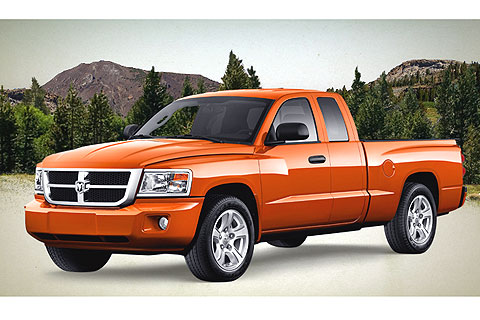
Dodge Dakota

The Dodge Dakota is a mid-size pickup truck from Chrysler's Ram division. From its introduction through 2009, it was marketed by Dodge. The first Dakota was introduced in 1986 as a 1987 model alongside the redesigned Dodge Ram 50. The Dakota was nominated for the North American Truck of the Year award for 2000. The Dakota has always been sized above the compact Ford Ranger and Chevrolet S-10 but below the full-sized pickups such as Dodge's own Ram. It is a conventional design with body-on-frame construction and a leaf spring/live axle rear end. The Dakota was the first small pickup with an optional V8 engine. One notable feature was the Dakota's rack and pinion steering, a first in work trucks. On November 4, 2009, Fiat announced that the slow selling truck would be discontinued in 2011. Dakotas have been used by police and fire departments, as off-road vehicles, patrol cars, or even brush trucks. The Dodge Dakota was conceived by Chrysler management as the first "mid-sized" pickup combining the nimble handling and fuel economy of a compact pickup with cargo handling capacity approaching that of full-sized pickups. To keep investment low, many components were shared with existing Chrysler products and the manufacturing plant was shared with the full-sized Dodge D-Model. The name Dakota means "friend" or "ally" in the Sioux Indian language.The first generation of the Dakota was produced from 1987 through 1996. Straight-4 and V6 engines were offered along with either a 5-speed manual or 4-speed automatic transmission. Four wheel drive was available only with the V6. Both 2 m and 2.4 m beds were offered. Fuel injection was added to the 3.9 L V6 for 1988 but the output remained the same.

Strong Dodge Dakota

New 2011 Dodge Dakota Doors Concept

The second-generation Dakota was built from 1997 through 2004. It inherited the semi truck look of the larger Ram but remained largely the same underneath. 1998 saw the introduction of the R/T model with the big 5.9 L 250 hp (186 kW) Magnum V8. At the time of its introduction, it was seen as one of the most radical in its class, not only for its styling, but for the fact it remained the only truck in its class with an available V8 engine that rivalled many V8s found in full size trucks with payloads of up to 1500 pounds. Four-door "Quad-Cab" models were added for 2000 with a slightly shorter bed, 63.1 in (160.2 cm), but riding on the Club Cab's 130.9 in (332.5 cm) wheelbase. The aging 5.2 L Magnum V8 was replaced by a new high-tech 4.7 L SOHC PowerTech V8. The Quad-Cab featured a full-size flip up rear seat to provide room for 3 passengers in the back or lots of dry, interior room for cargo. In spring 1998, a new limited edition R/T package was available as an option on the Dakota Sport model. This version is considered a true street/sport truck, only available in RWD. Factory modifications such as a 250 hp 360 cid/5.9 liter V8, heavy duty 46RE 4 speed automatic transmission, performance axle, limited slip differential, sport suspension and steering, uprated brakes, performance exhaust, special cast aluminum wheels, monotone paint, bucket seats, and many other standard options came with the package. Chrome wheels were available on 2002 models. Some of the last models made in 2003 came with the new stampede lower body cladding package and chromed version of the original cast aluminum wheels at no extra charge. This version of the R/T Dakota was produced through 2003, with the newer 2003 R/T trucks designated as their own trimline and no longer as part of an option package on the Dakota Sport trim.

Exotic Dodge Dakota

Dodge Dakota Dashboard View

The redesigned 2005 Dakota still shared its platform with the new Dodge Durango SUV (which is now similar to the Ram platform). This model is 3.7 in (94 mm) longer and 2.7 in (69 mm) wider, and features a new front and rear suspension, and rack-and-pinion steering. This new generation model also reverted the wheels back to five lug wheels from the prior generation's six lug wheels due to cost and assembly time saving measures. The Dakota is built at the Warren Truck Assembly plant in Warren, Michigan. There were a V6 and two V8 engines available: The standard engine is a 3.7 L PowerTech V6; the two 4.7 L V8 engines are the standard PowerTech V8 and the V8 High Output or HO. The 3.7 L V6 produces 210 horsepower (160 kW) and 235 lb�ft (319 N�m) of torque. The standard output 4.7 L V8 produces 230 hp (170 kW) and 295 lb�ft (400 N�m) of torque. The High Output 4.7 L V8 produces 260 horsepower (190 kW) and 310 lb�ft (420 N�m) of torque. Both the 3.7 L and standard output 4.7 L V8s were available with the 6 speed manual transmission in 2005 and 2006. For 2007, that option was deleted on the V8 models. The facelifted third generation Dakota was unveiled at the 2007 Chicago Auto Show. The Dakota received another facelift and interior upgrade along with a few other upgrades including built-in cargo-box utility rails, heated bench seats, best-in-class towing (up to 7,050 pounds), the largest and longest standard bed in the class, and the largest mid-size truck cab. Its new 4.7 liter V8 produces 302 hp (225 kW) and 329 lb�ft (446 N�m) of torque. The standard engine remains the 3.7 liter V6 with 210 horsepower (160 kW) and 235 lb�ft (319 N�m). of torque. Production began in August 2007. On November 4, 2009, Fiat announced that the Dakota will be discontinued in 2011. A new unibody truck called the Ram Rampage is expected to take the place of the Dakota in 2012.

Dodge Dakota

The Dodge Dakota is a mid-size pickup truck from Chrysler's Ram division. From its introduction through 2009, it was marketed by Dodge. The first Dakota was introduced in 1986 as a 1987 model alongside the redesigned Dodge Ram 50. The Dakota was nominated for the North American Truck of the Year award for 2000. The Dakota has always been sized above the compact Ford Ranger and Chevrolet S-10 but below the full-sized pickups such as Dodge's own Ram. It is a conventional design with body-on-frame construction and a leaf spring/live axle rear end. The Dakota was the first small pickup with an optional V8 engine. One notable feature was the Dakota's rack and pinion steering, a first in work trucks. On November 4, 2009, Fiat announced that the slow selling truck would be discontinued in 2011. Dakotas have been used by police and fire departments, as off-road vehicles, patrol cars, or even brush trucks. The Dodge Dakota was conceived by Chrysler management as the first "mid-sized" pickup combining the nimble handling and fuel economy of a compact pickup with cargo handling capacity approaching that of full-sized pickups. To keep investment low, many components were shared with existing Chrysler products and the manufacturing plant was shared with the full-sized Dodge D-Model. The name Dakota means "friend" or "ally" in the Sioux Indian language.The first generation of the Dakota was produced from 1987 through 1996. Straight-4 and V6 engines were offered along with either a 5-speed manual or 4-speed automatic transmission. Four wheel drive was available only with the V6. Both 2 m and 2.4 m beds were offered. Fuel injection was added to the 3.9 L V6 for 1988 but the output remained the same.

Strong Dodge Dakota

New 2011 Dodge Dakota Doors Concept

The second-generation Dakota was built from 1997 through 2004. It inherited the semi truck look of the larger Ram but remained largely the same underneath. 1998 saw the introduction of the R/T model with the big 5.9 L 250 hp (186 kW) Magnum V8. At the time of its introduction, it was seen as one of the most radical in its class, not only for its styling, but for the fact it remained the only truck in its class with an available V8 engine that rivalled many V8s found in full size trucks with payloads of up to 1500 pounds. Four-door "Quad-Cab" models were added for 2000 with a slightly shorter bed, 63.1 in (160.2 cm), but riding on the Club Cab's 130.9 in (332.5 cm) wheelbase. The aging 5.2 L Magnum V8 was replaced by a new high-tech 4.7 L SOHC PowerTech V8. The Quad-Cab featured a full-size flip up rear seat to provide room for 3 passengers in the back or lots of dry, interior room for cargo. In spring 1998, a new limited edition R/T package was available as an option on the Dakota Sport model. This version is considered a true street/sport truck, only available in RWD. Factory modifications such as a 250 hp 360 cid/5.9 liter V8, heavy duty 46RE 4 speed automatic transmission, performance axle, limited slip differential, sport suspension and steering, uprated brakes, performance exhaust, special cast aluminum wheels, monotone paint, bucket seats, and many other standard options came with the package. Chrome wheels were available on 2002 models. Some of the last models made in 2003 came with the new stampede lower body cladding package and chromed version of the original cast aluminum wheels at no extra charge. This version of the R/T Dakota was produced through 2003, with the newer 2003 R/T trucks designated as their own trimline and no longer as part of an option package on the Dakota Sport trim.

Exotic Dodge Dakota

Dodge Dakota Dashboard View

The redesigned 2005 Dakota still shared its platform with the new Dodge Durango SUV (which is now similar to the Ram platform). This model is 3.7 in (94 mm) longer and 2.7 in (69 mm) wider, and features a new front and rear suspension, and rack-and-pinion steering. This new generation model also reverted the wheels back to five lug wheels from the prior generation's six lug wheels due to cost and assembly time saving measures. The Dakota is built at the Warren Truck Assembly plant in Warren, Michigan. There were a V6 and two V8 engines available: The standard engine is a 3.7 L PowerTech V6; the two 4.7 L V8 engines are the standard PowerTech V8 and the V8 High Output or HO. The 3.7 L V6 produces 210 horsepower (160 kW) and 235 lb�ft (319 N�m) of torque. The standard output 4.7 L V8 produces 230 hp (170 kW) and 295 lb�ft (400 N�m) of torque. The High Output 4.7 L V8 produces 260 horsepower (190 kW) and 310 lb�ft (420 N�m) of torque. Both the 3.7 L and standard output 4.7 L V8s were available with the 6 speed manual transmission in 2005 and 2006. For 2007, that option was deleted on the V8 models. The facelifted third generation Dakota was unveiled at the 2007 Chicago Auto Show. The Dakota received another facelift and interior upgrade along with a few other upgrades including built-in cargo-box utility rails, heated bench seats, best-in-class towing (up to 7,050 pounds), the largest and longest standard bed in the class, and the largest mid-size truck cab. Its new 4.7 liter V8 produces 302 hp (225 kW) and 329 lb�ft (446 N�m) of torque. The standard engine remains the 3.7 liter V6 with 210 horsepower (160 kW) and 235 lb�ft (319 N�m). of torque. Production began in August 2007. On November 4, 2009, Fiat announced that the Dakota will be discontinued in 2011. A new unibody truck called the Ram Rampage is expected to take the place of the Dakota in 2012.

Tuesday, May 24, 2011

Dodge Rampage

The Dodge Rampage was a subcompact, unibody coupe utility based on Chrysler's L platform and manufactured from 1982-1984. First released as a 1982 model, the Rampage was later joined by its rebadged variant, the Plymouth Scamp. The Rampage borrows the car's unibody construction and the front fascia from the sporty 024/Charger variant. It was available with a Chrysler built and designed 2.2 L carbureted straight-4 engine with 96 hp (72 kW) and a curb weight of around 2,400 lb (1,100 kg). In the first year, it had leisurely performance due to the 4-speed manual transmission along with a 3-speed automatic transmission. Performance was improved with the introduction of a 5-speed manual transmission in 1983. The truck had a load capacity of 1,145 lb (519 kg), for a true "half ton" rating. This compared favorably to General Motors' Chevrolet El Camino. The Volkswagen Rabbit Sportruck and Subaru Brat were the Rampage's only real competition. The Dodge Rampage was based on the popular Dodge Omni and Plymouth Horizon. Their high gasoline mileage and modest price were good for the time, but the engine was a cause of the vehicle's failure � it could not deliver the performance of the El Camino, but when one compared it to the Volkswagen Rabbit Sportruck, the Rampage seemed to have the upper hand. The Rampage's front-wheel drive configuration also added to its deficiencies, as a front-wheel drive layout is not usually used for trucks. The quality, fit and finish, and overall feel of the truck were also well below the Japanese offerings of the day, contributing to its short life-span. The Plymouth Scamp was only sold in 1983. The Rampage lasted three years, though, and was removed from production after the 1984 model year.

In 1983, a select number of Dodge dealerships in Canada offered a special edition Rampage, which was only available for one year. The trucks were part of a short run at the Windsor Assembly Plant in Ontario and were fitted with numerous appearance upgrades from Chrysler's Direct Connection parts catalog. A special plate was mounted next to the standard build plate of each truck that read "Special Order - Direct Connection". Available in only three colors ("Graphic Red", "Snow White" and black), the Canadian DC Rampages were loaded with Direct Connection goodies, which included a front spoiler (Shelby-style), special extended-length side sirts, fiberglass tonneau cover (with integrated spoiler), orange and red stripe package with DC logos, roof wing, cast aluminum valve cover and a chrome air cleaner box. Some of the Canadian DC Rampages made their way to the U.S. where they were used for publicity purposes. A "Graphic Red" example was given away in a national contest while a "Snow White" version was photographed for the 1984 Direct Connection catalog alongside Carroll Shelby.Dodge resurrected the Rampage name at the 2006 Chicago Auto Show. This new concept car is again a front wheel drive pickup, but is as large as the full-size Dodge Ram. It is powered by the 5.7 L Hemi V8.

Dodge Rampage In The Parking Area

Dodge Rampage Sliding Doors Concept

Attractive Dodge Rampage In Black

Dodge Rampage Interior View

Dodge Rampage Engine Detail

Dodge Rampage Show Up

Dodge Rampage

The Dodge Rampage was a subcompact, unibody coupe utility based on Chrysler's L platform and manufactured from 1982-1984. First released as a 1982 model, the Rampage was later joined by its rebadged variant, the Plymouth Scamp. The Rampage borrows the car's unibody construction and the front fascia from the sporty 024/Charger variant. It was available with a Chrysler built and designed 2.2 L carbureted straight-4 engine with 96 hp (72 kW) and a curb weight of around 2,400 lb (1,100 kg). In the first year, it had leisurely performance due to the 4-speed manual transmission along with a 3-speed automatic transmission. Performance was improved with the introduction of a 5-speed manual transmission in 1983. The truck had a load capacity of 1,145 lb (519 kg), for a true "half ton" rating. This compared favorably to General Motors' Chevrolet El Camino. The Volkswagen Rabbit Sportruck and Subaru Brat were the Rampage's only real competition. The Dodge Rampage was based on the popular Dodge Omni and Plymouth Horizon. Their high gasoline mileage and modest price were good for the time, but the engine was a cause of the vehicle's failure � it could not deliver the performance of the El Camino, but when one compared it to the Volkswagen Rabbit Sportruck, the Rampage seemed to have the upper hand. The Rampage's front-wheel drive configuration also added to its deficiencies, as a front-wheel drive layout is not usually used for trucks. The quality, fit and finish, and overall feel of the truck were also well below the Japanese offerings of the day, contributing to its short life-span. The Plymouth Scamp was only sold in 1983. The Rampage lasted three years, though, and was removed from production after the 1984 model year.

In 1983, a select number of Dodge dealerships in Canada offered a special edition Rampage, which was only available for one year. The trucks were part of a short run at the Windsor Assembly Plant in Ontario and were fitted with numerous appearance upgrades from Chrysler's Direct Connection parts catalog. A special plate was mounted next to the standard build plate of each truck that read "Special Order - Direct Connection". Available in only three colors ("Graphic Red", "Snow White" and black), the Canadian DC Rampages were loaded with Direct Connection goodies, which included a front spoiler (Shelby-style), special extended-length side sirts, fiberglass tonneau cover (with integrated spoiler), orange and red stripe package with DC logos, roof wing, cast aluminum valve cover and a chrome air cleaner box. Some of the Canadian DC Rampages made their way to the U.S. where they were used for publicity purposes. A "Graphic Red" example was given away in a national contest while a "Snow White" version was photographed for the 1984 Direct Connection catalog alongside Carroll Shelby.Dodge resurrected the Rampage name at the 2006 Chicago Auto Show. This new concept car is again a front wheel drive pickup, but is as large as the full-size Dodge Ram. It is powered by the 5.7 L Hemi V8.

Dodge Rampage In The Parking Area

Dodge Rampage Sliding Doors Concept

Attractive Dodge Rampage In Black

Dodge Rampage Interior View

Dodge Rampage Engine Detail

Dodge Rampage Show Up

Thursday, May 5, 2011

2013 Dodge Viper teased

The Chevrolet Corvette�s dominance in the U.S. sports car segment has gone unchecked since Dodge dropped the V10-powered Viper last year. But that will all change in 2012 with the re-introduction of the, �icon of the Dodge brand�s performance car lineup.�

In addition to this news, Dodge has released a single teaser photo of the next-gen Viper. OK, so it�s actually a 2010 model year car. Except there�s one big difference � this car has stability control. Dodge SRT engineers used the old platform to create and test a stability control program that will be fitted to the fourth-generation machine, making the first time the Viper will have the driver aid.
Does this mean the 2013 Viper will be a watered-down versions of itself. Hardly. After all, it�s not like the Dodge engineers, accountants of lawyers had anything to say in the matter, as stability control is now required by the government

Saturday, April 16, 2011

Dodge Grand Caravan

The Dodge Caravan is a family minivan manufactured by Chrysler Group LLC and sold under its Dodge brand. Along with its nameplate variant, the Plymouth Voyager, the Caravan was introduced for the 1984 model year. In 1987, the Dodge Grand Caravan long-wheelbase (LWB) model was introduced and sold alongside the short-wheelbase (SWB) Caravan. The SWB model was discontinued after the 2007 model year; and, since the 2008 model year, the van has been sold only under the Grand Caravan nameplate. Other nameplate variants of the Caravan include the Chrysler Voyager (1988�present), the upmarket Chrysler Town & Country (1990�present), and the Volkswagen Routan (2008�present). Chrysler manufactures and markets its minivan series worldwide. Together with its nameplate variants, the Chrysler minivans have ranked as the 13th best-selling automotive nameplate worldwide. Chrysler introduced the Dodge and Plymouth minivans in November 1983 for the 1984 model year, using an extended derivative of the Chrysler K platform, the Chrysler S platform. Chrysler followed with a long wheelbase (LWB) model, the Grand Caravan in 1987, also based on the Chrysler S platform. Lee Iaccoca and Hal Sperlich had conceived their idea for a modern minivan during their earlier tenure at Ford Motor Company. Henry Ford II had rejected Iaccoca's and Sperlich's idea (and a prototype) of a minivan in 1974, then rumored to carry the name "Maxivan". Iaccoca followed Sperlich to Chrysler Corporation, and together they created the T115 minivan � a prototype that was to become the Caravan and Voyager, known colloquially as the "Magic-wagons" (a term used in advertising). The Chrysler minivans launched a few months ahead of the Renault Espace (the first MPV/minivan in Europe, initially presented to executives as a Talbot in 1979, but not launched until 1984), making them the first of their kind � effectively creating the modern minivan segment in the US. The original Matra design for the Renault Espace was created when Matra was owned by Chrysler Corporation, so Chrysler may also be credited with originating the minivan concept in Europe as well. Since their introduction in the fall of 1983, the Chrysler minivans have outsold other minivans in the United States, with over 13 million Chrysler, Dodge and Plymouth minivans in over 80 countries sold as of October 2008. Only recently, has Chrysler ceded the top-selling minivan spot to the Honda Odyssey, if Dodge Grand Caravan and Chrysler Town & Country sales are considered separately.
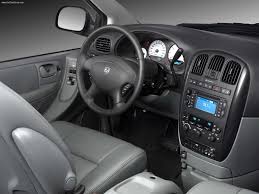
Dodge Grand Caravan Interior

Dodge Grand Caravan Engine Detail

Generation I Caravans used the Chrysler S platform, which was closely related to the K-cars, Dodge Aries and Plymouth Reliant. There were three trim levels on the Generation I Caravan: base, mainstream SE, and upscale LE. The Caravan was on Car and Driver magazine's Ten Best list for 1985. All trim levels were also available in a slightly longer body, called the Grand Caravan, which allowed significantly more cargo space behind the rear seat. Most of the interior trim, controls, and instrumentation were borrowed from the K-car, leading to a very "car-like" interior look and feel. Coupled with the lower floor that the front wheel drive design allowed, this helped to make the Caravan seem more like a large station wagon than a van, enticing many buyers who would not have otherwise been comfortable driving a van.From 1991 through 1995, the Caravan used the Chrysler AS platform; they were the last minivans derived from the Chrysler K platform.With Generation III, the Chrysler minivans long � and short � wheelbase models, three � and four-door configurations, and eight different powertrains � including electric and compressed natural gas, on a single, flexible platform.The redesigned Dodge Caravan and Chrysler Town&Country were released in August 2000. The release was part of a promotional tie-in with Nabisco, which unveiled their new "Mini Oreos" inside the van during the unveiling. The first vans rolled off the line at the Windsor Assembly Plant on July 24. Beginning with Generation V in model year 2008, Chrysler only made the long wheelbase Grand Caravan. This van debuted at the 2007 North American International Auto Show and had exterior styling by Ralph Gilles. A new six-speed automatic transmission became standard with the 3.8 L V6 and the new 4.0 L V6. The four-speed automatic transmission is standard with the 3.3 L Flex-Fuel V6.

Dodge Grand Caravan Luxury Interior

Dodge Grand Caravan Large Baggage
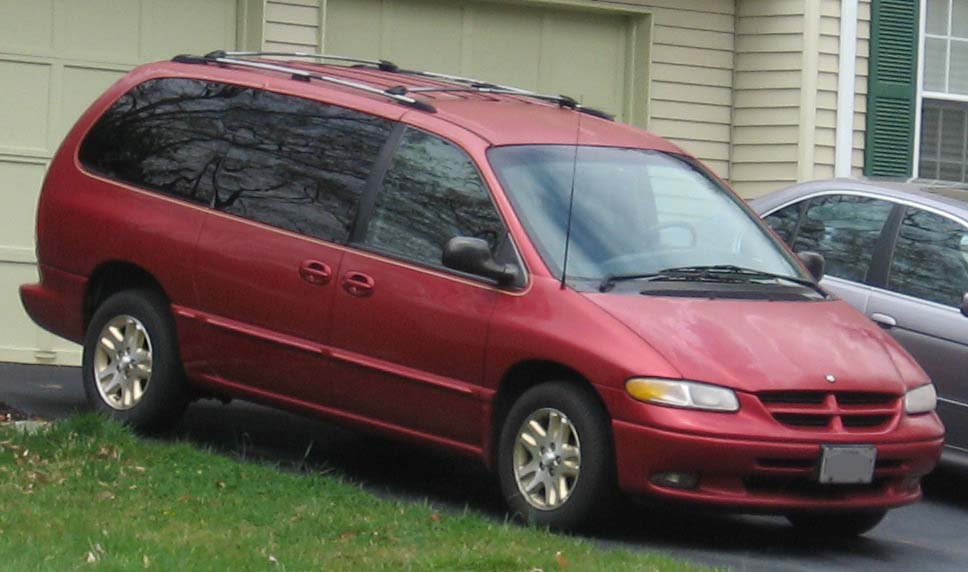
Major changes were made for the 2011 model year, both in styling and functionality. The suspension was heavily re-tuned, with both Dodge and Chrysler minivans gaining a larger front sway bar and new rear sway bar, increased rear roll center height, adjusted spring rates, a new steering gear, a revised front static camber setting, and lowered ride height. All three of the former engine choices were replaced by the new Pentastar 3.6-liter V6 with six-speed automatic transmission, now the sole powertrain choice for all models. Interior trim was restyled on both vans, in addition to major exterior revisions highlighted by the new "double-crosshair" grille on the Grand Caravan and a new chrome grille for the Town & Country. Other changes included extra sound insulation, acoustic glass, new seats, softer-touch surfaces, new LED ambient lighting and center console,and halogen projector headlamps with LED accents. The Chrysler models were adjusted so that instead of competing against equivalent Dodge trim levels, they were above Dodge in trim and features. In the US National Highway Traffic Administration (NHTSA)'s NCAP crash testing the 2010 Dodge Grand Caravan achieved a five star (top safety) rating in several categories. Both the 3.8 L and 4.0 L engines were paired with Chrysler's 62TE 6 speed automatic transmission with variable line pressure (VLP) technology (See Ultradrive#62TE). In Canada (2008�2010) the 3.3 L was the standard engine across the range, combined with the 4-speed 41TE automatic transmission. The 4.0 L engine and six speed combination was available as an option on only the top of the range SXT models. In 2011 the six speed transmission was specified as standard on the Town & Country.

Super Sport Car Evolution