Thursday, September 24, 2009
Lenovo Ophone: rivalul lui iPhone

ITG xpPhone

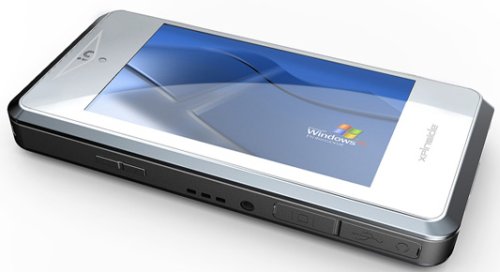
Telefoanele celulare au ajuns adevarate computere mobile, iar xpPhone, care poate fi admirat �n imaginile de mai jos, este ultimul din aceasta serie. ITG, compania chineza care a dezvoltat slider-ul, ce ruleaza sistemul de operare Windows XP, a anuntat ca telefonul poate fi comandat de doritori, informeaza dvice.com. Pretul sau nu a fost facut public, deocamdata.
Handsetul are un display cu touchscreen de 4.8 inci si rezolutia de 800x480, fiind astfel aproape la fel de mare ca o rama foto digitala. Capacitatea de stocare este de 38GB. Compania chineza "s-a dat peste cap" �n �ncercarea de a comasa c�t mai multe �n acest telefon ce utilizeaza un procesor AMD Super Mobile. Printre acestea se numara Wi-Fi, Bluetooth, iesirea VGA, dar si posibilitatea de a fi folosit pe post de hard disk extern.
Problema ar fi greutatea cam mare a device-ului, care se apropie de o jumatate de kilogram. Adica va cam trage de buzunarul pantalonilor. Acumulatorul are o autonomie de 5 ore, potrivit producatorului. Daca ar fi mai usor, si ar rula Windows 7, acesta ar putea fi �nsa telefonul inteligent al viitorului.
Configuration
� CPU: AMD Super Mobile CPU
� Memory: 512M/1G
� SSD: 8G/16G/32G/64G
� HDD: 30G/60G/80G/120G
� LCD: 4.8' TFT Touch-screen LCD 800*480
� Operating System: Microsoft Windows XP
� Network: GSM/GPRS/EDGE/WCDMA (HSDPA/HSUPA)
� CDMA/CDMA2000 1X/CDMA1X EVDO,TD-SCDMA,TD-HSDPA
� Wireless: WiFi 802.11b/g,WiMax(optional),Buletooth,Stand-alone GPS
� Camera Specifications:CMOS, 300k/1.3 Million
� Ports: 1 x earphone jack, 1 x microphone jack,Docking Connector (includes VGA output signal ), 1 x USB 2.0, SIM Slot
� Battery: Removable Lithium-ion
� Talk time: about 5 hours,Stand by time: about 5 days
� Real life: about 7 hours(Standard), about 12 hours(Large)
� Talk time: Standby time,Operation time may vary depending different usage.
� Weight: 400g (include battery)
Saturday, September 19, 2009
Nokia Erdos

Believe it or not, Nokia keeps doing their expensive 8800 series. And believe it or not, they still run the dreadful Symbian S60. This is the next model, the Nokia Erdos, carved out of a single piece of stainless steel.
The 3G Erdos has a 2.4-inch OLED 320 x 240 display that remains invisible under mirrored glass until you turn it on. It also has Wi-Fi, GPS, stereo Bluetooth, 8GB of internal memory, and a 5 megapixel autofocus camera with Carl Zeiss lens, dual LED flash, and video recording capability.
Friday, September 11, 2009
Nokia Twist

I don't know about you, but I have always wanted to twist a phone into different positions. Er, did I say phone? Verizon's new $100 Nokia 7705 Twist won't even cost too much to do it.

Besides having a swiveling screen that opens to a full QWERTY keypad and a handy mirror on the back for checking food in your teeth, the square sized phone is pretty much your standard messaging phone though it does have a 3 megapixel camera (that can also record video). You will want to pick up a MicroSD card to store anything since it only has 256 MB of internal memory. It will pack the standard Verizon services including VZ Navigator, V CAST Music and V CAST Video. With EV-DO Rev. 0 speeds should be decent, but not blazing.

Friday, September 4, 2009
Sony Ericsson Xperia Pureness

Points for being different, I guess. Sony Ericsson's Xperia Pureness spruces up an otherwise ordinary phone with an extraordinary, clear LCD.
We have no details other than its "talk, text, time" theme and what we can('t) see: the Xperia is a no-frills candybar with a transparent, monochrome LCD screen.
You'll notice that in the video, the black buttons aren't even labeled with numbers. I actually prefer this absurdly minimal design to the still product render, however impractical, as it takes a phone designed purely to be striking and makes it even more striking.
Wednesday, September 2, 2009
Sony Ericsson Xperia X2 Official

Hard to believe Sony Ericsson's Xperia X2 wasn't official until this moment�honestly, we care more about the awesome the Android-powered X3 at this point�but Sony just made it real, it running Windows Mobile 6.5.
The hard specs: 3.2-inch WVGA touchscreen, 8.1MP camera, HSPA, Wi-Fi, GPS, TV-out. And oh yes, the panels custom interface on top of Windows Mobile is back, though refined, as we saw earlier. It'll be out later this year for 699 euros, so um, not cheap if it ever comes to the US.
Thursday, August 27, 2009
Nokia N900 Maemo

There's been a lot of talk about the N900 Maemo "tablet", especially about how it looks suspiciously like a phone. And even if Nokia (inexplicably) plays it down in their now-official announcement, that's exactly what it is: an amazing-looking handset.
Beyond that Maemo Linux OS we've been begging Nokia to bring to phones for the better part of a year, the N900 is, as Nokia handsets tend to be nowadays, a healthy piece of hardware. It's got a 3.5-inch resistive WVGA screen, slide-out QWERTY keyboard, an ARM Cortex 8 processor, and 256MB of RAM, and is crammed with 32GB of internal memory with a MicroSD slot for expansion, GPS, an FM transmitter, a 5-megapixel camera, a 3.5mm jack and a gajillion-band cellular radio, including, crucially, support for T-Mobile's 1700MHz slice of the spectrum.
Since Maemo is based on Debian Linux, the app selection should be interesting. Stock, the N900 will ship with Firefox (Fennec, I assume) and Flash support and a panel-based multitasking system, as well as tight VoIP integration and near-total video and audio codec support.
Maemo is fresh in a phone context, but it looks fantastic here�I see bits of Pre, pieces of Android and a whole lot of Nokia freshness. More than anything, I really just want to touch this thing. Try getting that excited about an N97, sometime. The N900 will launch "select markets"�all of which sadly seem to trade in Euros�for �500, or about $700.
Friday, August 7, 2009
IBM SNAzzy Knows Your Circle of Friends Better Than You Do

That heavy breathing you hear on the phone sometimes? It's IBM.
Specifically, it's the IBM Social Network Analysis for Telecom Business Intelligence data mining tool, or SNAzzy for short, and it knows all about who called who and for how long on the network of "one of the largest mobile operators in the world."
The purpose of this snazzy snooping, as explained by Big Blue researchers, is to spot "churners" on a cell network who might influence their circle of friends with "profit-threatening behavior." The reasoning goes that when one person ditches a cell network for greener pastures, they can inspire their friends to do the same. Enter SNAzzy, which can apparently recognize this behavior, alert the carrier, and allow them to swoop in with retention materials and keep their remaining customers happy. It does this by mapping out call behavior, time, and a bunch of other heavy metrics that seem to be copy/pasted right out of the NSA.
Better still (I say sarcastically), IBM is already eying larger deployments beyond telecoms into areas like social networks. Personally, I can't wait to see what my Facebook picture stalking looks like when presented to me in graph form.
Wednesday, August 5, 2009
LG HiFi cellphone transforms from handset to headphones
LG announced its Design the Future competition winners, and among them was this Hi-Fi cellphone that doubles as a pair of headphones. Folded up, it's said to fit into a slot in a laptop, or maybe even your pocket. Unfolded, and it gives you a pair of stereo headphones.
We're wondering where the mic is on those headphones � but we're sure that pesky detail ( and a few others) can be worked out if this design concept ever finds its way to the real world.
Tuesday, July 14, 2009
New LG Chocolate Shown on Video

Well, there goes the rest of LG's annoyingly gradual tease campaign: the next generation LG Chocolate BL40, with a 4-inch, 800x344 (21:9!), multitouch screen has been revealed in full in a leaked promotional video.
On top of the display, we can see a few more of the rumored specs confirmed: LG's in-house Active Flash UI, Wi-Fi, 7.2mbps HSDPA, a-gps, and a 5mp camera with flash all make appearances, and we get a healthy look at the phone's software, glimpsing the onscreen keyboard, browser, Google Maps app, card-based contact system, scheduler and email app.
In terms of usability, the ultrawide screen is the obvious wildcard, but the OS will be a equally�if not more�important factor. In combination with the promise of a multitouch glass capacitive touchscreen, the simulated screen images in the video inspire confidence, exhibiting smoothness, thoughful navigation and an eye-and-finger-friendly UI in most places, although without a proper smartphone OS, the Chocolate will still be a dumbphone at heart.
As for when we'll actually find out if this thing has the wherewithal to match up with its ostentatious wackiness, all we get is a vague "coming soon," which according to previous reports, means August�though it's not clear if that's the official unveiling�which is pretty much ruined now�or the date of actual availability.
Friday, July 3, 2009
Samsung announces first cellphone with night vision video
Samsung, the company that feels good about brand-spamming its customers with untold hundreds of barely-different cellphones, finally differentiates itself with the first cellphone equipped with a night vision video camera. Samsung says the SCH-W760's infrared camera is perfect for users to videoconference in the dark.
We weren't aware the kids these days are calling those nocturnal interactions "videoconferencing," but hey, we do our best to keep up. Like you see in the pic above, this technology might be great for shooting videos of owls, and other night creatures.
Other than that 3-megapixel night shooting trick, this 3G slider is fairly conventional, using a 2.8-inch AMOLED display with 240x400 resolution. Available in Korea first, Samsung isn't saying if it will find its way Stateside, but we're guessing this see-in-the-dark cellphone tech will soon be widely available.
Thursday, June 25, 2009
Behind The Scenes With Philips X810
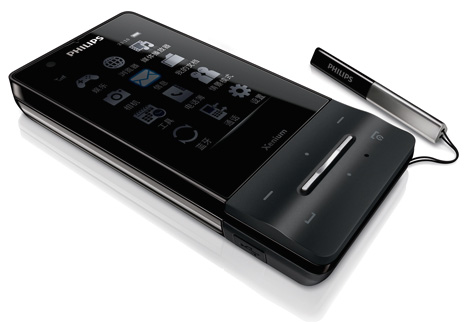
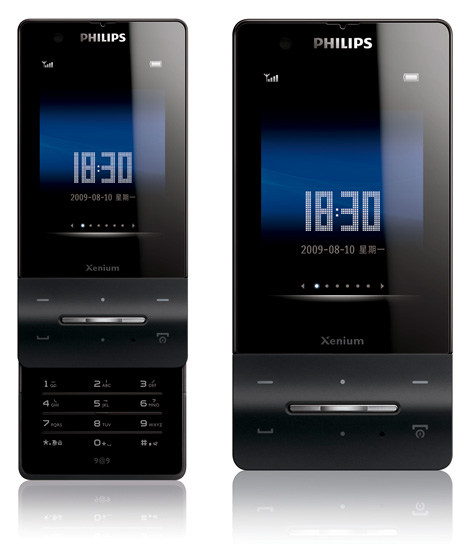
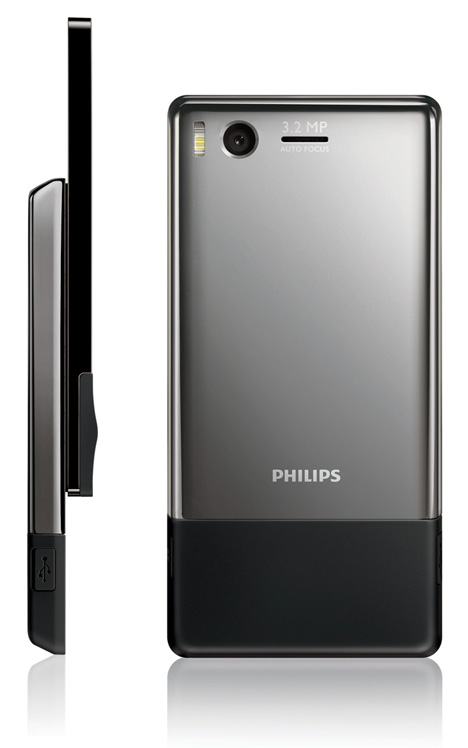
Ardent fans know that YD rarely covers real-live phones and lets the tech sites do the honors. On the rare occasions that we do cover them, it�s coz we try and bring out a different angle to the phone, like the design angle. I had the opportunity to interact with the Philips X810 designer Trent Stoddard and understand his sensibilities in designing this phone. The task at hand was to design a phone for the Chinese market, for a user who needed a large range of functions (like handwriting recognition) plus reflect luxury and individuality.
Relying on his trademark straightforward and honest design approach, Trent employed contrasting materials like stainless steel and rubber to scrounge out a �minimal yet iconic� design.
Inspiration is an integral part of design and Trent was inspired by bars of gold and silver and even organic elements like waves and sand dunes. Apparently the wave form at the answer keys acts to protect the screen when the phone is placed face-down. The detailing on the phone was inspired by fashion accessories like the buckles on handbags and shoes.
I know the techie in you wants to know the specs, so feast on it here.
BTW, care to tell me what inspires you designers when you sit on the drawing board? Leave me your comments; I�m sure they will inspire all of us!
Designer: Trent Stoddard for Philips


Full HD Video Recording Coming to Cellphones

Most cellphones can't do 720p yet but Omnivision is already sampling a new 1.75-micron sensor that will allow slim handsets to record at 30 frames per second in Full HD, 1080p. According to them, it gets even better:
The OV5653, based on the company's latest 1.75-micron OmniBSI technology, delivers low-light sensitivity of 1400mV/(lux-sec) � a 40% improvement over frontside illumination technology � and a two times improvement in signal-to-noise ratio (70lux), according to OmniVision. The OV5653 enables 720p recording at 60 fps and full HD 1080p at 30 fps, making it ideal for both 5-megapixel DSCs and DVs, according to the company.
So not only they have achieved 720p 60fps and 1080p at 30fps, but their OV5653 and OV5650 parts also have better sensibility and two times less signal-to-noise ratio than previous sensors. Not bad at all.
Wednesday, June 24, 2009
HTC Firestone

We saw a rough mockup of the HTC Firestone, the successor of the HTC Touch HDthat may appear on August. The specs of this Windows Mobile 6.5 look sweet:
� Phone: GSM850, GSM900, GSM1800, GSM1900, UMTS900, UMTS2100.
� GSM and HSDPA connectivity.
� Windows Mobile 6.5.
� Screen 3.6 inch WVGA touchscreen display transflective TFT, 65,536 colors.
� CPU: speed 600Mhz Qualcomm 8250 processor.
� Memory: 256MB RAM and 512 MB ROM.
� Slot: Micro SD.
� Bluetooth: Bluetooth 2.0 + EDR.
� Wireless LAN: 802.11b, 802.11g.
� AGPS.
� Gyro Sensor.
� Headphones: 3.5mm.
� Main Camera: 8 million pixels
Wednesday, June 17, 2009
Samsung's Galaxy i7500 Android Haptic Smartphone

The Galaxy i7500�Samsung's Android handset�is one of the first major, advanced smartphones to feature haptic feedback. PCWorld managed to get their hands on one and report back with their first impressions.
Samsung's Galaxy is a 11.9 millimeter-slim handset that features a 3.2-inch AMOLED touchscreen and 5-megapixel camera, and also comes equipped with GPS, Wi-Fi and and WCDMA support. Even more, the phone calls attention to the haptic feedback on its virtual keyboard, which is a first for a major touchscreen smartphone.
Because the AMOLED screen reportedly draws less power than the iPhone's TFT-LCD screens do, the Galaxy apparently has a longer battery life, making this�coupled with the haptic feedback�more mainstream-consumer friendly for those who have yet to purchase a smartphone. Although pricing and release dates are not finalized, the Galaxy will supposedly be available in Europe by the end of this month, and the rest of the world in the second half of 2009.
Tuesday, June 16, 2009
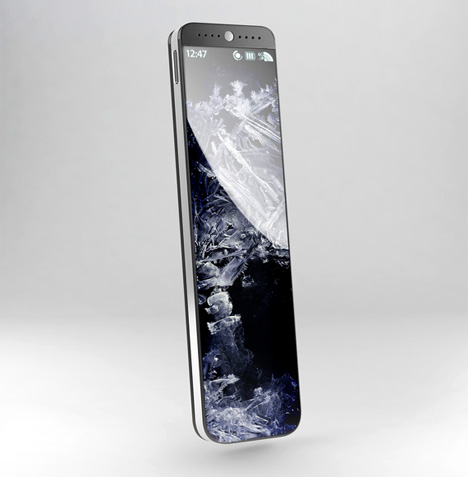
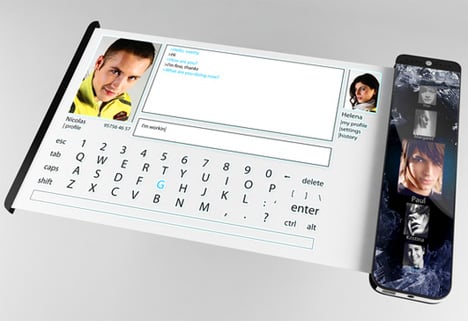
Mobile Script Phone Needs No Batteries
Yay! It�s been awhile since we�ve posted a mobile phone concept that promises to do everything under the sun in the thinnest form factor. I was getting withdrawal symptoms. The Mobile Script phone explores what functions any contemporary mobile device should have; internet access, documents on the go, games, communication, and mobility.
It has 2 touch screens, one in a traditional candy bar style format, the other a flexible OLED that stiffens with a low voltage charge when you unfurl it. This layout enables maximum real estate when watching movies or editing documents when you need it.
Okay if that wasn�t enough, there�s more futurist fantasms. You don�t need to charge it, yes you heard right. The case is covered in a photo sensitive nano material that converts sun light into energy. Oh my!
You know what? I like it.
Designer: Aleksandr Mukomelov


Nokia E72 And 5530 XpressMusic Are Now Official
After "leaking" a promotional video over the weekend Nokia have officially unveiled the E72 - their new QWERTY smartphone followup to the fantastic E71- at the Connection 09 event in Singapore.
Compared to its none-too-old brother, the E72 will see its camera bumped up to 5 megapixels along with the addition of an integrated compass, an optical navigation key (not unlike the BlackBerry Gemini's) and sensibly a 3.5mm headphone jack. Nokia say the S60 handset features a "desktop like email experience" and will begin shipping third quarter of 2009 for $485 without contract.
Also revealed was the 5530 XpressMusic - essentially a smaller, cheaper 5800 - featuring a 2.9 inch widescreen display, 3.2 megapixel camera with LED flash and a 4GB memory card. The GSM/EDGE phone doesn't use 3G but can at least connect via wifi; it will also be available third quarter of 2009 for around $275 unsubsidized.
Samsung Omnia II Has Biggest Ever Phone AMOLED Display
![]()
All-in-one Redefined: Omnia II (I8000)
The Omnia II is designed for the smartphone user who demands an enhanced and convenient multimedia experience featuring Windows Mobile 6.1 Professional.
Featuring the world's largest 3.7-inch AMOLED display with crystal-clear WVGA resolution, the Omnia II offers unbeatable screen clarity, even under the day light.
Complete with larger icons and a simpler structure, Omnia II's user interface has been deeply customized to provide touch-optimized usability. Also, innovative TouchWiz 2.0 User Interface and 3D effects make enjoying multimedia and multi tasking convenient and fun. Advanced R Touch (Resistive Touch) enables faster, more accurate touch response for a touch experience that's 100% user friendly.
The much enhanced display and user interface make it even more pleasurable to enjoy the rich multimedia functions of the Omnia II, including its DVD-like(480p) video recording/playback, smooth internet browsing as well as interactive 3D games. Users can also access and download content speedily while on the move thanks to the Omnia II's HSUPA 5.76Mbps, HSDPA 7.2Mbps and Wi-Fi capabilities. Generous memory up to 48GB lets users store more of their favorite content for on-the-go access.
Omnia II (I8000) Specification
Network: HSDPA 7.2 Mbps / HSUPA 5.76Mbps
EDGE/GPRS 850 / 900 / 1800 / 1900MHz
UMTS 900 / 1900 / 2100MHz
Display: 65K WVGA AMOLED Display (3.7", 480 x 800)
Advanced R-type Touch Screen
OS: Windows Mobile 6.1 Professional
Camera: 5 Megapixel CMOS / Auto-Focus /
Dual Power LED / Face Detection / Smile Shot
Mobile Blogging / Geo Tagging / Photo Editor
Audio: Audio Format Support (MP3, AAC, AAC+, WMA)
WMDRM, OMA DRM 2.1 / Find Music (Music Recognition)
Bluetooth� Stereo Headset (A2DP)
FM Radio with RDS / 3.5 earjack
Video: Video Format Support (DivX, XviD, H.263,
H.264, WMV9, MPEG4)
Video Recording & Playing (30fps@ D1(720x480))
Video Editing (Trim video, Audio dubbing,
Live dubbing, Add subtitle)
Value Added: A-GPS with Navigation (3D Map) / LBS
TouchWiz 2.0 UI with Mobile Widget / 3D Media Gate
Multi-task manager / 3D Interactive Games
Connectivity:Bluetooth� v 2.0 / USB 2.0 / Wi-Fi
Memory: Internal Memory : 2GB/8GB/16GB
External Memory : microSDHC� (up to 32GB)
Size: 118 x 60 x 11.9 mm
Battery: Talk time : Up to 10 hours (3G)
Standby time : Up to 430 hours (3G)
Sunday, June 14, 2009
Samsung Louvre Might Become Omnia Pro At Launch
BGR is reporting today that the well-known AMOLED-equipped Samsung Omnia Promight be linked to the recently unearthed "Louvre B7610." By the way, "linked" in this case means "the exact same thing."
Why the subterfuge? No idea, but what today's news does bring us are a slew of updated specs for the Omnia Pro/Louvre, due out sometime in September or October.
* 3.5-inch AMOLED resistive touchscreen display w/ WVGA resolution
* 800MHz processor
* 5.1 megapixel camera with auto-focus and LED flash
* Sliding QWERTY keypad
* 2 UIs (Pro & Media)
* TV-OUT
* 3.5mm headphone jack
* MicroUSB
* Divx/WMV/H.264 accelerations
* GPS/WIFI/HSDPA/HSUPA/Bluetooth
* FM Radio
* DNLA support
* 1GB internal memory with microSDHC up to 32GB
* 1500mAh battery
Louvre? Omnia Pro? Louvre Pro? Who knows. It's a slick phone with a robust set of features and a presumably sharp little touchscreen. We'll definitely know more toward the end of the summer.
Friday, June 12, 2009
Smartphone Buyers Guide: The Best of the Best

As the dust settles from the last two weeks of mobile madness, one question remains unanswered: Which of the new generation of smartphones should you actually buy? We've collected everything you need to know.
We've selected the five phones that most feel like modern handsets to us�the iPhone 3G, iPhone 3G S, the Palm Pre, the HTC Magic (or, as we soon expect, the T-Mobile G2) and the BlackBerry Storm�and broken them down by hardware, software and cost. This is a guide in the strictest sense, meaning we aren't declaring winners or losers, just giving you the information you need to make your own choice. So! On with the matrices.
Phones' hardware specs tend to dominate carriers' marketing, but in many cases they just don't mean much, with a few exceptions: screens, storage, graphics performance and input.
The iPhones and Pre hold a sizable advantage in the screen department, trumping the G2, which doesn't have multitouch, and the Storm, which has an ill-conceived pseudo-multitouch clickscreen that left most reviewers at best underwhelmed, and at worst downright frustrated.
In terms of storage, our phones take two fundamentally different approaches. The iPhone and Pre include healthy amounts of nonremovable storage�in the case of the iPhone 3G S, up to 32GB�which makes sense: if we're going to use our phones as they're marketed (as multimedia devices), we need space. The G2, like the G1 before it, depends on a removable microSD card for file storage, since its inbuilt memory is measured in megabytes. So does the Storm. This is fine if the carrier bundles the handset with a capacious card; Verizon is good about this. T-Mobile, on the other hand, shipped the G1 with a pitifully small 1GB card, so we'll just have to hope they're more generous with the G2.
Technical 3D ability is actually fairly uniform across this hardware, with the exception of the iPhone 3G S, which is, in this area, a next-gen product. Only Apple and HTC, though, give developers any meaningful kind of access to their handsets' graphics accelerators, meaning the G2 and iPhones (particularly the bulked-up 3G S) will be the sole options for would-be gamers. And of the two platforms, iPhone OS has amassed plenty of serious gaming titles, while Android, let's be honest, hasn't.
The Pre is an obvious standout in that it has a hardware keyboard in addition to its touchscreen. The hardware QWERTY/onscreen keyboard debate is all about personal preference, so whether this is a boon or a burden is up to you. Typing on a screen is an acquired skill�but much more so on the Storm than the iPhone or G2.
Battery life would seem to be a valuable metric; it's not. The differences in capacity and claimed endurance don't really matter much, since realistically, they all need to be charged nightly.
Note: the Storm is due a minor hardware refresh, possibly quite soon. The main change, it's been rumored, is a different touchscreen.
The greatest hardware in the world couldn't save a phone with shitty software, and your handset's OS is the single largest determining factor in how you'll enjoy your phone. We've explored the differences between the major smartphone platforms at length here, and there's no point getting too far into the specific differences right now.
To summarize: iPhone OS claims advantages in ease of use, its burgeoning App Store, and a respectable core feature set, but falters on multitasking and its lack of ability to install unsanctioned apps. The Pre's WebOS is extremely slick and friendly to multitasking, but its App Catalog is light on content, and its development SDK is somewhat restrictive. Android and BlackBerry OS are both more laissez-faire, letting users install apps from whatever source they choose. Neither of their app stores is spectacular, but Android's is markedly less anemic. More on app stores here.

Carrier preferences will often override prices, but here they are anyway. The Pre and G2 are the most economic options, and the Storm roughly ties the 3G S as the most expensive. (It's easy to underestimate how much a small monthly cost difference can add up over two years.) But again, carrier loyalty (or more likely, disloyalty) and coverage quality is as important as cost. If Sprint's killing your Pre buzz, it could be worth waiting until next year, when Verizon is rumored to pick it up. Likewise, if T-Mobile coverage in your area is patchy, don't worry: by the time T-Mobile actually offers the G2, we'll probably have at least another functionally identical handset lined up for release elsewhere.
So there you have it: everything you need to know about the latest crop of consumer smartphones. Go forth, and be gouged.