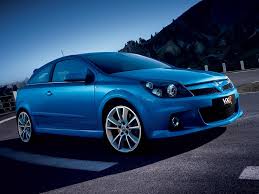
Vauxhall Astra, 2010


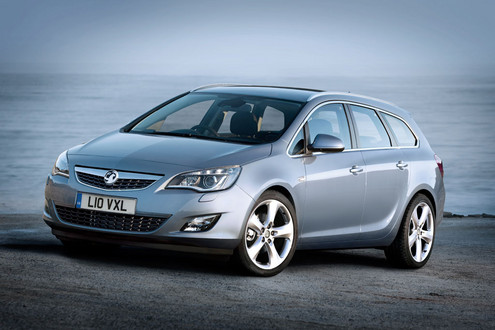
Launched at the 2009 Frankfurt Motor Show, the all-new Vauxhall Astra is poised to raise the bar for compact cars sold in the UK, with a combination of stylish design, class-leading dynamics, ultra-efficient powertrains and upscale quality.
Upmarket design, quality materials and clever packaging define new Vauxhall Astra's cabin
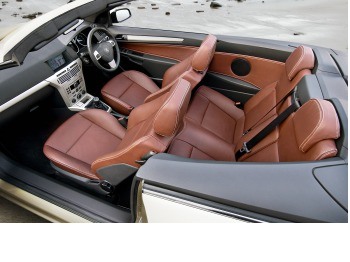
Echoing the flowing forms of its bodywork, the new Vauxhall Astra's interior marks a major shift towards premium design and quality in the compact sector. It employs the recurring wing and blade motifs that were first introduced in the Insignia and are now used in a fresh and innovative way.
Ambient lighting enhances the feeling of quality in the cabin, with lighting points framing the gearshift surround, the area above the centre console and within the door handle recesses, depending on trim level.
Unparalleled in this sector is the Astra's raft of clever cabin storage solutions, some of which have even been patented. Rather than focusing on the compartment size alone, the Astra's cabin is full of bespoke storage areas designed specifically for the 20 most common items buyers have been found to carry in their car, from an MP3 player to a 1.5-litre drinks bottle.
Efficient, yet powerful, Vauxhall Astra's engines are low on CO2 but high on power
The new Vauxhall Astra will be available with a range of eight engines, ranging from 87PS to 180PS, all of which offer impressive efficiency and an overall cut in emissions of 13.3 per cent compared with the previous Astra range.
Diesel engines are expected to represent almost half of all Vauxhall Astra sales, and will range from a 1.7-litre producing 110PS to a 2.0-litre generating 160PS, but will never emit more than 129g/km when fitted with a manual transmission.
Crucially, there will be an important ecoFLEX model, equipped with a 95PS 1.3 CDTi available in Spring 2010. Fitted with this engine, the ecoFLEX will achieve 109g/km, while retaining driveability and refinement.
There will also be five petrol engines available, ranging from an 87PS 1.4-litre to a 180PS 1.6-litre Turbo. Included in this line up will be a new 1.4-litre turbocharged engine, producing 140PS, replacing the 1.8-litre motor used in the previous range. This new powertrain perfectly illustrates Vauxhall's engine downsizing philosophy which provides drivers with all the performance of a larger capacity engine, but with far fewer emissions.
Innovative Watt's link rear axle equals fine dynamics and superior packaging
The new Astra's front and rear tracks have been increased by 56mm and 70mm respectively, while its wheelbase has been increased by 71mm, the cumulative effect being improved handling and ride quality, as well as more space and comfort for occupants.
Continuing Vauxhall's trend for innovation, its engineers have combined the size, weight and efficiency benefits of a compound crank rear axle with a cleverly positioned Watt's link, which helps support lateral forces during cornering.
Complementing this system is a new version of Vauxhall's FlexRide adaptive damping system, which adjusts the suspension character automatically depending on the driver's needs, while also offering three programmable damper settings.
Finally, a core body structure, stiffer than that of the outgoing car, enhances the new Vauxhall Astra's ride and handling still further, while also reducing noise and vibration inside the cabin.
EXTERIOR DESIGN
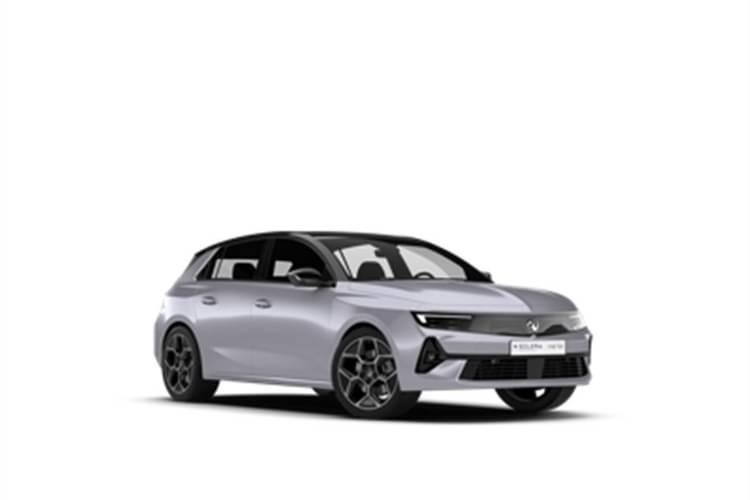
The next generation Vauxhall Astra brings a new look to the compact class, with its strong coupe-like lines, elegant surfaces and its unique interpretation of Vauxhall's design language.
At 4.42 metres the new Vauxhall Astra grows by some 17 centimetres compared with its predecessor, positioning itself right between the Corsa (4.0 metres) and the Insignia (4.83 metres). The wheelbase increases by 71 millimetres, improving rear passenger space and adding comfort for all occupants.
A slim but low trapezoidal grille incorporating the latest Griffin logo dominates the front of the car, while the familiar blade sculpted into the side panels of the new Astra sweeps upward and visually connects with the side window-line, balancing the car's proportions.
Eagle eye-shaped headlamps, that encompass the prominent wing-shaped daytime running lights, blend with a graceful flowing silhouette that connects the new car's muscular shoulder lines with its distinctive rear hatch area.
The raked A-pillars flow into a diving bonnet-line, leading to narrow headlamp units, housing lights mounted on a dark inner surface, which add depth and a three-dimensional quality. The signature wing graphic on the daylight running lights sits inside sharp, eagle-eye headlamps.
The front indicator lights are now located separately in the front bumper recesses and are accented with chrome, while the neatly shaped repeater units are set into the upper front wings.
New body design sees reappearance of the 'Blade'
A crisply-executed soft shoulder line runs along the side of the body into the sculpted rear light units. Above these, the car's windows on most models are framed by a matt chrome surround, unique in the compact class.
Coupe styling with hatchback functionality
The new Vauxhall Astra's side view hints at a sleek, almost coup�-like look, which belies the Astra's generous passenger accommodation, suitable for five adults.
Viewed from behind, the shoulder line extends along the side of the body into the sculpted rear lights in one, continuous flow. Designers achieved the muscular rear proportions by creating strong rear body shoulders, combined with a wraparound C-panel and tapered rear window.
The tail light units are set apart to accentuate the width of the vehicle's stance, and viewed at night, their double wing graphic creates an instantly recognisable appearance. This is enhanced by an upper rear spoiler, which also serves to improve the car's aerodynamics.
INTERIOR DESIGN
Echoing the flowing forms of its bodywork, the new Astra's interior marks a major shift towards premium design and quality in the UK's compact sector, and continues Vauxhall's design evolution which started five years ago with the previous Astra, followed by a further step-change last year with the launch of the Insignia.
The Vauxhall Astra's interior employs the recurring wing and blade motifs that were first introduced in the Insignia and are now used in a fresh and innovative way. The blade theme is expressed in details like the gooseneck shape of the door grab handles and the trim for the gearshift moulding and steering wheel.
Storage and packaging
Using feedback from a customer survey, the interior team first compiled a list of the 20 most common items stored in cars: pens, coins, a flashlight, a road atlas, a parking disc, sunglasses, a wallet, paper tissues, a mobile phone, CDs, sweets, cups, magazines, newspapers, fruit, a first aid kit, a jacket, a 1.5/1.0/0.5-litre drinks bottle. And, of course, gloves.
Next, they noted where owners wanted to keep the items and looked for practical solutions. They found that car companies tended to focus on storage size alone, and that led to irritating problems, such as CDs being stored in the centre console, preventing the arm rest from being fully dropped down.
This painstaking attention to detail has resulted in a variety of simple, but effective storage solutions. A hard-shelled sunglass case has been inserted above the door opening on the driver's side; coin slots and pen holders are moulded into the inside edge of the glove box lid; and the glove box itself has two removable compartments, while a second mini-glove box has been added just below the light switch.
Further storage innovation appears in the centre console, which can accommodate nine CD cases, as well as having a small storage area and an insert for two cup holders. There's also the option of an under-seat drawer beneath the passenger seat which is big enough to hold a pair of shoes. Rear passengers also benefit, with a 12-volt connection available for MP3 players, in addition to space for drinks bottles.
The new Vauxhall Astra's boot also came under close scrutiny. A recess was created in the side of the boot to accept either a first aid kit or warning triangle, while a patented FlexFloor was devised to offer further under-floor storage, while the floor itself can be fixed at different heights.
And those gloves? According to the survey, most owners don't keep them in the glovebox at all. They usually get thrown in the door's side pocket, next to the ice scraper.
Materials and quality
The quality of the materials used in the new Vauxhall Astra can be seen in areas like the grained surfaces, the textured panels, the chrome trim elements and the feel and operation of the buttons and switches. In addition, all the Astra's main surfaces are textured with upscale materials and top grains to give a strong, premium feel.
POWERTRAINS
Boasting an eight-engine line-up from launch, the new Vauxhall Astra range will be on average 13.3 per cent cleaner and more economical than that of its predecessor, without denting the performance of any specific models. A ninth engine will be available in Spring 2010 and will power the first ecoFLEX model in the range, its 1.3 CDTi engine producing 95PS and achieving combined emissions of just 109g/km.
Downsizing has been key to achieving lower emissions and fuel consumption, while a clear focus on high specific outputs and low-end torque values have ensured that strong performance is retained across the range.
The new 1.4-litre Turbo is a perfect example of this philosophy, producing 140PS and 139g/km combined C02 emissions, compared with the outgoing 1.8-litre engine, which produces the same power but with an extra 33g/km.
Sitting below the 1.4 Turbo in the petrol engine range are two normally aspirated 1.4-litre units producing 87 and 100PS respectively. Complementing these engines are two 1.6s: an un-blown unit with 115PS and a turbocharged version with 180PS.
The CDTi diesel line-up includes two 1.7-litre engines and one 2.0-litre unit, all of which feature common rail with multiple fuel injection and are equipped with particulate filters (DPFs). These range in power from 110PS for the lowest power 1.7 CDTi to 160PS for the 2.0 CDTi.
All Vauxhall Astra engines meet Euro 5 emissions standards and each of the four-cylinder units is mounted transversely and features an aluminium cylinder head, with dual overhead camshafts operating four valves per cylinder.
DRIVING DYNAMICS
The new Vauxhall Astra will not only feature a longer wheelbase and wider tracks for improved stability and ride comfort, but also a rear suspension system combining a compound crank with a Watt's link - the first of its type in the world - that is set to offer drivers class-leading handling and ride comfort.
The Astra's front and rear tracks have been increased by 56mm and 70mm respectively, while its wheelbase has been increased by 71mm, the cumulative effect being improved handling and ride quality, as well as more space and comfort for occupants.
Illustrating Vauxhall's commitment to developing its cars specifically for British roads and drivers, the new Vauxhall Astra has bespoke steering UK settings developed in conjunction with the Vauxhall Engineering Centre, based at GM's Millbrook Proving Ground in Bedfordshire.
And continuing Vauxhall's trend for innovation, its engineers have combined the size, weight and efficiency of its own patented compound crank rear axle layout with a cleverly positioned Watt's link, which supports lateral forces during cornering.
The FlexRide adaptive damping system, first seen in the European Car of the Year-winning Insignia and rare in the compact class, adjusts the suspension character automatically depending on drivers' needs, while also offering three programmable damper settings.
Enhancing this sophisticated system is an increase in the Astra's torsional body stiffness of 43 per cent, and of 10 per cent in bending stiffness, compared with the previous Vauxhall Astra, improving the car's handling and ride quality, as well as making a significant reduction in noise, vibration and harshness (NVH).
Advanced front suspension design and clever Watt's link at rear for superb dynamics
The Astra's new suspension layout combines MacPherson strut front suspension with a clever, newly developed compound crank rear axle with a Watt's link.
Front suspension is by MacPherson strut, with de-coupled top mountings that separate the paths of spring and damper loadings. To reduce unsprung weight and improve weight distribution, the combined strut carrier and the lower control arm are made from aluminium and the anti-roll bar is formed from hollow-section steel.
For optimum stability, the L-shaped control arm is attached through two bushings to the front sub-frame. The suspension geometry, and the tuning of the bushes, is designed to provide both lateral stiffness and longitudinal compliance for excellent handling and good ride comfort. The rearmost bushing of the L-arm is also hydraulically damped for excellent road isolation.
The Vauxhall Astra's unique compound crank/Watt's link rear suspension system has many advantages over a multi-link design, including improved packaging, greater wheel camber stiffness and less lower suspension friction. It also creates less camber loss due to body roll, while the Watt's link ensures that lateral stability is maintained.
The torsion beam of the patented compound crank axle is attached between the trailing links, about half way between the axle bush and the rear wheel. The open, U-shaped profile between the attachment points has now been lengthened and the wall thickness generally increased to provide more roll stiffness. In addition, beams with different wall thicknesses are fitted to give the required roll-steer characteristics.
The Watt's link is carried on a small cross-member attached to the underside of the car, just behind the rear wheel centre line. It comprises a short, pivoting centre link with a ball joint at each end, to which the lateral links from the wheels are bolted.
In a straight line, the set up ensures excellent stability, but during cornering it minimizes lateral deflection in the same way a modern multi-link system would do. Vauxhall's engineers estimate that the new linkage absorbs around 80 per cent of all lateral loadings on the rear suspension. In addition, the Watt's link reduces axle bush loads to allow softer bushings, which further isolate occupants from road noise and vibration.
Bespoke UK steering settings to cater for Britain's unique road infrastructure
Right from the start of the Astra's development, Vauxhall's UK engineering arm recognized that the car needed to fulfill the very specific needs of British drivers travelling on the kind of road surfaces that are not replicated anywhere else in Europe.
Connection, Assistance, Responsiveness, Isolation, and Smoothness were cited as the key fundamentals in the Astra's steering DNA, and after exhaustive testing on the notoriously demanding roads around GM's Millbrook Proving Ground in Bedfordshire, Vauxall has produced a system which provides acceptable assistance levels for a broad spectrum of drivers, while ensuring that the driver feels connected with the road at all times.
The Vauxhall Astra uses a rack and pinion steering system with speed sensitive assistance. But in order to provide drivers with more steering feedback, the system's electric motor is mounted directly on the steering rack, as opposed to the base of the steering column.
The key benefits of using an electric power steering (EPS) are well known. At low speeds, the level of power assistance is increased to minimize steering effort. At higher speeds, assistance is automatically reduced to ensure a high degree of steering feel for the driver. The second important benefit is that because it does not require an energy consuming pump, and responds directly to the amount of power needed at any speeds, fuel consumption is also reduced.
FlexRide system makes welcome return
First seen in the Insignia, and a rarity in this sector, FlexRide offers the driver three settings - Standard, Sport and Tour - while being fully and continually adaptive to changes in driving style and cornering speed. The system is offered as an option on SE, Elite and SRi models with all engines, except the normally-aspirated 1.4-litre petrol unit.
FlexRide provides electronic control on all four dampers and continuously adapts their settings within milliseconds, according to the prevailing road conditions, vehicle movements and individual driving styles, thereby enhancing driver safety.
In addition, FlexRide offers three settings that the driver can programme via dashboard buttons. In Standard mode, FlexRide continuously adapts to all driving conditions, but drivers can also opt for either Tour or Sport settings, too.
Tour mode relaxes the damper settings for a more comfortable ride and also reduces the steering effort, benefiting drivers on long journeys.
Sport mode offers a more connected driving experience: the dampers stiffen; the steering sharpens and the electronic throttle offers a swifter pedal response. To underline this effect, the instrument panel illumination changes from white to red, and if fitted, the Adaptive Forward Lighting system reacts even more quickly. Cars fitted with automatic transmission also have higher change-up points.
As a further refinement, Sport mode includes a customisation menu, where the driver can de-select the damper and steering-assistance elements.
The electronic brain behind FlexRide is the Driving Mode Control module. Using vehicle dynamics information, the DMC constantly monitors driving style and conditions, including acceleration, braking and cornering to optimise the chassis' behaviour.
Apart from a more rewarding driving experience, the FlexRide system offers safety benefits in emergency situations. For an avoidance manoeuvre in Tour mode, for example, chassis sensors convey this information to the DMC and the dampers are stiffened within a millisecond to provide maximum stability.
Electronic Parking Brake (EPB)
This easy-to-use function, which is standard on all SE, Elite and SRi models, replaces the conventional mechanical handbrake. As well as providing added convenience, the EPB also frees up valuable additional storage space in the centre console.
Instead of pulling a handbrake lever, the driver simply pulls a switch located near the gearshift. This sends an electrical signal to actuators in the rear brake calipers. The EPB can secure the car on gradients as steep as 30 per cent and is automatically disengaged when the vehicle moves off.
The EPB is combined with Hill Start Assist (HSA), which helps minimize downhill movement of the car when taking off on an uphill slope. HSA briefly maintains pressure at all four brakes to minimize the possibility of vehicle movement when the driver steps from the brake to accelerator pedal while engaging the clutch.
Braking system: Two systems depending on the performance level
The dual-circuit braking system features two brake disc combinations. The "15-inch" specification uses 276 mm ventilated front discs and 268 mm solid rear discs, clamped by single piston calipers. The "16-inch" version has 300 mm ventilated front discs and 292 mm solid rear discs with single piston calipers.
The four channel ABS (Anti-lock Braking System) is fitted as standard, together with the Electronic Brakeforce Distribution (EBD), which ensures that optimal braking force is applied on both axles for maximum stability under heavy breaking.
The Electronic Stability Control (ESC) including Traction Control (TC) is also fitted as standard across the range offering a high level of active safety. The ESC yaw sensor in the centre of the car detects movement around the vertical axis, and a sensor on the steering column measures the steering angle being applied. Inputs from these sources are then correlated with the speed of the car. The system is programmed to execute whatever actions will most effectively prevent the onset of a loss of control. Depending upon the driving situation, it is possible for braking to be applied via the ESC system to one, two or three wheels at once, or, if necessary, the electronic throttle opening is also reduced.
Other braking functions under ESC direction are:
* Cornering Brake Control (CBC) is activated when the car is braking while cornering. Brake pressure is individually varied between all four wheels in order to keep the car perfectly stable.
* Cornering Torque Control (CTC) prevents the inner wheel from slipping when cornering under acceleration. If wheel speed sensors detect the onset of any slippage, the inner wheel is slowed by applying brake pressure, thereby minimising any understeer tendency. As soon as grip is restored, the braking pressure is released.
* Electronic Drag Torque Control (EDC) prevents loss of grip if the driver steps off the throttle or downshifts too quickly.
* Brake Assist System (BAS) is designed to provide the driver with additional braking assistance in an emergency situation.
* Hydraulic Brake Fade Assist (HBFA) automatically raises braking pressure to compensate for brake fade under repeated applications of heavy braking.
* Trailer Stability Assist (TSA) is active when a Vauxhall-approved towing hitch is fitted. TSC counters any vehicle instability that may occur when towing a trailer or caravan by reducing the engine torque and applying brake pressure to selected wheels. ESC engages TSC when any oscillation from the attached trailer is transferred over the hitch point to the vehicle and detected as sufficient to cause instability.
SAFETY, INNOVATION & EQUIPMENT
Vauxhall has played a pioneering role in automotive lighting technology in recent years and its Adaptive Forward Lighting (AFL+) is now in its third generation. However, the new Vauxhall Astra will be the first compact class Vauxhall to adopt this (optional) feature, illustrating the premium nature of the car, albeit at Vauxhall's traditional value price point.
With multi-xenon headlamps, AFL+ can be specified on all new Astras, except S and Exclusiv models, as part of a Premium Forward Lighting Pack. This also includes High Beam Assist, automatic headlight-beam switching, LED daytime running lights and headlamp washers.
AFL+ includes two new functions - Town Light and Adverse Weather Light - and two improved functions - Highway Light and Country Road Light. There are a total of nine functions, each automatically engaged to suit prevailing road profiles and driving conditions:
* Dynamic Curve Light - Illuminates surface around bends; linked with Sport switch in FlexRide
* Country Road Light - Provides brighter and wider illumination of both sides of the road
* Static Cornering Light - Illuminates area up to 90 degrees to the left and right of car to aid low speed manoeuvres
* Highway Light - Automatically engages at over 60mph to provide a more intense and higher-level main beam
* Town Light - Operates between 20 and 35mph to provide a broader, less intense beam to help drivers see pedestrians at either side of the road
* Pedestrian Area Light - Activated at speeds up to 20mph in areas where drivers must exercise extreme caution, such as pedestrian areas
* Adverse Weather Light - Activated during rain or snow, the left headlamp increases in intensity to pick out lane markers, while the right beam intensity reduces from 35 to 32 Watt's to avoid blinding oncoming drivers
* High Beam Light - Provides maximum headlight beam and range, with output increasing from 35 to 38 Watt's
* Automatic headlight beam switching - senses the headlights from oncoming cars and activates dipped/full beam accordingly
Occupant safety
Occupant safety has played a major role in the new Vauxhall Astra's development, and a comprehensive set of active and passive safety systems are standard an all models.
All Vauxhall Astra variants are fitted with dual-front seat belt pre-tensioners, which provide over the shoulder and across the occupant's lap. They are pyrotechnically activated to restrain forward body movement in the event of a severe impact.
Other standard safety equipment includes two front airbags, two side airbags and a pair of roof rail-mounted airbags that cover the entire glass area between the A- and C-pillars. Three, three-point seatbelts are provided for rear seat passengers, and the front passenger-side airbag can be de-activated if the seat is occupied by a rear-facing child seat.
Whenever the airbags and pre-tensioners are deployed, a series of additional safety features is activated: the hazard warning lights come on; all doors unlock; the interior lights illuminate; and the heating/ventilation fan and fuel pump are both switched off.
The latest generation active head restraints, developed from those on the Insignia, are fitted as standard to all models, and provide enhanced protection from whiplash injuries if the car suffers a rear-end impact.
Other occupant safety features include:
* Seatbelt reminder - with audible warning. Operates on all five seating positions
* Front seat frames - with ramps to restrict occupant movement in a frontal impact
* Enhanced Pedal Release System (PRS) - in heavy frontal impacts, clutch and brake pedals are de-coupled to prevent foot and lower leg injuries
* ISOFIX child seat mounts for the outer rear seats, plus seatback-mounted top tether brackets for all rear seating positions
* Height-adjustable rear head restraints (optional for centre position)
* Adaptive brake lights - warn drivers behind by pulsing five times per second if the ABS is engaged above 20mph.
* Seatbelt reminder - with audible warning. Operates on all five seating positions
* Front seat frames - with ramps to restrict occupant movement in a frontal impact
* Enhanced Pedal Release System (PRS) - in heavy frontal impacts, clutch and brake pedals are de-coupled to prevent foot and lower leg injuries
* ISOFIX child seat mounts for the outer rear seats, plus seatback-mounted top tether brackets for all rear seating positions
* Height-adjustable rear head restraints (optional for centre position)
* Adaptive brake lights - warn drivers behind by pulsing five times per second if the ABS is engaged above 20mph.
Seat Technology
Vauxhall's target was to produce best-in-class seating for the new Astra, with special attention paid to comfort, position, range and protection during an accident.
The front seats offer the industry's best range of adjustment, with fore and aft movement extending to 280mm. The driver's seat is also adjustable for height by up to 65mm and the steering wheel can also be adjusted for reach and rake, ensuring that drivers of virtually all shapes and sizes will feel comfortable and in control.
Apart from excellent comfort and support, the new Vauxhall Astra's seats also provide a high level of safety, featuring the latest generation of active head restraints which offer protection against whiplash injuries. High strength steel in the seat frames increases rigidity, but reduces weight, saving up to three kilograms per car.
Shields in the front backrests provide protection against objects from the luggage compartment flying through the cabin, especially if the rear seat is folded down during a rear impact.
The Ergonomic Sports Seats are offered as an option across all trim levels, with either manual or powered lumbar support. The driver's seat features a six-way adjustment, a four-way adjustment of the lumbar support and an extendable seat cushion.
On SE and SRi models, the Ergonomic Sports Seats are available in leather, together with heating for the front seats. On Elite models, both these features are standard.
Flex-Fix integrated bike carrier
A unique feature in the sector is Vauxhall's innovative Flex-Fix bike carrier, which will be available as an option across the new Astra range in the near future.
The system, which is integrated with the car's rear bumper, makes transporting bikes easy and convenient, while eliminating the need to fit a rack on the car's tow hitch, or lift bikes on to a roof rack.
The FlexFix carrier can accommodate up to two bikes and slides out from the rear bumper like a drawer when a release lever near the boot's lip is pulled. Maximum weight capacity is 40kgs, and it can accept bikes with wheel sizes up to 28 inches. No fixing tools or special parts are required and, when not in use, FlexFix is pushed back to stow almost invisibly behind the bumper.