Showing posts with label IBM. Show all posts

Sunday, August 16, 2009

IBM Examining Microchips Built On DNA "Oragami" Nanostructures

via Gizmodo by Jack Loftus

From the "at least 10 years out" category of microchip fabrication comes word that IBM is working to reduce future costs and microchip sizes by using DNA.

Yes, that's correct: The building blocks of life could one day contribute to your virtual reality headshot in Halo 28: Master Chief Comes Back From the Dead for the 12th Time.

IBM's early stage research combines the DNA double helix and, unsurprisingly, nanotechnology to build frameworks for theoretically smaller and less expensive microchips.

"This is the first demonstration of using biological molecules to help with processing in the semiconductor industry," said IBM research manager Spike Narayan. "Basically, this is telling us that biological structures like DNA actually offer some very reproducible, repetitive kinds of patterns that we can actually leverage in semiconductor processes," he said.

But like I said, ten years out of more before the same genetic building blocks found in all of us are also powering the supercomputers of the future.

Tuesday, August 11, 2009

Army 2.0: G.I. Joe military tech is here now

via DVICE by CharlieWhite, via Gizmodo by

2680825150098563662elec.jpg

Did you scoff at the accelerator suits shown in the trailer for G.I. Joe: The Rise of Cobra? You shouldn't � similar technology is being developed right now by the U.S. military, and that's just the beginning of how military tech is rapidly evolving.

The U.S. has the most advanced military organization the world has ever known. And it's planning to keep that status. Already dozens of federal agencies, private contractors and intensely smart and motivated people are crafting new and sophisticated weapons that will give America the high-tech edge in warfare for years to come.

Human Universal Load Carrier


The tech: Just when we started scoffing at G.I. Joe's accelerator suit, along comes Lockheed Martin with its Human Universal Load Carrier (HULC) exoskeleton. It's a wearable robot, sensing where a soldier intends to go, and then accelerating that movement using its battery-powered titanium frame.

Replaces/Augments: Human legs. Finally, combat equipment designers can load up soldiers with even more gear, advanced weapons, and even things they're not even about to reveal to us.

Weakness? This 53-lb lower-body exoskeleton won't work miracles, but it will allow a mere mortal to accomplish nearly superhuman feats, such as climbing over a 12,000 foot mountain carrying a 100-pound pack without even breathing hard. So far, it only works on the legs.

Deployment date: Full-scale trials began in January, 2010.

Bionic Body Armor

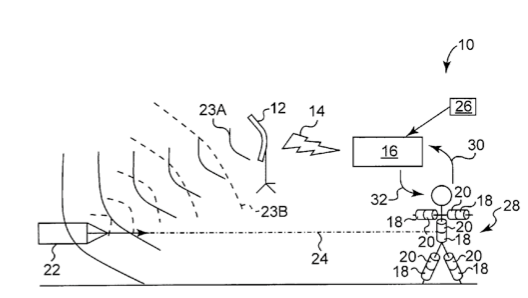
Believe it or not, IBM has filed for a patent on tech that heightens our reflexes so that we could, theoretically,dodge bullets like Neo in The Matrix.

This Bionic Body Armor would continuously scan the area for incoming projectiles. If one is detected, the system would deliver a shock to the muscles causing a swift, reflexive action away from the bullet.

The present invention relates generally to the protection of an individual against a projectile propelled from a firearm. More particularly, the present invention relates to a body armor system and its method of use that is capable of detecting a projectile propelled from a firearm, computing the trajectory of the projectile, and moving the individual out of the path of the projectile to avoid being hit.

Friday, August 7, 2009

IBM SNAzzy Knows Your Circle of Friends Better Than You Do

via Gizmodo by Jack Loftus on 8/2/09

That heavy breathing you hear on the phone sometimes? It's IBM.

Specifically, it's the IBM Social Network Analysis for Telecom Business Intelligence data mining tool, or SNAzzy for short, and it knows all about who called who and for how long on the network of "one of the largest mobile operators in the world."

The purpose of this snazzy snooping, as explained by Big Blue researchers, is to spot "churners" on a cell network who might influence their circle of friends with "profit-threatening behavior." The reasoning goes that when one person ditches a cell network for greener pastures, they can inspire their friends to do the same. Enter SNAzzy, which can apparently recognize this behavior, alert the carrier, and allow them to swoop in with retention materials and keep their remaining customers happy. It does this by mapping out call behavior, time, and a bunch of other heavy metrics that seem to be copy/pasted right out of the NSA.

Better still (I say sarcastically), IBM is already eying larger deployments beyond telecoms into areas like social networks. Personally, I can't wait to see what my Facebook picture stalking looks like when presented to me in graph form.

Super Sport Car Evolution