


via Gizmodo by Jesus Diaz
Showing posts with label green. Show all posts
Showing posts with label green. Show all posts
Friday, September 4, 2009


Saturday, July 25, 2009
Soliloquy Super-Yacht
via Gizmodo by Jesus Diaz on 7/23/09

According to Alastair Callender, his 190-foot Soliloquy would be able to fully propel itself using a combination of solar power, wind, and hybrid marine power technology. And it looks like a metamorphic alien mothership to boot.
It looks cool, but I have a hard time imagining this titan moving at a decent speed using these technologies. On the other side, if Cousteau's Alcyone ship�with its wind towers�can work, maybe this design could work too.
I would pass even if I had the money to buy it, though. Why would I get a cold, super-expensive super-yacht for a gazillion dollars when I can use the same money for a fast 100%-wind-powered three-mast schooner, with fully automated sail deployment,and have a crew of Scandinavian sailorettes with unbuttoned white shirts, short navy blue skirts, and no panties for the rest of my life? See? Rich people don't know how to spend their money.
OK. Perhaps that was way too much. Screw the automatic sail deployement. Let the sailorettes do their job.

Wednesday, May 20, 2009
Taiwanese stadium is 100% solar-powered
via�DVICE�by AdamFrucci on 5/20/09

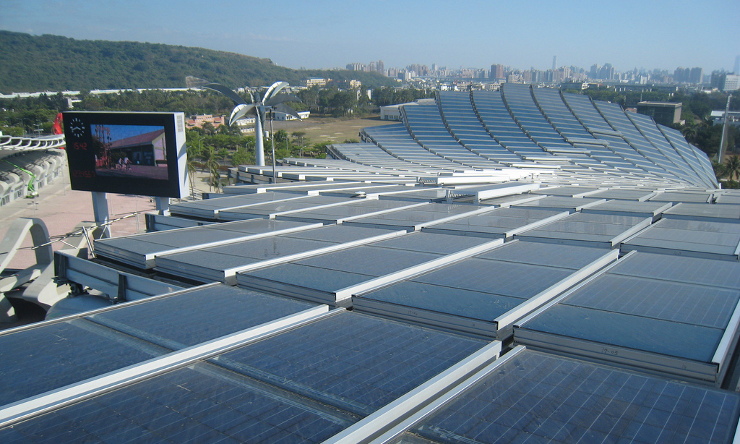
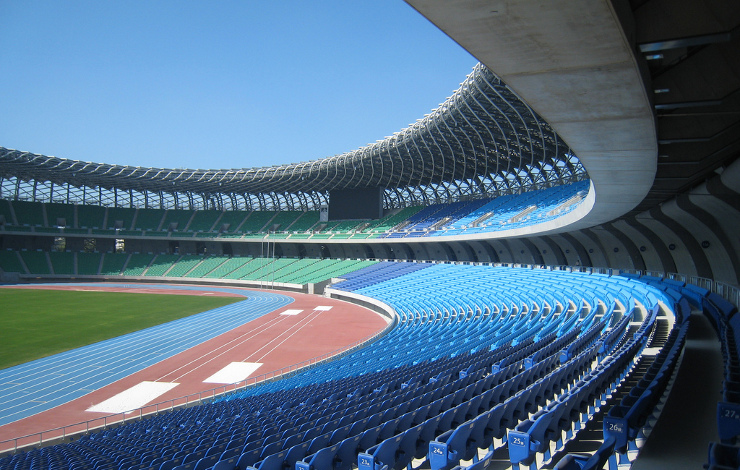
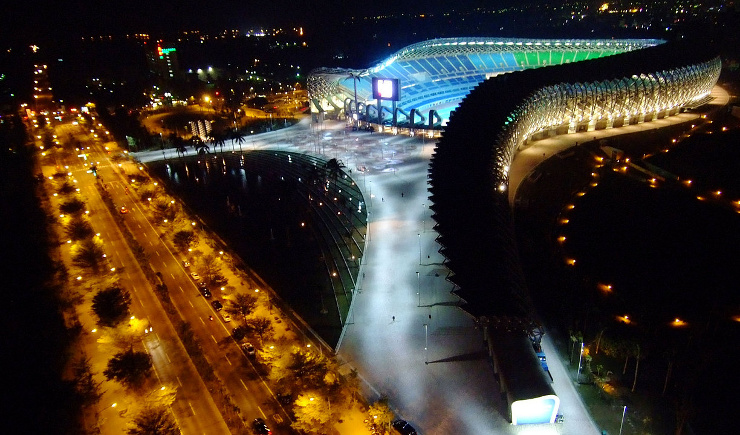
Taiwan's new solar stadium is absolutely incredible. Not only does it look downright-beautiful, but it's a marvel of eco-engineering: it's 100% solar powered.
The 50,000 seat arena is covered in 8,844 solar panels that'll provide lighting for the track and field with 3,300 lux. That's a lot of juice that won't need to be generated from environmentally-damaging ways. Hopefully we'll see more and more stadiums and other structures built this way in the near future.
Deputy Dog�via�Inhabitat
Wednesday, May 6, 2009
Romses Architects: Harvest Green Project, Vancouver
via�Designboom - Weblog�on 5/6/09
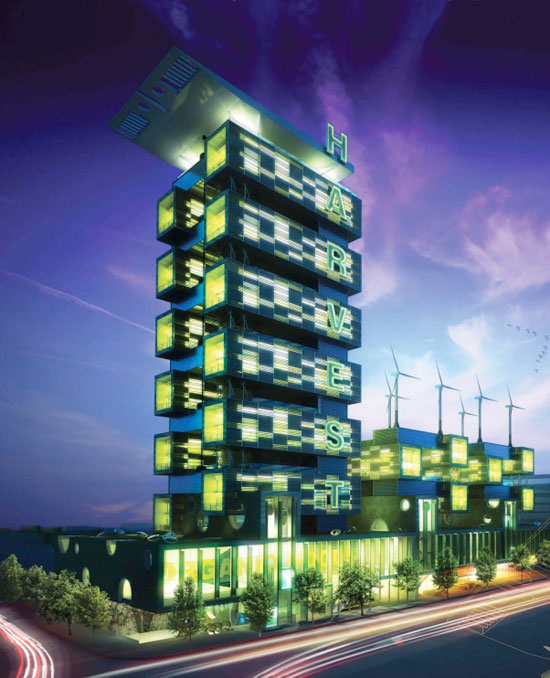
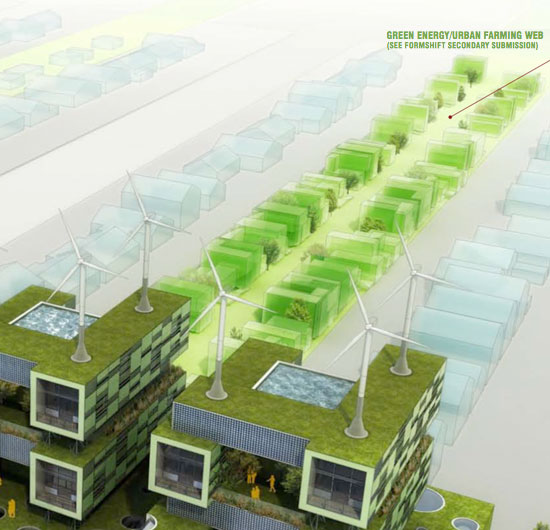
harvest green project, vancouver by romses architects
image courtesy romses architects
the 'harvest green project' by�romses architects�was a winning entry in
a recent competition held by the city of vancouver 'the 2030 challenge'
to address climate change plans and to guide greener and denser development,�
reducing carbon emissions for the future.
the concept of 'harvest' is explored in the project through the vertical
farming of vegetables, herbs, fruits, fish, egg laying chickens, and a
boutique goat and sheep dairy facility. in addition, renewable energy
will be harvested via green building design elements harnessing geothermal,
wind and solar power. the buildings have photovoltaic glazing
and incorporate small and large-scale wind turbines to turn the
structure into solar and wind-farm infrastructure. in addition, vertical
farming potentially adds energy back to the grid via methane generation
from composting non-edible parts of plants and animals. furthermore,
a large rainwater cistern terminates the top of the 'harvest
tower' providing on-site irrigation for the numerous indoor and outdoor
crops and roof gardens.
while the harvest green project supports the city mandate for compact
mixed-use communities in and around transit hubs, it further enhances
the mixed-use programming to include urban farming as a reaffirmation
of the importance of the connection of food to our culture
and daily life. in addition to food and energy harvesting, the proposal
purposefully incorporates program uses for residential, transit, a large
farmers market and supermarket, office and agricultural research and
educational facilities, and food related retail/hospitality. the result will
be a highly dynamic synergy of uses that compliment and support
each other.

harvest green project
image courtesy romses architects
harvest green project
image courtesy romses architects
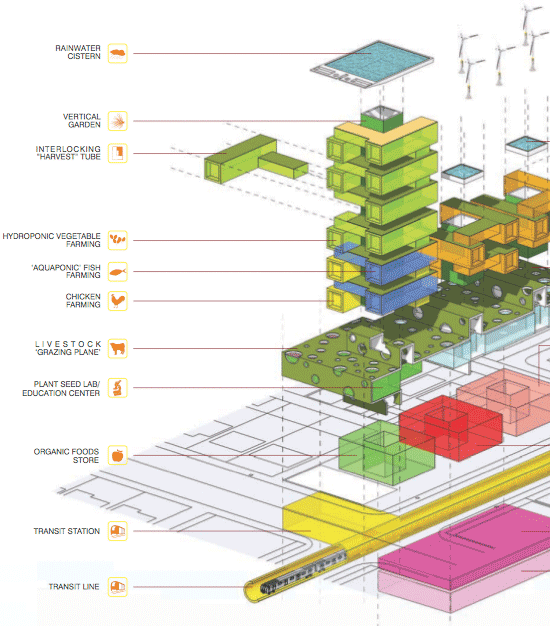
harvest green project - sections
image courtesy romses architects
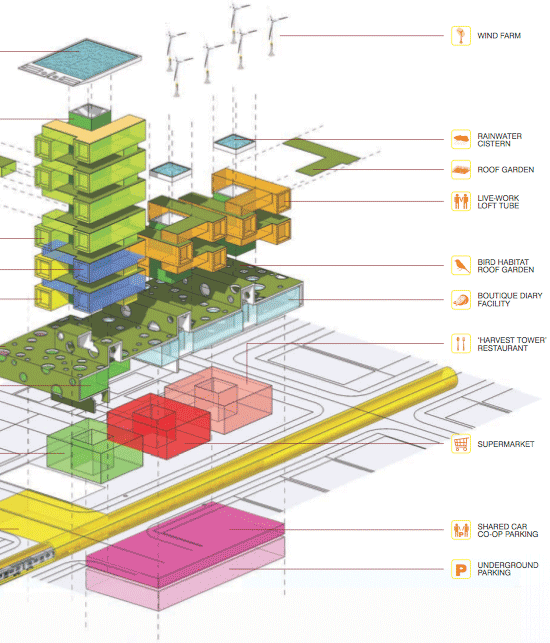
harvest green project - sections
image courtesy romses architects
Subscribe to:
Comments (Atom)


