O echipa de cercetatori de la Laboratoarele Berkeley, condusa de Heino Nitsche si Ken Gregorich, a sintetizat doi atomi din elementul 114, �n luna ianuarie, la zece ani dupa ce cercetatori din Dubna, Rusia, au pretins ca au fost primii care au obtinut acest element.
Rezultatele experimentului au fost publicate pe 24 septembrie, �n Physical Review Letters Journal. Procesul folosit pentru crearea elementului 114 a implicat ciocnirea atomilor de calciu si plutoniu, acestia av�nd masele atomice de 20 si respectiv 94.
Particulele de plutoniu si calciu au fost accelerate �n acceleratorul de particule Cyclotron, de la Berkeley si ciocniti la viteze foarte mari. �n doua momente diferite particulele au fuzionat, form�nd elementul 114.
"C�nd imprimi o energie foarte mare ionilor de calciu si �i ciocnesti cu plutoniul, nucleele lor vor avea c�teodata suficienta energie pentru a depasi forta de respingere si vor fuziona", a declarat Nitsche.
Potrivit lui Nitsche, principalul tel al stiintei nucleare este sa descopere "insula stabilitatii", un element supergreu cu un numar ideal de protoni si neutroni care �i va permite sa ram�na intact pentru o mare perioada de timp.
Toate elementele mai grele dec�t uraniul sunt �n prezent instabile si �si �njumatatesc perioada de viata foarte rapid. De exemplu, unul dintre cei doi atomi din elementul 114, produs la Berkeley, a disparut dupa o zecime de secunda si al doilea dupa o jumatate de secunda.
Heino Nitsche a mai adaugat cercetarile sale nu vor aduce nici un fel de profit, dar ca vor putea conduce la alte descoperiri �n viitor.
Omul de stiinta american Ray Kurzweil sustine ca oamenii ar putea deveni practic nemuritori �n aproximativ doua decenii. Nanotehnologia si �ntelegerea mai buna a felului �n care functioneaza organismul uman ne vorajuta sa traim vesnic.
Kurzweil, care a mai prezis aparitia unor tehnologii revolutionare, spune ca drumul spre nemurire este chiar accelerat de ritmul �incredibil� �n care evolueaza tehnologiile calculatoarelor si de progresele �nregistrate �n cercetarea genetica.
Ajuns la 61 de ani, omul de stiinta american apreciaza ca, teoretic, av�nd �n vedere repeziciunea cu care ne �mbogatim cunostintele, nanotehnologii capabile sa �nlocuiasca multe dintre organele noastre vitale ar putea sa apara pe piata �n 20 de ani.
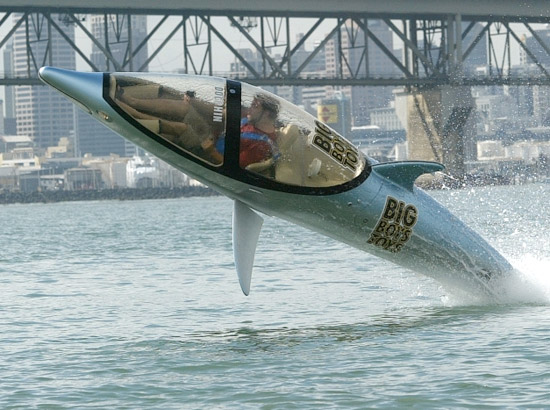
No your eyes aren�t fooling you, the Seabreacher is a submersible watercraft inspired by dolphins. The vehicle is designed and manufactured by Innespace Productions and comes in a few different models as well as customized builds. Just like a dolphin, the Seabreacher can jump dive and roll through the water at speeds of up to 40mph or 20mph underwater. The driver and a passenger are kept dry inside a sealed cockpit, but are free to look around through the glass top. The boat took over 10 years to develop and is now easy enough to drive and maintain for the average person. The design retails for around 48,000 USD and comes with a number of options such as additional view ports and custom upholstery.
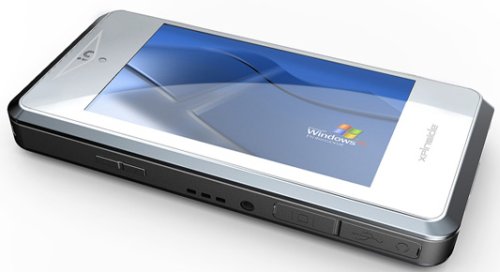
Telefoanele celulare au ajuns adevarate computere mobile, iar xpPhone, care poate fi admirat �n imaginile de mai jos, este ultimul din aceasta serie. ITG, compania chineza care a dezvoltat slider-ul, ce ruleaza sistemul de operare Windows XP, a anuntat ca telefonul poate fi comandat de doritori, informeaza dvice.com. Pretul sau nu a fost facut public, deocamdata.
Handsetul are un display cu touchscreen de 4.8 inci si rezolutia de 800x480, fiind astfel aproape la fel de mare ca o rama foto digitala. Capacitatea de stocare este de 38GB. Compania chineza "s-a dat peste cap" �n �ncercarea de a comasa c�t mai multe �n acest telefon ce utilizeaza un procesor AMD Super Mobile. Printre acestea se numara Wi-Fi, Bluetooth, iesirea VGA, dar si posibilitatea de a fi folosit pe post de hard disk extern.
Problema ar fi greutatea cam mare a device-ului, care se apropie de o jumatate de kilogram. Adica va cam trage de buzunarul pantalonilor. Acumulatorul are o autonomie de 5 ore, potrivit producatorului. Daca ar fi mai usor, si ar rula Windows 7, acesta ar putea fi �nsa telefonul inteligent al viitorului.
Configuration � CPU: AMD Super Mobile CPU � Memory: 512M/1G � SSD: 8G/16G/32G/64G � HDD: 30G/60G/80G/120G � LCD: 4.8' TFT Touch-screen LCD 800*480 � Operating System: Microsoft Windows XP � Network: GSM/GPRS/EDGE/WCDMA (HSDPA/HSUPA) � CDMA/CDMA2000 1X/CDMA1X EVDO,TD-SCDMA,TD-HSDPA � Wireless: WiFi 802.11b/g,WiMax(optional),Buletooth,Stand-alone GPS � Camera Specifications:CMOS, 300k/1.3 Million � Ports: 1 x earphone jack, 1 x microphone jack,Docking Connector (includes VGA output signal ), 1 x USB 2.0, SIM Slot � Battery: Removable Lithium-ion � Talk time: about 5 hours,Stand by time: about 5 days � Real life: about 7 hours(Standard), about 12 hours(Large) � Talk time: Standby time,Operation time may vary depending different usage. � Weight: 400g (include battery)
What you're looking at might just be the tire of the future. At least that's what the military thinks, as it's testing out prototypes of this new airless tire.
The advantages of airless tires are obvious: they can't be punctured and they never go flat. But it clearly takes a lot of science to get the proper material that can stand up to the pressure of a multi-ton military vehicle sitting on top of it. I look forward to when these things are the standard on normal cars we see on the highways.
Totally nuts! Researchers at the University of Tokyo have developed holograms that provide tactile feedback. It's one thing to see a three-dimensional ball floating in space but quite another to actually feel it, and that's the promise of this latest technology, which will hopefully revolutionize interface designs of the future.
The trick is to combine motion tracking (via Wiimotes, of all things) with ultrasonic waves, which can be tuned to provide tangible feedback at a focused point in space. It's difficult to describe in text, but that's why we have YouTube; check this video out to see what they're developing.
The way that we figure things out as wee ankle-biters is usually referred to as procedural learning, or the process by which we interact with our surroundings in a pre-verbal manner. In other words, imagine a baby figuring out it enjoys to play with a rattle while it rolls on the floor and drools all over itself.
A group of researchers from the Developmental Robotics Laboratory at Iowa State University are hoping their own robot � which has yet to be named � could learn in much the same way, without all the drooling. Rather than pre-program it to perform a set of tasks, the team believes that robots need to experience the same kind of development that humans and animals do.
To that end, their 'bot is equipped with two long arms and a pair of webcam-looking eyes. It can hear and see, and learns to identify objects by picking them up and performing different tests, such as shaking or dropping them. Another trick it's figured out is learning if a surface is markable or not by writing on it, such as running a pencil over paper and then looking for lead marks.
Transmaterial, the online companion to Blaine Brownell's similarly titled book series, has just been relaunched as a highly searchable database of the latest in "materials that redefine our physical environment", designed to better facilitate access to critical developments in the field. For some choice tidbits, check out the Bubble Screen and Super Cilia Skin.
How often does your expensive mobile phone slip out of your hand and fall apart on the floor while you�re making or attending a call? If it is quite a frequent occurrence with you, you would definitely love to have the upcoming Ascent Ti Carbon Fiber phone in your kitty. Developed by Vertu, the new series of luxury mobile phones come finished with optimum carbon fibers and resin that gives a flawless uniform look on both the flat and curved parts. Presenting a 2-inch QVGA display, 3G, 4GB of internal memory and a 3.15MP camera with LED flash, the Vertu Ascent Ti Carbon Fiber not only gives full-proof protection to your mobile phone, but also makes it sleek and lightweight, allowing you to extend your chats without burdening your wrist.
What do you get when you suspend nanoparticles of iron compounds in a colloidal solution of water, oil and a surfactant? Did you guess Zima? The real answer is ferrofluids, though you should be proud if you just knew what "surfactant" was.
A ferrofluid is a liquid that reacts to magnetic fields in trippy ways that make you think that science is both magical and potentially evil. They have multiple real world applications, many which are pretty badass, and none of which you will care about after seeing this:
Tell us that didn't look like the birth of the most sinister dildo ever.
What happens is that when a magnetic field is applied to the fluid, the particles of iron compound inside align to it. Once that happens, the fluid becomes a fluid-solid. That's right, ferrofluids are first generation T-1000s, only metallic black and thus 10 times as badass.
What the Hell is it Used For?
Ferrofluids have a lot of pretty mundane uses, from lubricating and protecting hard drives to providing heat conduction in speakers, but their primary use is in looking cool.
The ability to become solid or liquid with the application of a magnetic field also makes them perfect for computer assisted shock absorbers in Ferraris; NASA uses them for high-tech flight altitude assistance, and like a gyroscope in spacecraft. The Air Force uses their magnetic field absorbing properties to make aircraft invisible to radar and we like to think someday they'll be able to make super hot, futuristic robot dominatrices that we can store in a cup in the pantry when not in use.
#6.
Aerogel
It's not the brick in the picture up there, it's the stuff under the brick. Aerogel, also called "Frozen Smoke," is very much like Ben Affleck's appeal: practically non-existent, but still there somehow. It is 99 percent air, with the other percent being silicon dioxide or fudge or whatever, and looks like fucking magic. Its structure makes it a piss-poor conductor and thus makes it an excellent insulator. In other words, aerogel is also fireproof.
In addition to being awesomely heat resistant, aerogel can also hold insane amounts of weight proportionate to the size of the aerogel being used, up to 4000 times, which shames regular air something fierce. To put it in totally nonsensical terms, if air had a party, while aerogel was busy getting hummers in the back, loser oxygen would be making sure everyone was using a coaster. That's how much cooler aerogel is. Fuck you, oxygen.
What the Hell is it Used For?
The suits astronauts use are filled with it to keep the cold of space from, you know, killing them. More transparent aerogels are being made to insulate windows, or the world's lightest ping-pong ball, as you can see in this clip at 0:36:
Every once in a while, science rules.
#5.
Perfluorocarbons
Remember that scene in The Abyss, before you fell asleep, when Ed Harris was put in a diving suit that was filled with pink goo that he then breathed? It turns out James Cameron wasn't blowing pink goo-laced smoke up our ass; that stuff really exists. Perfluorocarbons are fluids that contain shitloads of oxygen, making it possible to breathe liquid. They originally tested it back in the 60s on mice, with a certain degree of success... sort of.
The mice ended up dying after being submerged in it for a few hours, possibly due to the gut wrenching horror of drowning, but not dying, while trying to scream in their tiny mouse voices. Rather than manning up to the fact that breathing liquid destroyed the mice's diaphragms, the scientists blamed the deaths on impurities in the liquid (most likely horrified mouse shit).
What the Hell is it Used For?
Aside from slow, tortuous rodent murder, perfluorocarbons are used for ultrasounds, and even artificial blood. But before you go out and fill your pool with some for a leisurely four-hour swim at the bottom, be aware they are also awful pollutants. The worst offenders have a half life of 50,000 years and warm the atmosphere 6,500 times more effectively than carbon dioxide, and God knows how many cow farts that would be. Supervillains of the world, we hope you are taking notes.
4.
Elastic Conductors
Odds are pretty good that some of you are reading this on an LCD screen while the rest of us are trying to make it out on the 13-inch monochrome monitor that came with our garage sale Commodore 64. But even with the LCD, some laptops still weigh over 10-pounds. And while that doesn't seem like much, the level of muscle atrophy experienced by the average Warcraft addict makes that weight a thousand times heavier. However, elastic conductors could fix that and make smuggling your porn collection into church even easier.
Also, oooohhh.
Elastic conductors are made of "ionic liquid" mixed with carbon nanotubes. We shrugged when we read that too, but scientists are very excited about it because you can run a current through it and it will stretch to double its original length, and snap back into place as if nothing happened. The point being you can wind up with the roll out, paper thin computer pictured above.
What the Hell is it Used For?
In addition to making screens that can be rolled up and stuck in our back pocket, a lot of scientists and doctors want to use elastic conductors to make flexible-lensed cameras... to be fitted to the back of the eyeball.
Girlfriends the world over will actually start recording their boyfriend's every word and guys at urinals will become infinitely more paranoid if they catch another guy's eye. On the plus side, the market for hidden camera porn will probably experience an unprecedented explosion in content.
#3.
Non-Newtonian Fluids
A non-Newtonian liquid, in practical terms, is a liquid that turns solid when sufficient stress is applied. Like, say, the impact of feet:
They have the power to make dorks walk on water like Jesus (which is exceptionally cool for about the first 30 seconds of the video, and then sad for the remainder).
What the Hell is it Used For?
Our friends in the military want to use them for body armor. The idea is that the fluids will allow fabrics to be soft and supple, but harden on the impact of a bullet. It would be like wearing a Jell-O sweater that doubles as a bulletproof vest.
#2.
Transparent Alumina
You may remember from Star Trek IV that Scotty orders some transparent aluminum so that they can steal whales for the future (it made a lot more sense at the time). Anyway, in the movie the material baffled the present-day engineers he described it to, since it's a miracle substance from centuries in the future.
In reality, transparent alumina has been around for a while. Originally, it was just boring old sapphires and rubies (both are transparent aluminum crystals), but as we have seen, mankind is not happy to let nature have the last laugh and we are now able to make transparent alumina, which is a clear metal that is as strong as steel. Our dreams of building Wonder Woman's invisible jet have taken another glorious step toward reality.
What the Hell is it Used For?
The military (again) wants it for see-through armor, probably so that every time a soldier standing behind a clear wall gets shot at and flinches in life-flashing-before-the-eyes terror, his buddies are justified for punching him and calling "two for flinching."
Also, something with lasers.
Transparent alumina could usher in a new world where windows deflect bullets, or airplane windows don't shatter when they hit a goose at Mach 4. The downside being that if they make car windows out of it, people who don't wear their seat belts will no longer live the dream of being "thrown clear" of the accident, and more likely wind up as "that guy whose nose shot out his ass."
#1.
Carbon Nanotubes
These things are a miracle material that will someday power our homes, launch us into space, and make love to us whenever and wherever we want. That last one isn't planned yet, but it better be. Carbon nanotubes were the accidental leftovers of an arc-welder experiment, and they have nerds and scientists foaming at the mouth with their possible uses.
They are the strongest material ever found by mankind. Ever. Even stronger than Lou Ferrigno and he was the fucking Hulk, man. A hair-thick strand can bear the weight of an entire car, assuming it wouldn't cut straight through the chassis. Although that would possibly be even cooler than lifting a car with artificial hair.
There is the small, some might say major, issue that carbon nanotubes are only microns long, and pasting them together end to end has so far proven impossible. But physics can't hold back mankind, and recently a New Hampshire based company made a man-sized blanket out of nanotubes, showing that science will always say "Fuck you" to Mother Nature when she sets boundaries.
What the Hell is it Used For?
So far, they have managed to make super-small computer processors and low-resistance circuitry. In the future, all bets are off. Everything from tiny supercomputers to even tinier, super-efficient batteries, to more efficient solar panels to paper-thin materials that can stop a bullet, to freaking space elevators.
Sunglasses hinges that never break, toasters that get the toast right every time, TV remotes where the numbers don't wear off the buttons, ceiling fans that don't vibrate. Bags of chips that never get stuck in the vending machine. Carbon nanotubes will fucking solve it all.
Let's hope this XM-25 rifle with its�smart bullets�doesn't find its way into enemy hands. The system is clever enough to detonate its exploding 25mm bullets within 3 feet of their targets, picking off unfortunate foes with uncanny accuracy, even when they're hiding behind obstacles.
After calculating the target's distance with a laser rangefinder, this lethal weapon sends a radio signal to a chip inside the bullet. That brilliant projectile can precisely measure the distance it's traveled, exploding at precisely the right distance for maximum killage. Ouch.
The U.S. military will begin field testing this crazy tech this year, with the goal of rolling it out on battlefields everywhere in a couple of years. Let's just hope U.S. troops won't need to be on battlefields then.
Displays incorporated into eyeglasses � or even contact lenses � have been popular fare of spy fiction from�Mission: Impossible�to�Torchwood. It's wicked cool to see messages like "THAT IS THE TARGET -- ELIMINATE HIM" scroll by your field of view, but the glasses are almost always one-way, with the wearer just a passive observer of incoming data. Now researchers in Germany are about to do one better than science fiction, creating an eyeglass display that a user can control with simple eye movements.
When you think of exoskeletons, you probably don't think "cheap," but $4,200? People spend more than that for high-end gaming computers.
Cyberdyne is gearing up to mass produce 400 of its "Hybrid Assistive Limb" exoskeletons annually, selling first to interests in Japan, then perhaps the rest of the world. The company intends the suit less for personal interest and more for "rehabilitation support and physical training support in medical field, ADL support for disabled people,�heavy labour support�at factories, and rescue support at disaster sites, as well as in the entertainment field." But, hey, if the market exists, Cyberdyne will�ramp up production�and � who knows? � maybe all of us will be running around in our very own exoskeletons.
Considering that Cyberdyne was planning late last year to rent its suits for $2,200, just $2,000 more to own one doesn't sound bad at all. Naturally, you won't find these at your�local exoskeleton store�� those seriously interested will have to go through the company.