Garware Motors announced it will launch GT650 and GT250R Hyosung motorcycles in India. Launching done because previous motors get pretty good response.
After launching Kawasaki Ninja 650R in India, the company said it had seen a positive response and optimistic if the two motors will also get the same thing.
However, the second motor is not going to be launched at the same time. In the first period, the motor will be launched is the Hyosung GT650. This motor will be slightly more sporty because it will lose the fairing, the price will also be a bit cheaper.
After that, like disitat Motor Beam, launched Hyosung GT250R that is claimed to be able to compete with the Kawasaki Ninja 250R, but can not compete with the Honda CBR 250R. Because Honda is a Japanese automobile manufacturer that has achieved a high degree of localization and have more features tech.
Showing posts with label Chrysler. Show all posts
Sunday, August 7, 2011
Sunday, July 31, 2011
Nissan Patrol
Reliable, unbreakable, affordable. The Nissan Patrol is a name synonymous with ruggedness, a legendary off-roader capable of going anywhere, anytime. Meticulously honed for over five decades, the Patrol is Nissan's flagship large SUV model and enjoys a rich heritage particularly in the Middle East that dates back to the 1950's. This off-road trendsetter was one of the first dedicated four-wheel-drive vehicles in the climatically demanding Middle East region, and boasts the notable distinction of also being the first vehicle to successfully cross the grueling Simpson Desert in Australia back in 1962.
Under the banner of "The Hero Comes Home" the Nissan Patrol is back as an all-new seventh generation model, building on its impressive history, but at the same time, incorporating a new platform, a radical new design direction, significantly enhanced interior comfort and luxury, powerful new V8 engines, a 7-speed automatic transmission and a new 4WD system.
"We paid special attention to the needs of current Nissan Patrol owners, and their passengers, and so focused on creating first-class levels of comfort for the whole family. Heightened luxury, a roomier cabin and a quieter ride combine to achieve this goal, while maintaining Nissan Patrol's superior off-road heritage" stresses Hiroyuki Fushiki, project head and Segment Chief Product Specialist.
Tested to the limit
Wanting to build the best possible Nissan Patrol, engineers first tuned and tested 200 prototypes for dynamic evaluation at the company's Motegi, Oppama and Tochigi proving grounds before sending them to the Middle East where they were exposed to every imaginable challenge; desert, rocky surfaces, highways and inner-city traffic. "By the time we came around to adding the new body and interior, we had virtually completed our reliability and durability testing and perfected all of the new technologies," says chief vehicle engineer, Takashi Fukui.
After extensive market research, especially in the Middle East, the design team concluded that for the Nissan Patrol to beat its main competitors, it needed not only a brand new design direction but class-leading engine performance, greater luxury and comfort and a smart mix of new technologies that enhanced the total driving experience. Product design director, Taiji Toyota, tells us that the all-new exterior design is like a breath of fresh air. "Not as edgy and hardcore as its predecessor, the softer new surfaces are beautiful and add a sense of modernity to the design equation, while still maintaining a ruggedness and commanding road presence" he said.
According to the design director, one design element that expresses 'Patrol' and had to feature strongly was the angled-strut motif front grille. It was meticulously proportioned to deliver a sense of continuity with past models but give a touch of newness while enhancing the car's status level.
Focus on roomier, more luxurious cabin
Featuring generous amounts of leather, polished aluminium and wood grain paneling, the Nissan Patrol's interior too has been significantly upgraded. Given that most customers only go off-road no more than 15% of the time, designers wanted to create a better, higher quality interior for the whole family.
In keeping with the Nissan Patrol's mission to deliver more comfort and more room, the new Patrol delivers seat dimensions that outclass all competition. Boasting wider, higher and deeper front seats, the Nissan Patrol offers over 100mm more legroom for second row passengers, and a roomier third row of seats as well. Employing double the lateral rigidity over the outgoing model, the new Nissan Patrol sits on a revised platform that now offers a more robust construction with a low vibration body.
All-new V8 engine leads array of segment-beating hardware
The new Nissan Patrol is now the most powerful vehicle in its class. And the key technology achieving this jump in performance over the predecessor's 4.8 litre power plant is the newly developed 'VK56VD' 5.6-litre V8 engine with VVEL (variable valve event and lift) and DIG (direct injection gasoline) technologies that generate 400hp and 550Nm of torque on the top specification version of this new engine.
Every component has been redesigned for maximum performance and smooth response, while a new 7-speed automatic transmission with a wider range of gear ratios than its predecessor, gives the off-roader the ability to deliver power faster.
Comprehensively upgraded 4WD system sets new standard
In a world-first for Nissan, the new Patrol employs a Hydraulic Body Motion Control System (HBMC), which keeps the car flatter with less body roll during lane-changing and cornering, while delivering a comfortable ride in city driving and superb stability on rugged and sandy tracks. Another crucial part of handling equation comes from the new suspension system, which now employs 4-wheel independent suspension, upgraded from the previous rigid axle setup. Nissan has completely redesigned the vehicle's suspension from the bushes to the links. The combination of HBMC and the new suspension system with its longer suspension stroke delivers significantly improved handling and stability on both on- and off-road terrain.
The Nissan Patrol also employs a newly developed ALL MODE 4x4 system incorporating a variable 4x4 mode package. It allows the driver to quickly switch between four drive modes: sand, on-road, snow and rock, with the flick of a switch. In sand mode, owners are able to drive safely, quickly and skillfully in sand and dirt, just like professional rally drivers.
In addition, the Nissan Patrol also offers a new Hill Start Assist and Hill Descent Control which can also be selected easily with the touch of a button. With Hill Start Assist, if a driver stops on a slope and steps off the brake pedal, the system keeps the vehicle stationary - with no roll back. Hill Descent Control uses the brakes to maintain a constant downhill speed of 7km/h in 4H mode and 4km/h in 4L mode.
The new model employs a revised Tyre Pressure Monitor System (TPMS) with tyre inflation indicator which beeps the horn softly to inform drivers that a suitable tyre pressure has been reached.
A revised, more effective brake system also provides the best braking performance in its class thanks to its new hydraulic brake booster and a 4-piston opposed front caliper setup with larger 358mm front discs.
More world-firsts
Nissan designers paid special attention to the second row seat passengers by not only significantly expanding legroom, but by also fitting a new multi-screen DVD entertainment system, a first form Nissan. It boasts two rear-facing TVs; one 7-inch monitor embedded into each front seat headrest.
Fitted with six airbags for top grade, the Nissan Patrol also comes with a totally revised climate control system boasting another world-first - the curtain vent. Curtain vent has several small but highly effective vents mounted in the ceiling above each side window to blow a strong current of cool air down forming a curtain of air that acts as a barrier to heat penetrating the cabin.
Yet another impressive Nissan Patrol feature is the cool box mounted in the centre console between the front seats. Incorporating a unique double hinge design, the lid of the cool box can be opened easily from either the front or second row of seats to access the six 600ml drink bottles inside.
And lastly...
With its fresh new styling, superior packaging, powerful but economical V8 engine, clever off-road technologies and higher levels of luxury and comfort, the all-new Nissan Patrol is now a true segment leader.
Under the banner of "The Hero Comes Home" the Nissan Patrol is back as an all-new seventh generation model, building on its impressive history, but at the same time, incorporating a new platform, a radical new design direction, significantly enhanced interior comfort and luxury, powerful new V8 engines, a 7-speed automatic transmission and a new 4WD system.
"We paid special attention to the needs of current Nissan Patrol owners, and their passengers, and so focused on creating first-class levels of comfort for the whole family. Heightened luxury, a roomier cabin and a quieter ride combine to achieve this goal, while maintaining Nissan Patrol's superior off-road heritage" stresses Hiroyuki Fushiki, project head and Segment Chief Product Specialist.
Tested to the limit
Wanting to build the best possible Nissan Patrol, engineers first tuned and tested 200 prototypes for dynamic evaluation at the company's Motegi, Oppama and Tochigi proving grounds before sending them to the Middle East where they were exposed to every imaginable challenge; desert, rocky surfaces, highways and inner-city traffic. "By the time we came around to adding the new body and interior, we had virtually completed our reliability and durability testing and perfected all of the new technologies," says chief vehicle engineer, Takashi Fukui.
After extensive market research, especially in the Middle East, the design team concluded that for the Nissan Patrol to beat its main competitors, it needed not only a brand new design direction but class-leading engine performance, greater luxury and comfort and a smart mix of new technologies that enhanced the total driving experience. Product design director, Taiji Toyota, tells us that the all-new exterior design is like a breath of fresh air. "Not as edgy and hardcore as its predecessor, the softer new surfaces are beautiful and add a sense of modernity to the design equation, while still maintaining a ruggedness and commanding road presence" he said.
According to the design director, one design element that expresses 'Patrol' and had to feature strongly was the angled-strut motif front grille. It was meticulously proportioned to deliver a sense of continuity with past models but give a touch of newness while enhancing the car's status level.
Focus on roomier, more luxurious cabin
Featuring generous amounts of leather, polished aluminium and wood grain paneling, the Nissan Patrol's interior too has been significantly upgraded. Given that most customers only go off-road no more than 15% of the time, designers wanted to create a better, higher quality interior for the whole family.
In keeping with the Nissan Patrol's mission to deliver more comfort and more room, the new Patrol delivers seat dimensions that outclass all competition. Boasting wider, higher and deeper front seats, the Nissan Patrol offers over 100mm more legroom for second row passengers, and a roomier third row of seats as well. Employing double the lateral rigidity over the outgoing model, the new Nissan Patrol sits on a revised platform that now offers a more robust construction with a low vibration body.
All-new V8 engine leads array of segment-beating hardware
The new Nissan Patrol is now the most powerful vehicle in its class. And the key technology achieving this jump in performance over the predecessor's 4.8 litre power plant is the newly developed 'VK56VD' 5.6-litre V8 engine with VVEL (variable valve event and lift) and DIG (direct injection gasoline) technologies that generate 400hp and 550Nm of torque on the top specification version of this new engine.
Every component has been redesigned for maximum performance and smooth response, while a new 7-speed automatic transmission with a wider range of gear ratios than its predecessor, gives the off-roader the ability to deliver power faster.
Comprehensively upgraded 4WD system sets new standard
In a world-first for Nissan, the new Patrol employs a Hydraulic Body Motion Control System (HBMC), which keeps the car flatter with less body roll during lane-changing and cornering, while delivering a comfortable ride in city driving and superb stability on rugged and sandy tracks. Another crucial part of handling equation comes from the new suspension system, which now employs 4-wheel independent suspension, upgraded from the previous rigid axle setup. Nissan has completely redesigned the vehicle's suspension from the bushes to the links. The combination of HBMC and the new suspension system with its longer suspension stroke delivers significantly improved handling and stability on both on- and off-road terrain.
The Nissan Patrol also employs a newly developed ALL MODE 4x4 system incorporating a variable 4x4 mode package. It allows the driver to quickly switch between four drive modes: sand, on-road, snow and rock, with the flick of a switch. In sand mode, owners are able to drive safely, quickly and skillfully in sand and dirt, just like professional rally drivers.
In addition, the Nissan Patrol also offers a new Hill Start Assist and Hill Descent Control which can also be selected easily with the touch of a button. With Hill Start Assist, if a driver stops on a slope and steps off the brake pedal, the system keeps the vehicle stationary - with no roll back. Hill Descent Control uses the brakes to maintain a constant downhill speed of 7km/h in 4H mode and 4km/h in 4L mode.
The new model employs a revised Tyre Pressure Monitor System (TPMS) with tyre inflation indicator which beeps the horn softly to inform drivers that a suitable tyre pressure has been reached.
A revised, more effective brake system also provides the best braking performance in its class thanks to its new hydraulic brake booster and a 4-piston opposed front caliper setup with larger 358mm front discs.
More world-firsts
Nissan designers paid special attention to the second row seat passengers by not only significantly expanding legroom, but by also fitting a new multi-screen DVD entertainment system, a first form Nissan. It boasts two rear-facing TVs; one 7-inch monitor embedded into each front seat headrest.
Fitted with six airbags for top grade, the Nissan Patrol also comes with a totally revised climate control system boasting another world-first - the curtain vent. Curtain vent has several small but highly effective vents mounted in the ceiling above each side window to blow a strong current of cool air down forming a curtain of air that acts as a barrier to heat penetrating the cabin.
Yet another impressive Nissan Patrol feature is the cool box mounted in the centre console between the front seats. Incorporating a unique double hinge design, the lid of the cool box can be opened easily from either the front or second row of seats to access the six 600ml drink bottles inside.
And lastly...
With its fresh new styling, superior packaging, powerful but economical V8 engine, clever off-road technologies and higher levels of luxury and comfort, the all-new Nissan Patrol is now a true segment leader.
Jaguar XFRJaguar XFR
A saloon with the soul of a Jaguar sports car, the XF has won accolades and enthusiastic fans across the globe for its dynamic abilities and dramatic looks. Advances in lighting technology have allowed the new 2012 Jaguar XF model range to adopt the bold Jaguar design language introduced on the flagship XJ saloon.
Sheetmetal revisions to the grille, bonnet and front wings incorporating new triangular side vents give the car a more muscular, purposeful appearance. The range-topping Jaguar XFR receives its own unique, overtly assertive design to underline its performance potential while an alternative 'Aerodynamic' option is available on all other derivatives for a total of three dramatically different styling options.
The headlamps now incorporate bi-function HID xenon technology that allows them to be much slimmer and more compact while still providing outstanding beam resolution. They also incorporate LED daytime running lights arranged in a distinctive Jaguar 'J-Blade' signature pattern for instant recognition.
The tail lamps have been entirely renewed and now extend onto the central portion of the boot lid. These new units are now full-LED for stop, light and indicator functions and give the Jaguar XF a distinctive night-time rear signature. Separating them is a revised boot lid finisher with a gloss black lower edge for a cleaner appearance. The boot also features power closure on all models.
Sheetmetal revisions to the grille, bonnet and front wings incorporating new triangular side vents give the car a more muscular, purposeful appearance. The range-topping Jaguar XFR receives its own unique, overtly assertive design to underline its performance potential while an alternative 'Aerodynamic' option is available on all other derivatives for a total of three dramatically different styling options.
The headlamps now incorporate bi-function HID xenon technology that allows them to be much slimmer and more compact while still providing outstanding beam resolution. They also incorporate LED daytime running lights arranged in a distinctive Jaguar 'J-Blade' signature pattern for instant recognition.
The tail lamps have been entirely renewed and now extend onto the central portion of the boot lid. These new units are now full-LED for stop, light and indicator functions and give the Jaguar XF a distinctive night-time rear signature. Separating them is a revised boot lid finisher with a gloss black lower edge for a cleaner appearance. The boot also features power closure on all models.
Jaguar XJ
The original XJ was the last car designed by Jaguar founder Sir William Lyons and the latest car to wear the nameplate is as innovative, beautiful and desirable as its famous forebear.
Revolutionary, not evolutionary, the Jaguar XJ is truly a product of the 21st century and is the clearest indication yet of the singular sense of purpose behind Design Director Ian Callum's vision for the future of Jaguar.
The unique full-length panoramic glass roof that floods the cabin with natural light allows the Jaguar XJ to offer an unrivalled sense of spaciousness and occasion for driver and passengers and at the same time retain the sleek coup�-like profile and lithe stance for which Jaguars are famous.
Lightweight aluminium architecture
The mould- breaking styling is matched by similarly impressive construction techniques pioneered by Jaguar. The lightweight aluminium structure - 50 percent of which is made from recycled materials - offers improved fuel consumption and reduced emissions. In conjunction with a lifecycle approach to design and manufacture this allows the Jaguar XJ to minimise its carbon footprint.
The weight saved by the use of aluminium - an average of 150kg compared to its rivals - also has benefits for performance and agility and is complemented by the most advanced, powerful and efficient Jaguar powertrains ever. The choice of engines has been enlarged for the 2012 range with the fitment of a 3.0-litre V6 petrol engine (market specific). All engines are coupled to a shift-by-wire, six-speed automatic transmission controlled by the JaguarDrive Selector or steering wheel-mounted paddles.
The cabin of the Jaguar XJ blends elegant, contemporary design with the comfort, luxury and unmistakable sporting style of a Jaguar. Chrome and piano black detailing provides an eye-catching contrast to the beautifully-crafted leather and wood veneer surfaces. Both standard and long-wheelbase models are available, for an even more sumptuous and refined experience for rear seat passengers.
Advanced new technology has allowed Jaguar's interior designers to create an environment more akin to a state-of-the-art living space than a car cabin. Stunning 12.3-inch high-definition virtual instruments complement an innovative Dual-view 8-inch Touch-screen that allows the passenger to view DVD movies or TV programmes while the driver is provided with vehicle functions or satellite-navigation directions.
Premium surround sound options include the top-of-the-range 1200W Bowers & Wilkins system that is comparable in audio quality to the best in-home entertainment. Advanced infotainment features also include hard-drive based audio and navigation systems and comprehensive connectivity for portable audio and video devices via the powerful Media Hub.
2012 enhancements
Subtle enhancements to the cabin are now available for the 2012 XJ range to allow greater personalisation and flexibility of use. A new Rear Comfort Pack offers seats that now feature electric adjustment of the backrest recline angle, four-way lumbar support and a massage function. Increased comfort is also provided by new winged headrests, footrests and the ability for the front passenger seat to be stowed away forwards when unoccupied to increase legroom even further.
On the long-wheelbase Portfolio derivative a new 'Executive Pack' transforms the rear of the Jaguar XJ into a high-speed mobile office space with the provision of fold-down laptop trays and an electric rear sunblind for increased privacy. The package also includes upgraded carpeting, combination wood and leather steering wheel, gloss wood veneer choices and chrome mirror housings.
Jaguar has always listened closely to customer feedback and in the case of the Jaguar XJ, this has led to a new interior colour combination. Available with the Premium Luxury and Portfolio trim levels the Jet/Ivory option features ivory seating with contrast jet stitching, piping and upper surfaces while the headlining is available in either colour, according to customer preference.
All Jaguar XJ variants are now available with an Illumination Package derived from that offered as standard on the Supersport model. This comprises illuminated treadplates, boot latch and front and rear air vents.
"An XJ should be the ultimate in comfort, design and refinement. The bespoke interior changes we have incorporated for the 2012 model make it an even more special car to drive or be driven in." Ian Callum, Design Director, Jaguar Cars
Revolutionary, not evolutionary, the Jaguar XJ is truly a product of the 21st century and is the clearest indication yet of the singular sense of purpose behind Design Director Ian Callum's vision for the future of Jaguar.
The unique full-length panoramic glass roof that floods the cabin with natural light allows the Jaguar XJ to offer an unrivalled sense of spaciousness and occasion for driver and passengers and at the same time retain the sleek coup�-like profile and lithe stance for which Jaguars are famous.
Lightweight aluminium architecture
The mould- breaking styling is matched by similarly impressive construction techniques pioneered by Jaguar. The lightweight aluminium structure - 50 percent of which is made from recycled materials - offers improved fuel consumption and reduced emissions. In conjunction with a lifecycle approach to design and manufacture this allows the Jaguar XJ to minimise its carbon footprint.
The weight saved by the use of aluminium - an average of 150kg compared to its rivals - also has benefits for performance and agility and is complemented by the most advanced, powerful and efficient Jaguar powertrains ever. The choice of engines has been enlarged for the 2012 range with the fitment of a 3.0-litre V6 petrol engine (market specific). All engines are coupled to a shift-by-wire, six-speed automatic transmission controlled by the JaguarDrive Selector or steering wheel-mounted paddles.
The cabin of the Jaguar XJ blends elegant, contemporary design with the comfort, luxury and unmistakable sporting style of a Jaguar. Chrome and piano black detailing provides an eye-catching contrast to the beautifully-crafted leather and wood veneer surfaces. Both standard and long-wheelbase models are available, for an even more sumptuous and refined experience for rear seat passengers.
Advanced new technology has allowed Jaguar's interior designers to create an environment more akin to a state-of-the-art living space than a car cabin. Stunning 12.3-inch high-definition virtual instruments complement an innovative Dual-view 8-inch Touch-screen that allows the passenger to view DVD movies or TV programmes while the driver is provided with vehicle functions or satellite-navigation directions.
Premium surround sound options include the top-of-the-range 1200W Bowers & Wilkins system that is comparable in audio quality to the best in-home entertainment. Advanced infotainment features also include hard-drive based audio and navigation systems and comprehensive connectivity for portable audio and video devices via the powerful Media Hub.
2012 enhancements
Subtle enhancements to the cabin are now available for the 2012 XJ range to allow greater personalisation and flexibility of use. A new Rear Comfort Pack offers seats that now feature electric adjustment of the backrest recline angle, four-way lumbar support and a massage function. Increased comfort is also provided by new winged headrests, footrests and the ability for the front passenger seat to be stowed away forwards when unoccupied to increase legroom even further.
On the long-wheelbase Portfolio derivative a new 'Executive Pack' transforms the rear of the Jaguar XJ into a high-speed mobile office space with the provision of fold-down laptop trays and an electric rear sunblind for increased privacy. The package also includes upgraded carpeting, combination wood and leather steering wheel, gloss wood veneer choices and chrome mirror housings.
Jaguar has always listened closely to customer feedback and in the case of the Jaguar XJ, this has led to a new interior colour combination. Available with the Premium Luxury and Portfolio trim levels the Jet/Ivory option features ivory seating with contrast jet stitching, piping and upper surfaces while the headlining is available in either colour, according to customer preference.
All Jaguar XJ variants are now available with an Illumination Package derived from that offered as standard on the Supersport model. This comprises illuminated treadplates, boot latch and front and rear air vents.
"An XJ should be the ultimate in comfort, design and refinement. The bespoke interior changes we have incorporated for the 2012 model make it an even more special car to drive or be driven in." Ian Callum, Design Director, Jaguar Cars
Tuesday, July 19, 2011
Chevrolet Camaro ZL1
The 2012 Chevrolet Camaro ZL1 debuted at the 2011 Chicago Auto Show. It is the highest-performing Camaro and the most technically advanced car ever developed in its class. The new ZL1 continues the momentum of Camaro, propelling it into an entirely new realm of leading-edge performance technology. It is planned to launch at the beginning of 2012.
Motivated by a supercharged V-8 engine producing an estimated 550 horsepower (410 kW), the Camaro ZL1 will be the fastest Camaro ever offered by Chevrolet. And more than just power, the ZL1 features technologically advanced and highly developed chassis and suspension systems that help it deliver balanced, track-ready handling and braking power to complement its high engine output. Rigorous development of the ZL1 is ongoing, and official estimates of the car�s capabilities will be released later in 2011, as testing nears completion.
�Camaro ZL1 is about high-tech performance and design, and is a type of car no one has ever brought to this segment previously,� said Rick Scheidt, vice president of Chevrolet marketing. �It�s the most technically advanced Camaro ever, so we�ve chosen a name from the most elite and exclusive Camaro in history.�
The ZL1 name is derived from the all-aluminum racing engine of the same name, which was developed in the late 1960s and installed into a handful of regular-production 1969 Camaros. Only 69 were built with the engine, but they�ve achieved mythical status among enthusiasts, as they represented the pinnacle in Camaro performance � until now. The 2012 ZL1 model is designed to be a major leap forward for the Camaro, bringing a new level of performance capability to the segment.
The central goal of the car�s development was creating something new � a Camaro intended to reach optimal lap times on top road-racing circuits and excellent driving dynamics on the street. To achieve that goal, engineers evolved many of the existing Camaro�s systems, as well as incorporated new technologies such as electric power steering and Magnetic Ride Control, the world�s fastest-reacting suspension system.
Camaro ZL1�s design communicates and supports its performance mission. Rather than using decorative elements, ZL1 is visually differentiated from other current Camaro models with elements vital to the car�s elevated capabilities.
�Everything about the ZL1�s design is directly related to its technology and serious performance, especially aerodynamics,� said Ed Welburn, vice president, Global Design. �Our designers� goal was to execute that function-oriented design with beautifully sculpted forms, creating an imposing, powerful persona. Function becomes the aesthetic. The intent is a car that delivers on the attitude it projects.�
Major elements of the ZL1�s design are a new front fascia and hood with air extractors, designed in tandem to create aerodynamic downforce to aid handling. The car�s hood includes a signature center section constructed of carbon fiber and rendered in satin black finish. New rocker panels, wide tires, 20-inch wheels and exhaust tips portray the car�s handling and power.
The ZL1 badge appears on the grille, hood and the brake calipers, all key areas portraying the technology within.
Tech overview.
Supporting the dynamic track and street performance of the ZL1 is the LSA 6.2L supercharged engine, which will produce an estimated 550 horsepower (410kW) and 550 lb.-ft. of torque (677 Nm), with specific features for the Camaro. Built on GM�s legendary all-aluminum, small-block V-8 architecture, the LSA features an intercooled supercharger system, premium heat-resistant aluminum-alloy cylinder heads and other details designed to ensure its exceptional performance is delivered with smoothness and refinement. Components and design elements that contribute to the LSA�s performance include:
� Balanced, lightweight reciprocating assembly
� High-strength hypereutectic pistons
� Sixth-generation Eaton supercharger with four-lobe rotors
� Piston oil squirters.
Because the Camaro ZL1 uses electric power steering, the engine does not incorporate a conventional hydraulic power steering pump on its accessory drive system. This enhances performance, because no engine power is used to turn a steering pump pulley.
Camaro ZL1 is a complete high-performance car, not just a Camaro with more power. Key technical highlights include:
Transmission � The high-performance Tremec TR-6060 six-speed manual is matched with the LSA engine. It is the �MG9� version of the transmission, with a higher torque capacity. It is used with a dual-mass flywheel and twin-disc clutch for easy operation and shift smoothness. A new, shorter-throw shifter actuates the gear changes.
Exhaust � ZL1 is equipped with a dual-mode exhaust system, which alters the sound level and character in response to engine rpm. First used on the legendary Corvette, and specifically tuned for Camaro ZL1, the dual-mode exhaust will give the car a signature sound.
Drivetrain � It is revised with a stronger driveshaft and rear axle system, featuring a larger and stronger cast iron differential housing, stronger axles and heavy-duty limited-slip differential. This patent-pending system is designed to ensure that ZL1�s tremendous power is delivered smoothly to the ground.
Suspension � The suspension features completely revised tuning and the inclusion of segment-exclusive Magnetic Ride Control. ZL1�s Magnetic Ride system will include driver selectable modes (Tour and Sport) tailored for the preferred style of driving. It uses advanced magneto-rheological science to produce shock damping with the highest level of precision, enabling body control optimized for excellent performance in everyday driving as well as track situations. This technology appears on only a small roster of some of the world�s finest performance cars. Other chassis elements are redesigned to support the car�s high-performance limits. Rear stabilizer bars have drop links repositioned outboard of the control arms. This makes the bars more effective in controlling body roll in turns, with crisp response to driver commands.
Brakes and Steering � Camaro ZL1 features an advanced track-capable braking system, developed in conjunction with experts from Brembo. The large 14.6-inch (370 mm) two-piece front rotors have six-piston calipers; the 14.4-inch (365 mm) rear rotors have four-piston calipers. ZL1 marks the entry of a new electric power steering system to Camaro. It is being developed to ensure precise control and feedback to the driver, with greater variability of effort for high-performance driving.
Exterior � ZL1�s signature from the front is the redesigned fascia and aluminum hood with a raised, carbon fiber insert. The fascia includes a front splitter and new vertical fog lamps. The fog lamp area includes air intakes designed for brake cooling. The hood features front-mounted air extractors that direct air precisely over the car. Visually, this center section, in satin black carbon fiber, communicates the car�s high-performance intent as a visual contrast to the car�s exterior color. Functionally, the air extractor is a key in connecting airflow closely to the bodywork, creating aerodynamic downforce. The carbon fiber center section reduces the mass of the hood. High-intensity discharge (HID) headlamps and fog lamps are standard. The rear of the car includes a diffuser and spoiler, also functional elements that enhance the car�s aerodynamics.
Wheels and Tires � New-design, 20-inch forged aluminum wheels, which are lighter than the 20-inch wheels used on the Camaro SS, are used with new Goodyear Supercar F2 ties developed specifically for the ZL1.
Interior � ZL1 is tailored for high-performance driving. The front seats feature microfiber suede inserts. Other enhancements include a redesigned steering wheel, alloy pedals, Head-Up Display with unique performance readouts and the �four-pack� auxiliary gauge system featuring a boost readout.
Production details.
All of the Camaro exterior colors will be offered with the ZL1, but black is the only interior color. The unique exterior features are complemented with a black center section on the hood. Inside, the Camaro ZL1 has heated leather seats with microfiber inserts and ZL1 logos embroidered on the front headrests. Microfiber suede is repeated as an accent on the instrument panel, adding a richer look to the interior. The ZL1 will include the same content as the current 2SS package and include the following new or unique features:
� Six-way power driver and passenger seats
� Unique instrument panel and door panel inserts; and ZL1-logo sill plates
� Steering wheel audio controls with Bluetooth capability
� Wireless PDIM and USB-port
� Boston Acoustics premium audio system
� Rear parking assist
� Rear camera system (displayed in the inside rearview mirror).
Engineers have already driven Camaro ZL1 prototypes extensively at demanding road courses in the U.S. and Germany, with final testing being completed through the balance of 2011.
Motivated by a supercharged V-8 engine producing an estimated 550 horsepower (410 kW), the Camaro ZL1 will be the fastest Camaro ever offered by Chevrolet. And more than just power, the ZL1 features technologically advanced and highly developed chassis and suspension systems that help it deliver balanced, track-ready handling and braking power to complement its high engine output. Rigorous development of the ZL1 is ongoing, and official estimates of the car�s capabilities will be released later in 2011, as testing nears completion.
�Camaro ZL1 is about high-tech performance and design, and is a type of car no one has ever brought to this segment previously,� said Rick Scheidt, vice president of Chevrolet marketing. �It�s the most technically advanced Camaro ever, so we�ve chosen a name from the most elite and exclusive Camaro in history.�
The ZL1 name is derived from the all-aluminum racing engine of the same name, which was developed in the late 1960s and installed into a handful of regular-production 1969 Camaros. Only 69 were built with the engine, but they�ve achieved mythical status among enthusiasts, as they represented the pinnacle in Camaro performance � until now. The 2012 ZL1 model is designed to be a major leap forward for the Camaro, bringing a new level of performance capability to the segment.
The central goal of the car�s development was creating something new � a Camaro intended to reach optimal lap times on top road-racing circuits and excellent driving dynamics on the street. To achieve that goal, engineers evolved many of the existing Camaro�s systems, as well as incorporated new technologies such as electric power steering and Magnetic Ride Control, the world�s fastest-reacting suspension system.
Camaro ZL1�s design communicates and supports its performance mission. Rather than using decorative elements, ZL1 is visually differentiated from other current Camaro models with elements vital to the car�s elevated capabilities.
�Everything about the ZL1�s design is directly related to its technology and serious performance, especially aerodynamics,� said Ed Welburn, vice president, Global Design. �Our designers� goal was to execute that function-oriented design with beautifully sculpted forms, creating an imposing, powerful persona. Function becomes the aesthetic. The intent is a car that delivers on the attitude it projects.�
Major elements of the ZL1�s design are a new front fascia and hood with air extractors, designed in tandem to create aerodynamic downforce to aid handling. The car�s hood includes a signature center section constructed of carbon fiber and rendered in satin black finish. New rocker panels, wide tires, 20-inch wheels and exhaust tips portray the car�s handling and power.
The ZL1 badge appears on the grille, hood and the brake calipers, all key areas portraying the technology within.
Tech overview.
Supporting the dynamic track and street performance of the ZL1 is the LSA 6.2L supercharged engine, which will produce an estimated 550 horsepower (410kW) and 550 lb.-ft. of torque (677 Nm), with specific features for the Camaro. Built on GM�s legendary all-aluminum, small-block V-8 architecture, the LSA features an intercooled supercharger system, premium heat-resistant aluminum-alloy cylinder heads and other details designed to ensure its exceptional performance is delivered with smoothness and refinement. Components and design elements that contribute to the LSA�s performance include:
� Balanced, lightweight reciprocating assembly
� High-strength hypereutectic pistons
� Sixth-generation Eaton supercharger with four-lobe rotors
� Piston oil squirters.
Because the Camaro ZL1 uses electric power steering, the engine does not incorporate a conventional hydraulic power steering pump on its accessory drive system. This enhances performance, because no engine power is used to turn a steering pump pulley.
Camaro ZL1 is a complete high-performance car, not just a Camaro with more power. Key technical highlights include:
Transmission � The high-performance Tremec TR-6060 six-speed manual is matched with the LSA engine. It is the �MG9� version of the transmission, with a higher torque capacity. It is used with a dual-mass flywheel and twin-disc clutch for easy operation and shift smoothness. A new, shorter-throw shifter actuates the gear changes.
Exhaust � ZL1 is equipped with a dual-mode exhaust system, which alters the sound level and character in response to engine rpm. First used on the legendary Corvette, and specifically tuned for Camaro ZL1, the dual-mode exhaust will give the car a signature sound.
Drivetrain � It is revised with a stronger driveshaft and rear axle system, featuring a larger and stronger cast iron differential housing, stronger axles and heavy-duty limited-slip differential. This patent-pending system is designed to ensure that ZL1�s tremendous power is delivered smoothly to the ground.
Suspension � The suspension features completely revised tuning and the inclusion of segment-exclusive Magnetic Ride Control. ZL1�s Magnetic Ride system will include driver selectable modes (Tour and Sport) tailored for the preferred style of driving. It uses advanced magneto-rheological science to produce shock damping with the highest level of precision, enabling body control optimized for excellent performance in everyday driving as well as track situations. This technology appears on only a small roster of some of the world�s finest performance cars. Other chassis elements are redesigned to support the car�s high-performance limits. Rear stabilizer bars have drop links repositioned outboard of the control arms. This makes the bars more effective in controlling body roll in turns, with crisp response to driver commands.
Brakes and Steering � Camaro ZL1 features an advanced track-capable braking system, developed in conjunction with experts from Brembo. The large 14.6-inch (370 mm) two-piece front rotors have six-piston calipers; the 14.4-inch (365 mm) rear rotors have four-piston calipers. ZL1 marks the entry of a new electric power steering system to Camaro. It is being developed to ensure precise control and feedback to the driver, with greater variability of effort for high-performance driving.
Exterior � ZL1�s signature from the front is the redesigned fascia and aluminum hood with a raised, carbon fiber insert. The fascia includes a front splitter and new vertical fog lamps. The fog lamp area includes air intakes designed for brake cooling. The hood features front-mounted air extractors that direct air precisely over the car. Visually, this center section, in satin black carbon fiber, communicates the car�s high-performance intent as a visual contrast to the car�s exterior color. Functionally, the air extractor is a key in connecting airflow closely to the bodywork, creating aerodynamic downforce. The carbon fiber center section reduces the mass of the hood. High-intensity discharge (HID) headlamps and fog lamps are standard. The rear of the car includes a diffuser and spoiler, also functional elements that enhance the car�s aerodynamics.
Wheels and Tires � New-design, 20-inch forged aluminum wheels, which are lighter than the 20-inch wheels used on the Camaro SS, are used with new Goodyear Supercar F2 ties developed specifically for the ZL1.
Interior � ZL1 is tailored for high-performance driving. The front seats feature microfiber suede inserts. Other enhancements include a redesigned steering wheel, alloy pedals, Head-Up Display with unique performance readouts and the �four-pack� auxiliary gauge system featuring a boost readout.
Production details.
All of the Camaro exterior colors will be offered with the ZL1, but black is the only interior color. The unique exterior features are complemented with a black center section on the hood. Inside, the Camaro ZL1 has heated leather seats with microfiber inserts and ZL1 logos embroidered on the front headrests. Microfiber suede is repeated as an accent on the instrument panel, adding a richer look to the interior. The ZL1 will include the same content as the current 2SS package and include the following new or unique features:
� Six-way power driver and passenger seats
� Unique instrument panel and door panel inserts; and ZL1-logo sill plates
� Steering wheel audio controls with Bluetooth capability
� Wireless PDIM and USB-port
� Boston Acoustics premium audio system
� Rear parking assist
� Rear camera system (displayed in the inside rearview mirror).
Engineers have already driven Camaro ZL1 prototypes extensively at demanding road courses in the U.S. and Germany, with final testing being completed through the balance of 2011.
Monday, July 4, 2011
2010 Chrysler Town & Country design
On a day when a recall was announced because spiders are spinning webs and clogging fuel systems, another bizarre recall is annonced. This time it is Chrysler. The company is recalling at least 248,000 vehicles because of engine stalls. Here is where it gets weird - the stall is caused by a combination of rough roads which cause the key to turn in the ignition killing the engine. According to documents filed by Chrysler with the National Highway Traffic Safety Administration the affected vehicles are the 2010 Dodge Journey and Grand Caravans and the 2010 Chrysler Town & Country.
2010 Chrysler Town & Country

2010 Chrysler Town & Country

2010 Chrysler Town & Country

2010 Chrysler Town & Country

2010 Chrysler Town & Country

2010 Chrysler Town & Country

2010 Chrysler Town & Country

2010 Chrysler Town & Country

2010 Chrysler Town & Country

2010 Chrysler Town & Country

2010 Chrysler Town & Country

If you have one of these vehicles, get to your nearest Chrysler dealership as fast as possible to fix this dangerous safety defect. If your car stalls while driving in traffic there could tragic consequences. We can help guide you through the process if you believe you have an issue with a defective vehicle of some type. Spend some time revieiwng our Library Article pages on unsafe vehicles. Also download our informational book for FREE. If you still have questions, call the Firm at 877-307-9500 and speak with a Board Certified Personal Injury Trial Lawyer, either Chad Points or Tony Denena. We look forward to hearing from you.
On a day when a recall was announced because spiders are spinning webs and clogging fuel systems, another bizarre recall is annonced. This time it is Chrysler. The company is recalling at least 248,000 vehicles because of engine stalls. Here is where it gets weird - the stall is caused by a combination of rough roads which cause the key to turn in the ignition killing the engine.
2010 Chrysler Town & Country

2010 Chrysler Town & Country

2010 Chrysler Town & Country

2010 Chrysler Town & Country

2010 Chrysler Town & Country

2010 Chrysler Town & Country

2010 Chrysler Town & Country

2010 Chrysler Town & Country

2010 Chrysler Town & Country

2010 Chrysler Town & Country

2010 Chrysler Town & Country

If you have one of these vehicles, get to your nearest Chrysler dealership as fast as possible to fix this dangerous safety defect. If your car stalls while driving in traffic there could tragic consequences. We can help guide you through the process if you believe you have an issue with a defective vehicle of some type. Spend some time revieiwng our Library Article pages on unsafe vehicles. Also download our informational book for FREE. If you still have questions, call the Firm at 877-307-9500 and speak with a Board Certified Personal Injury Trial Lawyer, either Chad Points or Tony Denena. We look forward to hearing from you.
On a day when a recall was announced because spiders are spinning webs and clogging fuel systems, another bizarre recall is annonced. This time it is Chrysler. The company is recalling at least 248,000 vehicles because of engine stalls. Here is where it gets weird - the stall is caused by a combination of rough roads which cause the key to turn in the ignition killing the engine.
Labels:
Chrysler
Saturday, June 4, 2011
Wednesday, May 11, 2011
2011 Chrysler Sebring
The 2011 Chrysler Sebring isn't completely new car, but it is a major change from the previous model. There are two transmission: A four-speed automatic for base model, and six-speed automatic for most others-a dual-clutch automatic transmission will be available on Limited models with the four-cylinder later in the model year. An S model will be added later in the model year.
The Sebring comes with standard safety items such as dual front airbags, front seat side airbags, side curtain airbags, and stability and traction control systems.
A new grille, headlamps, hood and deck lid will distinguish the 200 from the Chrysler Sebring, needed changes to give this midsize sedan a fresh look. With strong competition from the Toyota Camry, Honda Accord, Nissan Altima, Hyundai Sonata, Ford Fusion and Chevrolet Malibu, Chrysler needs a contender in the crowded midsize sedan segment.
�Cheap� has best described the Sebring�s interior more often than not, as Chrysler put on the plastic instead of the class with this model. The 200 moves away from that earlier decision, employing soft touch materials to upgrade the interior. A new instrument panel with fresh gauges, improvements to door panels and arm rests, and more comfortable seats will help distinguish the 2011 Chrysler Sebring.
Labels:
Chrysler
2011 Chrysler Sebring
The 2011 Chrysler Sebring isn't completely new car, but it is a major change from the previous model. There are two transmission: A four-speed automatic for base model, and six-speed automatic for most others-a dual-clutch automatic transmission will be available on Limited models with the four-cylinder later in the model year. An S model will be added later in the model year.
The Sebring comes with standard safety items such as dual front airbags, front seat side airbags, side curtain airbags, and stability and traction control systems.
A new grille, headlamps, hood and deck lid will distinguish the 200 from the Chrysler Sebring, needed changes to give this midsize sedan a fresh look. With strong competition from the Toyota Camry, Honda Accord, Nissan Altima, Hyundai Sonata, Ford Fusion and Chevrolet Malibu, Chrysler needs a contender in the crowded midsize sedan segment.
�Cheap� has best described the Sebring�s interior more often than not, as Chrysler put on the plastic instead of the class with this model. The 200 moves away from that earlier decision, employing soft touch materials to upgrade the interior. A new instrument panel with fresh gauges, improvements to door panels and arm rests, and more comfortable seats will help distinguish the 2011 Chrysler Sebring.
Labels:
Chrysler
Sunday, May 8, 2011
Chrysler ME Four Twelve
The spectacular quad-turbo, V-12 powered, mid-engine Chrysler ME Four-Twelve super car has roared onto the scene to shine as the most advanced Chrysler ever built.
The ME Four-Twelve braking system features massive 15.0-inch (381 mm) ventilated carbon ceramic composite disc brake rotors with six-piston aluminum mono block calipers for superior braking performance during all driving conditions. The composite discs are sixty-five percent lower in weight than comparable cast iron rotors. This results in significantly reducing unsprung mass and improving shock damping response.
ME Four-Twelve wheels are cast aluminum: 19�10-inch front and 20�12.5-inch rear. Michelin high-performance radials are 265/35ZR19 in the front and 335/30ZR20 in the rear.
Ultimate Chrysler Engineering and Design Statement � to the Last Aerodynamic Detail
At just 44.9 inches tall, 78.7 inches wide and 178.8-inches long, the two-seat, mid-engine ME Four-Twelve has a striking presence � poised as if ready to pounce. The ME Four-Twelve carbon fiber body work has that �chiseled all from one piece� look, honed from hours of development in the Chrysler Group wind tunnel in Auburn Hills, Mich.
The computer controlled active rear spoiler articulates rearward 100 mm to increase down-force to a total of 925 lbs. (421 kg) at 186 mph (300 km/h), while achieving a competitive coefficient of drag (Cd) of 0.358. This results in unwavering stability at the ultra-high speeds of which ME Four-Twelve is capable. All body openings have been optimized to achieve maximum thermal performance. In addition, large vented front and rear wheel houses reduce lift as well as active and passive aerodynamic devices that have been implemented to provide stable vehicle performance at all speeds. Those devices include:
A front fascia splitter for increased frontal down-force
A fully developed underbody with integral rear diffuser to reduce lift and provide additional rear down-force
Formations in the belly pan forward of each wheel to aid in reducing lift
The decklid rear �ski-slope� formation improves rear down-force
Large rear grille integrated into the fascia helps ventilate air through the engine compartment
Cubic section at the leading edge of the front fascia helps air attach to the underbody and reduces lift
A Tasteful and Purposeful Interior Environment
Chrysler brand beauty and elegance has been blended with the function and form that are essential in the ultimate super car. For example, ME Four-Twelve�s interior shows the carbon fiber structure of the body tub throughout, used for its light-weight attributes but refined in texture to fulfill the Chrysler brand promise. In addition, leather-covered sport seats, a tilt steering wheel, automatic climate control and a premium audio system are housed in a vehicle that is just as at home on the highway as it is on the race track. About creating exciting, desirable automobiles. And, as such, it�s not really a concept car but is, in fact, a prototype that will be road-ready by summer.�
AMG Powertrain and Ricardo Clutch Transmission for Unmatched 0-60 Performance
The heart of the ME Four-Twelve is its all-aluminum, quad-turbo, 6.0-liter V-12 engine. With electronic sequential multipoint fuel injection and a 9.0:1 compression ratio, the ME Four-Twelve�s AMG-developed engine delivers 850 bhp @ 5750 rpm, with 850 lb-ft. (1150 N-m) of torque between 2500 and 4500 rpm on premium unleaded fuel. The specific power output translates to 142 bhp/liter, and with a curb weight of just 2880 lbs. (1310 kg), the ME Four-Twelve has the weight-to-power ratio of 3.4 lbs/bhp � each of these sets new performance records and new benchmarks in the super car category.
And, befitting a machine that will play comfortably in the super car league, the performance of the ME Four-Twelve is stunning. In our projections and modeling, the ME Four-Twelve goes from 0-60 mph in 2.9 seconds, 0-100 mph in 6.2 seconds and it will blister through the quarter mile in 10.6 seconds at 142.0 mph. The estimated top speed of the ME Four-Twelve is 248 mph (400 km/h). The vehicle is designed and packaged to achieve outstanding thermal performance under extreme operating conditions. Its large capacity, high-efficiency engine-cooling system allows this engine to retain optimum thermal performance � a key advantage in the super car arena.The heart of the ME Four-Twelve is its all-aluminum, quad-turbo, 6.0-liter V-12 engine. With electronic sequential multipoint fuel injection and a 9.0:1 compression ratio, the ME Four-Twelve�s AMG-developed engine delivers 850 bhp @ 5750 rpm, with 850 lb-ft. (1150 N-m) of torque between 2500 and 4500 rpm on premium unleaded fuel. The specific power output translates to 142 bhp/liter, and with a curb weight of just 2880 lbs. (1310 kg), the ME Four-Twelve has the weight-to-power ratio of 3.4 lbs/bhp � each of these sets new performance records and new benchmarks in the super car category.
The 7-speed Ricardo Double Clutch Transmission was developed specifically for this vehicle and features the latest double wet-clutch technology and electronic control strategy. The exclusive ME Four-Twelve transmission delivers uninterrupted torque to the rear wheels with 200 millisecond shift times.
Advanced Composite Structure, Cat-Quick Agility
The ME Four-Twelve�s advanced, carbon fiber bodywork was designed to mate to a carbon fiber and aluminum honeycomb monocoque tub. Aluminum crush structures and chrome-moly sub-frames complete the ME Four-Twelve�s rigid support structure. Taking advantage of its impressive racecar-like structural rigidity, the ME Four-Twelve�s suspension, steering and brakes are engineered for super car performance. Overall, the vehicle�s structure � consisting of multiple materials - achieves an ultra lightweight design with outstanding vehicle rigidity and complies with all US federal regulations related to impact testing.
The suspension is comprised of double wishbones, aluminum control arms, horizontally-opposed coil-over dampers with electronically controlled compression and rebound tuning, stainless-steel push rods and a blade configured anti-roll bar.The ME Four-Twelve�s advanced, carbon fiber bodywork was designed to mate to a carbon fiber and aluminum honeycomb monocoque tub. Aluminum crush structures and chrome-moly sub-frames complete the ME Four-Twelve�s rigid support structure. Taking advantage of its impressive racecar-like structural rigidity, the ME Four-Twelve�s suspension, steering and brakes are engineered for super car performance. Overall, the vehicle�s structure � consisting of multiple materials - achieves an ultra lightweight design with outstanding vehicle rigidity and complies with all US federal regulations related to impact testing.
The ME Four-Twelve braking system features massive 15.0-inch (381 mm) ventilated carbon ceramic composite disc brake rotors with six-piston aluminum mono block calipers for superior braking performance during all driving conditions. The composite discs are sixty-five percent lower in weight than comparable cast iron rotors. This results in significantly reducing unsprung mass and improving shock damping response.
ME Four-Twelve wheels are cast aluminum: 19�10-inch front and 20�12.5-inch rear. Michelin high-performance radials are 265/35ZR19 in the front and 335/30ZR20 in the rear.
Ultimate Chrysler Engineering and Design Statement � to the Last Aerodynamic Detail
At just 44.9 inches tall, 78.7 inches wide and 178.8-inches long, the two-seat, mid-engine ME Four-Twelve has a striking presence � poised as if ready to pounce. The ME Four-Twelve carbon fiber body work has that �chiseled all from one piece� look, honed from hours of development in the Chrysler Group wind tunnel in Auburn Hills, Mich.
The computer controlled active rear spoiler articulates rearward 100 mm to increase down-force to a total of 925 lbs. (421 kg) at 186 mph (300 km/h), while achieving a competitive coefficient of drag (Cd) of 0.358. This results in unwavering stability at the ultra-high speeds of which ME Four-Twelve is capable. All body openings have been optimized to achieve maximum thermal performance. In addition, large vented front and rear wheel houses reduce lift as well as active and passive aerodynamic devices that have been implemented to provide stable vehicle performance at all speeds. Those devices include:
A front fascia splitter for increased frontal down-force
A fully developed underbody with integral rear diffuser to reduce lift and provide additional rear down-force
Formations in the belly pan forward of each wheel to aid in reducing lift
The decklid rear �ski-slope� formation improves rear down-force
Large rear grille integrated into the fascia helps ventilate air through the engine compartment
Cubic section at the leading edge of the front fascia helps air attach to the underbody and reduces lift
A Tasteful and Purposeful Interior Environment
Chrysler brand beauty and elegance has been blended with the function and form that are essential in the ultimate super car. For example, ME Four-Twelve�s interior shows the carbon fiber structure of the body tub throughout, used for its light-weight attributes but refined in texture to fulfill the Chrysler brand promise. In addition, leather-covered sport seats, a tilt steering wheel, automatic climate control and a premium audio system are housed in a vehicle that is just as at home on the highway as it is on the race track. About creating exciting, desirable automobiles. And, as such, it�s not really a concept car but is, in fact, a prototype that will be road-ready by summer.�
Labels:
Chrysler
Tuesday, May 3, 2011
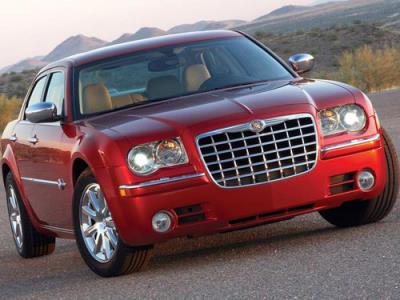
Chrysler 300
The Chrysler 300 is a full-size car first shown at the 2003 New York Auto Show as a concept car. Sales in the U.S. began in the spring of 2004 as an early 2005 model year car. Designed by Ralph Gilles, the new 300 was built as a luxurious sedan while the SRT-8 model was designed to be the high-performance version. The Chrysler 300 is also marketed in Australia, as the first full-size Chrysler vehicle sold there since the Valiant was discontinued in 1981.The Chrysler 300 is based on the rear-wheel drive Chrysler LX platform which features components derived from the W210 Mercedes-Benz E-Class of 1996 to 2002. Shared components include the rear suspension design, front seat frames, wiring harnesses, steering column, the 5-speed automatic transmission's design, and a derivative of the 4Matic all-wheel drive system. The Chrysler 300 also features a double wishbone front suspension that is derived from the W220 Mercedes-Benz S-Class.The basic 300 (or 300C in some countries) comes with standard 17-inch wheels, wheel covers, four-wheel disc brakes, single disc mp3 player, auxiliary input jack, power driver seat and a four-speed automatic transmission. It uses a 2,736 cc (2.736 L; 167.0 cu in) EER V6 making 190 hp (140 kW). In Canada, it comes standard with the Touring model's 3,518 cc (3.5 L; 214.7 cu in) V6 engine. The vehicle comes with standard rear wheel drive and available all wheel drive. The basic 300 model was renamed to LX for 2008, then Touring for 2009 and 2010.
A redesigned 300 was introduced in 2011. Exterior changes include a revised body, bi-xenon HID projector headlights, LED daytime running strips within the headlights, modified tail lights with LEDs and a horizontally slotted front grill. Thinner roof pillars and a more raked windshield will contribute to improved visibility. A dual-pane panoramic sunroof will offer twice the outward visibility of an average sunroof. The new 300 has optional 20-inch polished-aluminum wheels. Interior upgrades included a new instrument panel with "soft-touch" materials throughout, 8.4 inch Uconnect Touch, new steering wheel and center console. Both seat-mounted and curtain side airbags were made standard. The predecessors' 2.7- and 3.5-liter engines were replaced with Chrysler's 3.6-liter Pentastar V6 engine producing 292 horsepower (218 kW) and 260 lb�ft (350 N�m) of torque. The 5.7-liter HEMI V8 engine remained available with 363 horsepower. A 3.0-liter turbodiesel V6 will also be available in Europe. The 2011 model is offered in Touring, Limited, 300C, and 300C AWD configurations. Touring and Limited trims will come with the Pentastar V6 while the 300C line will offer the 5.7. An SRT-8 version was unveiled at the 2011 New York International Auto Show, powered by a 6.4-liter HEMI V8 engine. Also shown was a 300S trim, which featured a blacked-out grille and headlamps, as well as 20-inch polished-face aluminum wheels with black painted pockets, and a 300C Executive series. In Continental Europe it will be sold under the Lancia badge, except for the UK where it will retain the Chrysler badge.
Labels:
Chrysler
Chrysler 300
The Chrysler 300 is a full-size car first shown at the 2003 New York Auto Show as a concept car. Sales in the U.S. began in the spring of 2004 as an early 2005 model year car. Designed by Ralph Gilles, the new 300 was built as a luxurious sedan while the SRT-8 model was designed to be the high-performance version. The Chrysler 300 is also marketed in Australia, as the first full-size Chrysler vehicle sold there since the Valiant was discontinued in 1981.The Chrysler 300 is based on the rear-wheel drive Chrysler LX platform which features components derived from the W210 Mercedes-Benz E-Class of 1996 to 2002. Shared components include the rear suspension design, front seat frames, wiring harnesses, steering column, the 5-speed automatic transmission's design, and a derivative of the 4Matic all-wheel drive system. The Chrysler 300 also features a double wishbone front suspension that is derived from the W220 Mercedes-Benz S-Class.The basic 300 (or 300C in some countries) comes with standard 17-inch wheels, wheel covers, four-wheel disc brakes, single disc mp3 player, auxiliary input jack, power driver seat and a four-speed automatic transmission. It uses a 2,736 cc (2.736 L; 167.0 cu in) EER V6 making 190 hp (140 kW). In Canada, it comes standard with the Touring model's 3,518 cc (3.5 L; 214.7 cu in) V6 engine. The vehicle comes with standard rear wheel drive and available all wheel drive. The basic 300 model was renamed to LX for 2008, then Touring for 2009 and 2010.
A redesigned 300 was introduced in 2011. Exterior changes include a revised body, bi-xenon HID projector headlights, LED daytime running strips within the headlights, modified tail lights with LEDs and a horizontally slotted front grill. Thinner roof pillars and a more raked windshield will contribute to improved visibility. A dual-pane panoramic sunroof will offer twice the outward visibility of an average sunroof. The new 300 has optional 20-inch polished-aluminum wheels. Interior upgrades included a new instrument panel with "soft-touch" materials throughout, 8.4 inch Uconnect Touch, new steering wheel and center console. Both seat-mounted and curtain side airbags were made standard. The predecessors' 2.7- and 3.5-liter engines were replaced with Chrysler's 3.6-liter Pentastar V6 engine producing 292 horsepower (218 kW) and 260 lb�ft (350 N�m) of torque. The 5.7-liter HEMI V8 engine remained available with 363 horsepower. A 3.0-liter turbodiesel V6 will also be available in Europe. The 2011 model is offered in Touring, Limited, 300C, and 300C AWD configurations. Touring and Limited trims will come with the Pentastar V6 while the 300C line will offer the 5.7. An SRT-8 version was unveiled at the 2011 New York International Auto Show, powered by a 6.4-liter HEMI V8 engine. Also shown was a 300S trim, which featured a blacked-out grille and headlamps, as well as 20-inch polished-face aluminum wheels with black painted pockets, and a 300C Executive series. In Continental Europe it will be sold under the Lancia badge, except for the UK where it will retain the Chrysler badge.
Labels:
Chrysler
Subscribe to:
Comments (Atom)