Showing posts with label Daewoo. Show all posts

Friday, August 5, 2011

Daewoo Lacetti

The Daewoo Lacetti is a compact car made by the South Korean automaker GM Daewoo since 2002. The first-generation Lacetti was available as a four-door sedan, a five-door hatchback or a five-door station wagon. The sedan and wagon were designed by Pininfarina, and the hatchback by Giorgetto Giugiaro. The hatchback, known as Lacetti5 in South Korea, was introduced in summer 2004. In November 2008 the second-generation Lacetti was launched under the name Lacetti Premiere, being a badge-engineered version of the Chevrolet Cruze - though co-developed by GM Daewoo and Chevrolet. In South Korea, the 4-door Daewoo Lacetti was released in 2002. The 5-door hatchback showed off only after the 2004 facelift of the sedan, which mainly included a new front grill, switching from a three-part corporate Daewoo grill to a simpler, Chevrolet-style grill. The hatchback name was Lacetti5, offering a specific design for the front, rear and dashboard. The wagon version, called simply Lacetti Wagon, was introduced in late 2007 - strangely as it was already sold in many other countries. It had the same dashboard than the hatchback, with the sedan front end. At the same time, GM Daewoo introduced the VM Motori Diesel engines on the Lacetti range. When the Lacetti Premiere was introduced in November 2008, the sedan and wagon version sales were discontinued, leaving the only hatchback in the range, renamed Lacetti EX. The Lacetti EX was discontinued in October 2009. In Australia and New Zealand, the Daewoo Lacetti was briefly sold between 2003 and 2004 as a four-door sedan. During the 'Asian Economic Crisis', Daewoo became technically insolvent and the company withdrew from the Australian market. From 2005, the Lacetti (sedan and wagon) and Lacetti5 were sold together as the Holden Viva. It was introduced at around the same time as the Daewoo Gentra-based Holden Barina. Unlike the current Barina, however, the Viva was meant to be below the premium Holden Astra as a budget alternative. Despite the Viva's lower price compared to the Astra (A$17,990 compared to A$21,990), the Astra continued to outsell the Viva by a factor of about two-to-one. With the release of the all new Holden Cruze in mid 2009 the Viva ceased to be sold in Australia. The Lacetti was available in Canada as the Chevrolet Optra in two models, a four door hatchback (the Optra5), and an Optra Wagon, all in LS or LT trim levels (2005 Wagon only had Base or LS trim levels) . The sedan was available in 2004 and 2005, but was removed in 2006. All are powered by the 2.0 L inline-4 D-TEC engine, rated at 119 hp (89 kW) at 5400 rpmand 126 ft�lbs (171 N�m) of torque at 4000 rpm, driving the front wheels through either a 5-speed manual transmission or a 4-speed automatic. Despite its compact size and the 2.0L engine, fuel economy was poor rated at 10.7L/ 100 km for city and 7.4 for highway driving which was worse than midsize cars like the Toyota Camry or Honda Accord, considering that the Optra was a compact car.


GM Daewoo Lacetti (Nubira) Commercial

In China, the cars are marketed as the Buick Excelle sedan or wagon and Excelle HRV (hatchback). The sedan, which is also assembled in China, features an updated exterior. GM confirmed the Excelle's successor at its extended product review in August 2009. The car will be based on the Chevy Cruze and will also be sold in the U.S. The second generation hatchback (Excelle XT) made its debut in 2009 while the sedan (Excelle GT) made its debut in 2010.In Europe, the car was initially sold as the Daewoo Nubira, with the production model being introduced at the Frankfurt Motor Show in September 2003. However, by the end of 2004, it was rebadged Chevrolet Lacetti throughout the continent. As with its home market, in some European markets, the Lacetti name is also used for the entire range of sedan, station wagon and hatchback models on the same J-series platform. In Finland and Germany, for example, only the hatchback is sold under the Lacetti name. In 2002, The Lacetti is manufactured in India and sold as the Optra and the hatchback version is sold as the Chevrolet Optra SRV (formerly known/sold as Chevrolet SRV), which they plan to get out with a 2L diesel engine in the near future. The Optra is sold with two engine options, 1.6 L and 1.8 L. In the first option it is available in three trim levels, the Elite, the Elite LS, and LT Royale. In the second engine option it is available in two levels, the LT and the LT AT, the latter coming with automatic transmission. In 2007 GM India came out with a diesel engined Optra called the Optra Magnum. The Magnum had a different nose, and interiors as compared to the petrol version. Subsequently the petrol version got the new nose treatment(like that of the Optra SRV but with a slightly different front grill) and tail lights, and are sold as Optra Magnum petrol/diesel. In Pakistan , the car comes in three trim levels, 1.6L SE, 1.6L LS and 1.8L CDX. SE trim comes in manual transmission only, while LS and CDX trim come in 5 speed manual or 4 speed automatic transmission.In Japan, Suzuki briefly distributed the Lacetti as the Chevrolet Optra Wagon. It was available in two trim levels, the LS and the LT. Both came with either a 5-speed manual or 4-speed automatic transmission with a console shift. The Optra Wagon was powered by a 1.6 L or 1.8 L engine.

In Mexico, the Lacetti came to the market in 2006 as Optra to replace the Chevrolet Cavalier, and it was sold only as a sedan. The Optra was phased out after the 2009 model year in favour of the Chevrolet Cruze, although for now, the Mexican Cruze is an imported model from South Korea. As the United States and Canada got the Lacetti for the 2004 model year, Mexico got the car 2 years later, making Mexico the last North American country to get the car.In Singapore, Chevrolet replaced the Daewoo nameplate after GM bought Daewoo. It still offers the same line-up than GM Daewoo, naming the Optra sedan, Optra station wagon and Optra5 hatchback in Malaysia, Thailand, and the Philippines. In Indonesia, the sedan is simply called Optra or Optra Magnum for the facelift model, and Estate for the station wagon. The vehicles use the 1.6 L or 1.8 L engine with an automatic transmission available for selected models. Suzuki marketed a rebadged Lacetti as the Forenza and Reno beginning in the United States in 2004 � following the end of Daewoo's North American operations in 2002 and replacing the Daewoo Nubira station wagon and sedan. The Forenza/Reno falls between the Aerio (later SX4) and the now-discontinued Verona. In the territories of Guam and Northern Mariana Islands, it was sold as a Chevrolet Optra, but it was only available as a sedan. The US model line features the 2.0 L 4-cylinder E-TEC II made by Holden, developing a maximum power of 126 horsepower (94 kW) at 5600 rpm. Automotive News says the Forenza and Reno will be discontinued within the 2008 model year, and the Reno has been replaced by the Suzuki SX4 sedan after the 2008 model year. The 2010 Suzuki Kizashi, a large compact sedan, replaced the Forenza. It is sold as the Chevrolet Lacetti and includes 5-door hatchback, sedan and station wagon models. The entire line of models are produced at the Avtotor plant in Kaliningrad with full cycle of manufacturing.The second-generation, known as the Lacetti Premiere in South Korea, built on the GM Delta II platform is sold in most markets as the Chevrolet Cruze.This model is known as the Chevrolet Lacetti in the United Kingdom and is available in Hatchback or Estate body styles. It is very similar to the older model and shares many parts, including the bonnet, headlamps and front bumper. The Chevrolet Lacetti was picked as the new "reasonably-priced car" in Top Gear's "Star in a Reasonably-Priced Car" segment for season 8 in 2006, replacing the Suzuki Liana, which had ceased production. In this segment of the show, celebrity guests set timed laps of the Top Gear test track driving the Lacetti. In the first episode of series 15 of Top Gear, broadcast on BBC2 on 27 June, the Lacetti that was used for the power laps was given a 'Viking Burial' by presenter Richard Hammond when an industrial chimney was demolished, knocking it over and burying the Lacetti in the process. Soon afterwards, the new reasonably priced car (a Kia Cee'd) was unveiled to the audience.

Friday, June 10, 2011

Daewoo Lanos

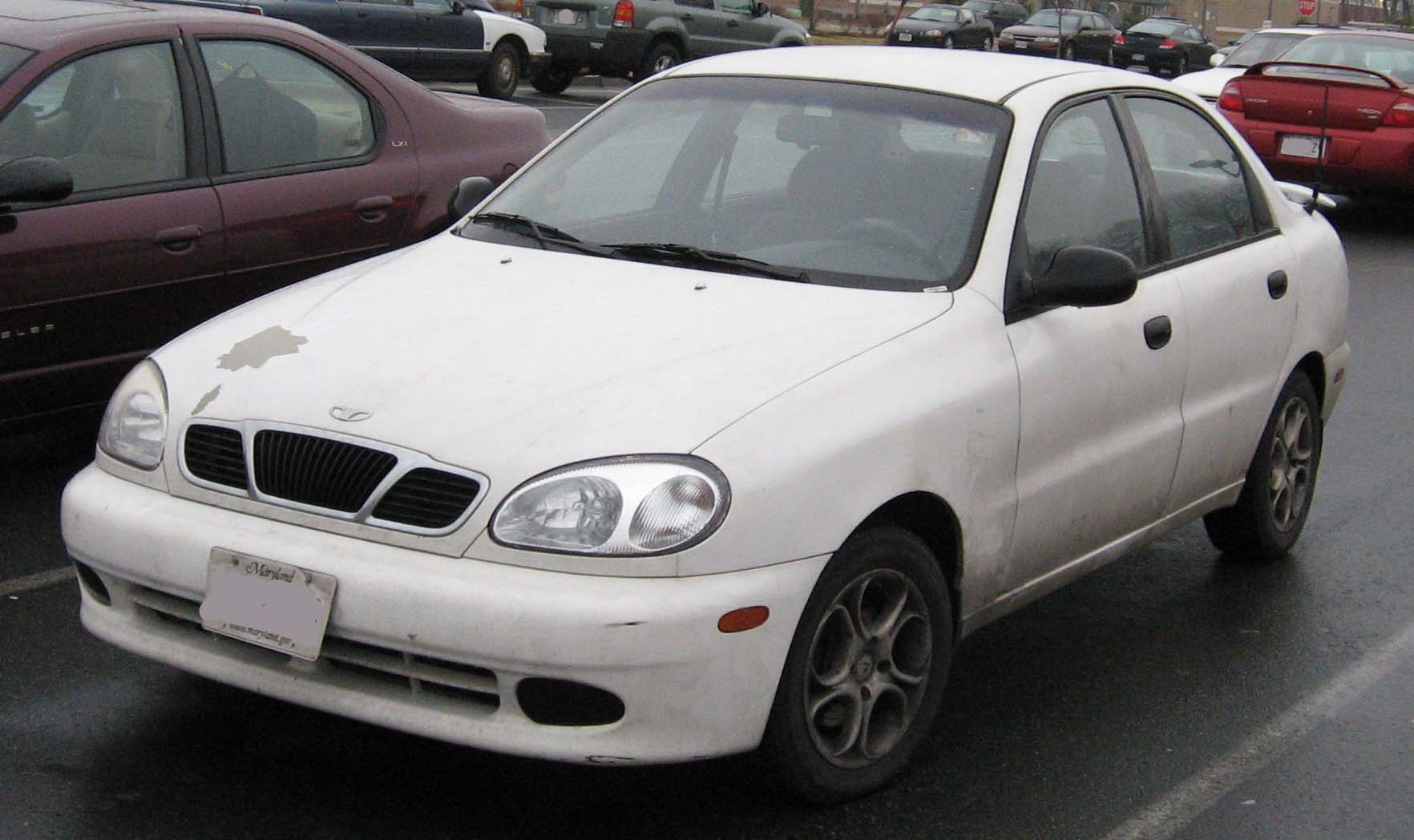
The Daewoo Lanos was a subcompact car manufactured by the Korean automaker Daewoo Motor from 1997 to 2002, and from 1997 to 2008 made under a license agreement by the Fabryka Samochod�w Osobowych (FSO) in Poland, marketed as FSO Lanos, and assembled in Ukraine in modified versions known as Daewoo Sens and Chevrolet Lanos. The Chevrolet Lanos is also manufactured and sold in Egypt, from November 2008 to present (2011). For a brief period, it was also assembled by TagAZ in Russia, marketed as Doninvest Assol. The Lanos was designed by Giorgetto Giugiaro and featured three body styles - 3-door and 5-door hatchbacks and a 4-door sedan. Lanos was designed to replace Daewoo Nexia in the Daewoo lineup and was itself replaced by Daewoo Kalos.
In 1992, Daewoo dissolved its joint-venture with General Motors, and simultaneously a decision was made to independently develop replacements for the contemporary Daewoo Motors products, based on older General Motors models. The Lanos development programme was formally started in autumn 1993, with the goal to create a car to replace Daewoo Nexia as Daewoo's small family car.


ANGEL EYES daewoo lanos

The project began with a comparative study of competing models from 20 different manufacturers, with Toyota Tercel, Opel Astra and Volkswagen Golf identified as most competitive. Four design studios were commissioned to deliver clay models preseting their ideas for the new model's styling. Giorgetto Giugiaro's design was chosen, and Italdesign was commissioned to develop the car's final outside and interior styling. The technical side of the project was conducted simultaneously by Daewoo's development centre Korea as well as suppliers and contractors, who were involved in developing particular components. This included AC Rochester (engine componentry), Delco Chassis Division (brakes, including ABS), GM Powertrain (automatic transmission), Italdesign (body, structural analysis, electrics, prototype construction), PARS Passive R�ckhaltesysteme GmbH (airbags) and Porsche (vehicle concept � research, structural analysis, suspension and brake components, and experimental production supervision). The cars were equipped with GM Family 1 D-TEC I4 engines ranging from 1.5 L (1549 cc) SOHC to 1.6 L (1598 cc) DOHC. In the UK and many countries of Europe (like Italy, France or Austria) there are also E-TEC models 1.4 (1349 cc) and 1.6 (1598 cc). The suspension is built upon that of a Daewoo Nexia, as used in Vauxhall/Opel Astra Mk2 GTE. The four models available were S, SE, SE Plus, SX, and later, the SPORT model. The S was the base model and did not include many standard features (like a CD player or power windows). The SE was just a small step up from the S base model. However, the SX model usually included a CD, radio, and cassette player along with power windows, a power side mirror, and fog lights. A few select SX models even came with a sun-roof though not many did. In the Lanos's later years, the SE and SX models were dropped and replaced with a new trim line called the SPORT (2001�2002). The SPORT included several features similar to the SX, but also included red/black leather seats, and a metallic silver dash trim. Also, the SPORT model had window controls located on the doors rather than the center console (like in the previous trim lines).

CKD kits were supplied to the Polish car factory FSO, the Ukrainian ZAZ and Russian TagAZ (where it was briefly sold as the Doninvest Assol). From 2002, ZAZ equipped some of the kits with a domestic MeMZ-307 engine and sold this version under the Daewoo Sens name; this practice continues with the start of full-scale production of model T150. In 2004, ZAZ adopted the Lanos chassis for full-scale production and installed new welding and painting lines. The updated version is called the ZAZ Lanos (internal model T150). The engines are still supplied by GM Daewoo, although ZAZ is currently seeking a way to acquire modern engine technology. ZAZ is selling the Lanos as ZAZ Sens. The "Sens" name is used on the pre-facelift models. Since January 2005, the Lanos produced in Poland started to be sold under the brand name of FSO. In 2005, General Motors contracted with ZAZ to provide Ukrainian-assembled Lanos models for the Russian market, to be imported duty-free, thanks to an international agreement, and sold through the GM dealer network. Sales of the Chevrolet Lanos sedan commenced in Russia in November 2005. The Chevrolet brand was utilized to compete effectively with the Renault Logan. In 2006, a panel van variant of the ZAZ Lanos was introduced. The 5-door hatchback version was available with all the options and manual transmission; it was also called Daewoo "Juliet" in Egypt. Near the end of year 2000 the Lanos was introduced with a different rear end design and a face lifted front. It was called "Lanos II" in this particular market. A SE version came with all the options plus the manual transmission. The automatic transmission version was stopped shortly after the introduction of the "Lanos II". In November 2008, GM Egypt started selling Chevrolet Lanos. The car is built in the company's factory in 6 October district and it is basically a Daewoo Lanos with a Chevrolet emblem. The Lanos was finally phased out after the 2002 model year, superseded worldwide by the Daewoo Kalos. Daewoo ceased operations in North America. After GM took over Daewoo to become GMDAT, Chevrolet began importing the Daewoo Kalos, rebadged as the Aveo, to North America beginning with MY2004. The 2001 and 2002 models follow a recent trend among cars intended to be sold in many markets, in that their rear lamps are asymmetric, with the fog lamp and reverse lamp occupying complementary spots on the driver's side and passenger side respectively; consequently, the rear lamps differ between left- and right-hand drive examples.

Daewoo Lanos

The Daewoo Lanos was a subcompact car manufactured by the Korean automaker Daewoo Motor from 1997 to 2002, and from 1997 to 2008 made under a license agreement by the Fabryka Samochod�w Osobowych (FSO) in Poland, marketed as FSO Lanos, and assembled in Ukraine in modified versions known as Daewoo Sens and Chevrolet Lanos. The Chevrolet Lanos is also manufactured and sold in Egypt, from November 2008 to present (2011). For a brief period, it was also assembled by TagAZ in Russia, marketed as Doninvest Assol. The Lanos was designed by Giorgetto Giugiaro and featured three body styles - 3-door and 5-door hatchbacks and a 4-door sedan. Lanos was designed to replace Daewoo Nexia in the Daewoo lineup and was itself replaced by Daewoo Kalos.
In 1992, Daewoo dissolved its joint-venture with General Motors, and simultaneously a decision was made to independently develop replacements for the contemporary Daewoo Motors products, based on older General Motors models. The Lanos development programme was formally started in autumn 1993, with the goal to create a car to replace Daewoo Nexia as Daewoo's small family car.


ANGEL EYES daewoo lanos

The project began with a comparative study of competing models from 20 different manufacturers, with Toyota Tercel, Opel Astra and Volkswagen Golf identified as most competitive. Four design studios were commissioned to deliver clay models preseting their ideas for the new model's styling. Giorgetto Giugiaro's design was chosen, and Italdesign was commissioned to develop the car's final outside and interior styling. The technical side of the project was conducted simultaneously by Daewoo's development centre Korea as well as suppliers and contractors, who were involved in developing particular components. This included AC Rochester (engine componentry), Delco Chassis Division (brakes, including ABS), GM Powertrain (automatic transmission), Italdesign (body, structural analysis, electrics, prototype construction), PARS Passive R�ckhaltesysteme GmbH (airbags) and Porsche (vehicle concept � research, structural analysis, suspension and brake components, and experimental production supervision). The cars were equipped with GM Family 1 D-TEC I4 engines ranging from 1.5 L (1549 cc) SOHC to 1.6 L (1598 cc) DOHC. In the UK and many countries of Europe (like Italy, France or Austria) there are also E-TEC models 1.4 (1349 cc) and 1.6 (1598 cc). The suspension is built upon that of a Daewoo Nexia, as used in Vauxhall/Opel Astra Mk2 GTE. The four models available were S, SE, SE Plus, SX, and later, the SPORT model. The S was the base model and did not include many standard features (like a CD player or power windows). The SE was just a small step up from the S base model. However, the SX model usually included a CD, radio, and cassette player along with power windows, a power side mirror, and fog lights. A few select SX models even came with a sun-roof though not many did. In the Lanos's later years, the SE and SX models were dropped and replaced with a new trim line called the SPORT (2001�2002). The SPORT included several features similar to the SX, but also included red/black leather seats, and a metallic silver dash trim. Also, the SPORT model had window controls located on the doors rather than the center console (like in the previous trim lines).

CKD kits were supplied to the Polish car factory FSO, the Ukrainian ZAZ and Russian TagAZ (where it was briefly sold as the Doninvest Assol). From 2002, ZAZ equipped some of the kits with a domestic MeMZ-307 engine and sold this version under the Daewoo Sens name; this practice continues with the start of full-scale production of model T150. In 2004, ZAZ adopted the Lanos chassis for full-scale production and installed new welding and painting lines. The updated version is called the ZAZ Lanos (internal model T150). The engines are still supplied by GM Daewoo, although ZAZ is currently seeking a way to acquire modern engine technology. ZAZ is selling the Lanos as ZAZ Sens. The "Sens" name is used on the pre-facelift models. Since January 2005, the Lanos produced in Poland started to be sold under the brand name of FSO. In 2005, General Motors contracted with ZAZ to provide Ukrainian-assembled Lanos models for the Russian market, to be imported duty-free, thanks to an international agreement, and sold through the GM dealer network. Sales of the Chevrolet Lanos sedan commenced in Russia in November 2005. The Chevrolet brand was utilized to compete effectively with the Renault Logan. In 2006, a panel van variant of the ZAZ Lanos was introduced. The 5-door hatchback version was available with all the options and manual transmission; it was also called Daewoo "Juliet" in Egypt. Near the end of year 2000 the Lanos was introduced with a different rear end design and a face lifted front. It was called "Lanos II" in this particular market. A SE version came with all the options plus the manual transmission. The automatic transmission version was stopped shortly after the introduction of the "Lanos II". In November 2008, GM Egypt started selling Chevrolet Lanos. The car is built in the company's factory in 6 October district and it is basically a Daewoo Lanos with a Chevrolet emblem. The Lanos was finally phased out after the 2002 model year, superseded worldwide by the Daewoo Kalos. Daewoo ceased operations in North America. After GM took over Daewoo to become GMDAT, Chevrolet began importing the Daewoo Kalos, rebadged as the Aveo, to North America beginning with MY2004. The 2001 and 2002 models follow a recent trend among cars intended to be sold in many markets, in that their rear lamps are asymmetric, with the fog lamp and reverse lamp occupying complementary spots on the driver's side and passenger side respectively; consequently, the rear lamps differ between left- and right-hand drive examples.

Friday, May 13, 2011

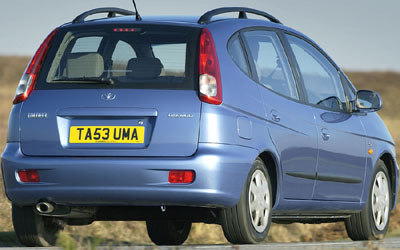
Dewoo Tacuma

The Daewoo Tacuma or Rezzo is a Mini MPV produced by South Korean GM Daewoo since 2000. Developed under the U100 code name, it was designed by Pininfarina and is based on the original Daewoo Nubira J100, a compact car.

Following the phasing out of Daewoo as a brand in most export markets, the car was rebadged as Chevrolet, retaining either model name depending on the market. Additionally, the Chevrolet Vivant nameplate was introduced for the South African and South American markets.

Dewoo Tacuma Multifunction Baggage

Dewoo Tacuma Concept

Dewoo Tacuma Interior View

On an episode of Top Gear, presenter Jeremy Clarkson commented that the Tacuma contradicted its trim name "Xtra Cool" and the only way to drive one was to wear a box on your head.

Dewoo Tacuma Rare Seat View

Luxury Silver Dewoo Tacuma

The Tacuma comes with 1.6 L Family 1 or 2.0 L Family II straight-4 engines. It is available with a five-speed manual transmission or a four-speed automatic. Standard Tacumas have a seating capacity of five, but a seven-seater version was also introduced for the South Korean market. Maximum luggage capacity of the Tacuma is 1425 L.

In Korea, it is called Rezzo. It comes with 2.0 L Family II straight-4 engines and 2.0L E-TEC SOHC Liquefied petroleum gas (LPG) engines. Most Rezzo's come fitted with an LPG powered engine because gasoline is very expensive in Korea.

Dewoo Tacuma

The Daewoo Tacuma or Rezzo is a Mini MPV produced by South Korean GM Daewoo since 2000. Developed under the U100 code name, it was designed by Pininfarina and is based on the original Daewoo Nubira J100, a compact car.

Following the phasing out of Daewoo as a brand in most export markets, the car was rebadged as Chevrolet, retaining either model name depending on the market. Additionally, the Chevrolet Vivant nameplate was introduced for the South African and South American markets.

Dewoo Tacuma Multifunction Baggage

Dewoo Tacuma Concept

Dewoo Tacuma Interior View

On an episode of Top Gear, presenter Jeremy Clarkson commented that the Tacuma contradicted its trim name "Xtra Cool" and the only way to drive one was to wear a box on your head.

Dewoo Tacuma Rare Seat View

Luxury Silver Dewoo Tacuma

The Tacuma comes with 1.6 L Family 1 or 2.0 L Family II straight-4 engines. It is available with a five-speed manual transmission or a four-speed automatic. Standard Tacumas have a seating capacity of five, but a seven-seater version was also introduced for the South Korean market. Maximum luggage capacity of the Tacuma is 1425 L.

In Korea, it is called Rezzo. It comes with 2.0 L Family II straight-4 engines and 2.0L E-TEC SOHC Liquefied petroleum gas (LPG) engines. Most Rezzo's come fitted with an LPG powered engine because gasoline is very expensive in Korea.

Tuesday, April 5, 2011

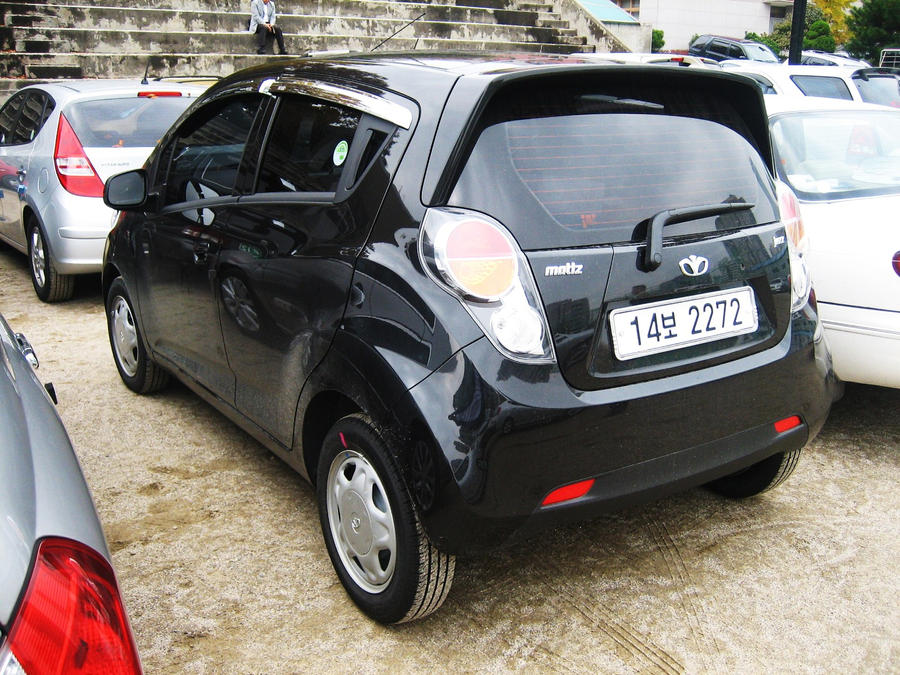
Daewoo Matiz

The Daewoo Matiz is a city car produced by the South Korean automaker GM Korea, marketed worldwide since 1998 when it replaced the Daewoo Tico. It is available solely as a five-door hatchback with two engine configurations. The Matiz was originally designed by Italdesign Giugiaro, and has received two facelifts. Various generations of the car have been sold under both Daewoo and various GM brands, and have been manufactured and marketed under license agreements by local automakers in several countries. The Matiz was built between 1998 and 2006 over 2.3 million units[1] in the world. The Matiz was at the center of a 2006 international intellectual property rights controversy, with the design of the M100 copied outright by Chinese manufacturer Chery in its QQ. The production of Daewoo Matiz started in 1998 and it was sold in South Korea and many European markets with the code name M100. The exterior design is based on the Lucciola, a Fiat Cinquecento concept by Italdesign Giugiaro which had been rejected by Fiat. The 0.8-litre gasoline engine and the transmission were carryovers from the Daewoo Tico. Engineering was carried out at Daewoo's Worthing Technical Centre in England. The car became the best selling Daewoo model in Europe and in India for the next four years. The Matiz was originally launched with just a 0.8 L 3-cylinder engine. This engine was developed from the TICO unit by Tickford, a UK company based in Milton Keynes. The Tickford connection was acknowledged in the brochures distributed in UK showrooms.


In 2005 the Matiz received substantial modifications (M200), previewed by the Chevrolet M3X concept car shown at 2004 Paris Motor Show. The upper body was significantly revised based again on a design from Italdesign Giugiaro, the S-Tec engines were updated and the car's drag coefficient was lowered, resulting in better fuel economy. The interior was also significantly revised, one notable feature of this car being its centre-mounted instrument cluster. The platform was also revised, with a twist-beam rear suspension system replacing the previous 3-link beam axle, and the front suspension making use of cast, rather than pressed and fabricated, lower control arms. In 2008, the 800cc engine was revised to fall below the 120g/km level, thus qualifying for the UK's �35 road tax band and no London Congestion Charge. In Europe it was sold under the name Chevrolet Matiz but in Italy exist the LPG version was called Chevrolet Matiz Eco Logic. The Matiz Eco Logic was built from 2007 to 2010 in over 60,000 vehicles by BRC Gas Equipment in Cherasco, Cuneo (Italy). In South Korea, where it is sold only with a 800 cc engine and following the introduction of M300 Matiz (Matiz Creative), the M200 Matiz was renamed to Matiz Classic. Chevrolet Spark LPG: was a version for the Indian market with Sequential Injection-type LPG kit. Available models include 1.0L PS and 1.0L LS. The car was unveilled on World Environment Day in New Delhi. The 2005 Chevrolet Matiz scored three stars (with one strike through) in the EuroNCAP crash test: "The final adult occupant protection star is struck through because there was an unacceptably high risk of life-threatening injury to the chest in side impact." In contrast, the pre-2005 Daewoo Matiz was awarded 72% in the side impact Euro NCAP. In Europe, the Matiz is equipped with front seatbelt pretensioners, front seatbelt load limiters, driver and passenger frontal airbags and ISOFIX rear anchorages.


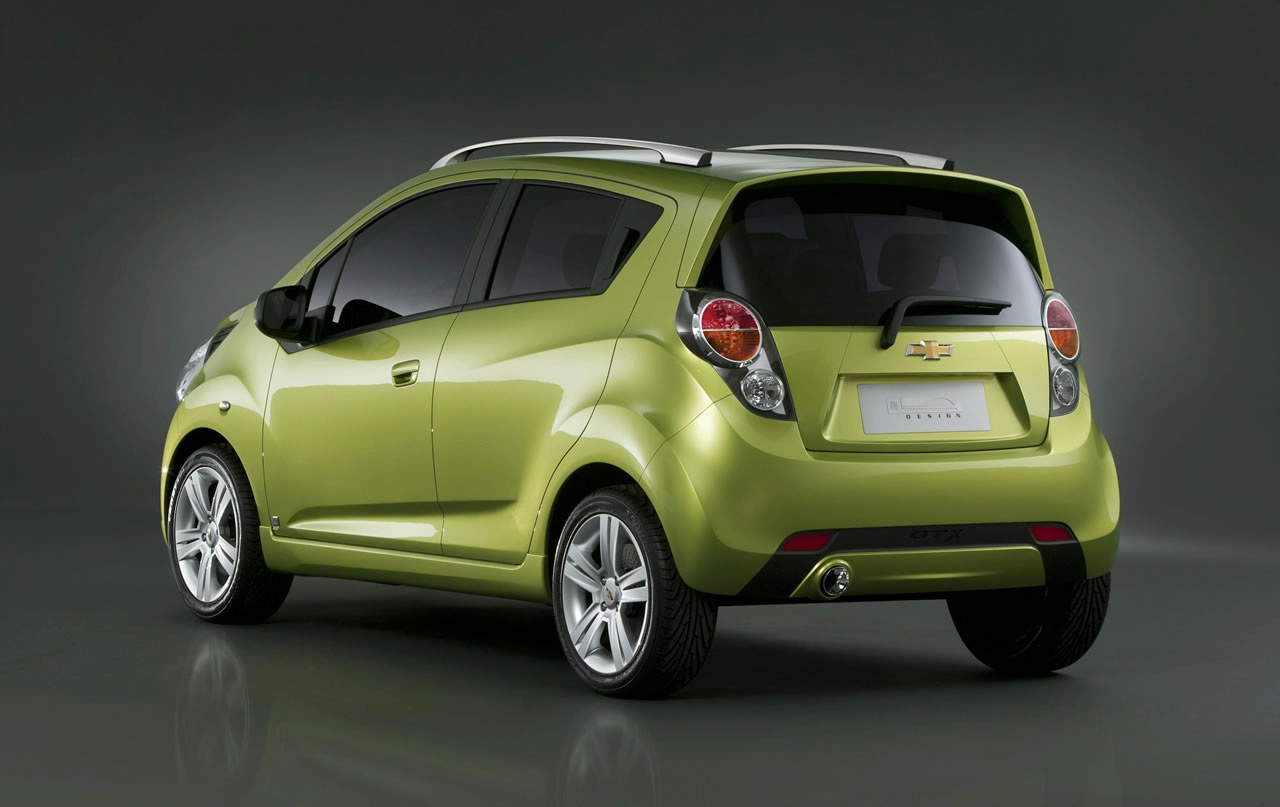
The Chevrolet Beat was unveiled at the 2007 New York International Auto Show alongside two other concept vehicles, the Trax and the Groove. The Beat is a front-drive, three-door hatchback concept, derived from the Daewoo Kalos. It was built in India, and designed by GM Daewoo in South Korea. It is powered by a 1.2 L turbocharged gasoline engine mated to an automatic transmission. The Beat concept sports a Vertigo Green exterior paint job with the same hue carried over to parts of the interior. Its profile is high at the rear and tapering down evenly to the front of the grille. Headlights that appear to extend all the way from the base of the grille to the base of the windshield are LED-type. Oversize 17 inch wheels barely hide the matching green paint of disc brakes. Twin taillights that extend upward to the back-up lights are also LED's. In early 2007, GM conducted a poll testing the relative popularity of the Beat, Trax and Groove concepts on a Chevrolet website, with the Beat receiving nearly 50% of the vote, which ultimately determined the car making it into production. This car was designed to appeal to young car buyers in urban markets, infusing the energy, diversity and excitement of urban life into a car that would deliver good-looking fun, fuel economy and value. GM presented a pre-production version of the Chevrolet Beat carrying the Chevrolet Spark nameplate at the 2009 North American International Auto Show. The production version was announced at the 2009 North American International Auto Show, but only the Beat concept was shown at the time. The production Chevrolet Spark was unveiled at the 2009 Geneva Motor Show. It is expected to be available in the first quarter of 2010 in Europe, followed by other markets worldwide, with US sales set to begin in early 2012. Commercial production of a 5-door Chevrolet Beat started from December 15, 2009, in Halol, India. It was launched in India on January 5, 2010, during Auto Expo New Delhi, India. The GM Daewoo Matiz version was unveiled in Seoul Motor Show 2009. The Holden version, named Barina Spark, was revealed at the 2010 Australian International Motor Show in Sydney in October. A photo was revealed on October 8. The Auto platform was replaced by GM Gamma platform, developed by GM Daewoo engineers.

Daewoo Matiz

The Daewoo Matiz is a city car produced by the South Korean automaker GM Korea, marketed worldwide since 1998 when it replaced the Daewoo Tico. It is available solely as a five-door hatchback with two engine configurations. The Matiz was originally designed by Italdesign Giugiaro, and has received two facelifts. Various generations of the car have been sold under both Daewoo and various GM brands, and have been manufactured and marketed under license agreements by local automakers in several countries. The Matiz was built between 1998 and 2006 over 2.3 million units[1] in the world. The Matiz was at the center of a 2006 international intellectual property rights controversy, with the design of the M100 copied outright by Chinese manufacturer Chery in its QQ. The production of Daewoo Matiz started in 1998 and it was sold in South Korea and many European markets with the code name M100. The exterior design is based on the Lucciola, a Fiat Cinquecento concept by Italdesign Giugiaro which had been rejected by Fiat. The 0.8-litre gasoline engine and the transmission were carryovers from the Daewoo Tico. Engineering was carried out at Daewoo's Worthing Technical Centre in England. The car became the best selling Daewoo model in Europe and in India for the next four years. The Matiz was originally launched with just a 0.8 L 3-cylinder engine. This engine was developed from the TICO unit by Tickford, a UK company based in Milton Keynes. The Tickford connection was acknowledged in the brochures distributed in UK showrooms.


In 2005 the Matiz received substantial modifications (M200), previewed by the Chevrolet M3X concept car shown at 2004 Paris Motor Show. The upper body was significantly revised based again on a design from Italdesign Giugiaro, the S-Tec engines were updated and the car's drag coefficient was lowered, resulting in better fuel economy. The interior was also significantly revised, one notable feature of this car being its centre-mounted instrument cluster. The platform was also revised, with a twist-beam rear suspension system replacing the previous 3-link beam axle, and the front suspension making use of cast, rather than pressed and fabricated, lower control arms. In 2008, the 800cc engine was revised to fall below the 120g/km level, thus qualifying for the UK's �35 road tax band and no London Congestion Charge. In Europe it was sold under the name Chevrolet Matiz but in Italy exist the LPG version was called Chevrolet Matiz Eco Logic. The Matiz Eco Logic was built from 2007 to 2010 in over 60,000 vehicles by BRC Gas Equipment in Cherasco, Cuneo (Italy). In South Korea, where it is sold only with a 800 cc engine and following the introduction of M300 Matiz (Matiz Creative), the M200 Matiz was renamed to Matiz Classic. Chevrolet Spark LPG: was a version for the Indian market with Sequential Injection-type LPG kit. Available models include 1.0L PS and 1.0L LS. The car was unveilled on World Environment Day in New Delhi. The 2005 Chevrolet Matiz scored three stars (with one strike through) in the EuroNCAP crash test: "The final adult occupant protection star is struck through because there was an unacceptably high risk of life-threatening injury to the chest in side impact." In contrast, the pre-2005 Daewoo Matiz was awarded 72% in the side impact Euro NCAP. In Europe, the Matiz is equipped with front seatbelt pretensioners, front seatbelt load limiters, driver and passenger frontal airbags and ISOFIX rear anchorages.


The Chevrolet Beat was unveiled at the 2007 New York International Auto Show alongside two other concept vehicles, the Trax and the Groove. The Beat is a front-drive, three-door hatchback concept, derived from the Daewoo Kalos. It was built in India, and designed by GM Daewoo in South Korea. It is powered by a 1.2 L turbocharged gasoline engine mated to an automatic transmission. The Beat concept sports a Vertigo Green exterior paint job with the same hue carried over to parts of the interior. Its profile is high at the rear and tapering down evenly to the front of the grille. Headlights that appear to extend all the way from the base of the grille to the base of the windshield are LED-type. Oversize 17 inch wheels barely hide the matching green paint of disc brakes. Twin taillights that extend upward to the back-up lights are also LED's. In early 2007, GM conducted a poll testing the relative popularity of the Beat, Trax and Groove concepts on a Chevrolet website, with the Beat receiving nearly 50% of the vote, which ultimately determined the car making it into production. This car was designed to appeal to young car buyers in urban markets, infusing the energy, diversity and excitement of urban life into a car that would deliver good-looking fun, fuel economy and value. GM presented a pre-production version of the Chevrolet Beat carrying the Chevrolet Spark nameplate at the 2009 North American International Auto Show. The production version was announced at the 2009 North American International Auto Show, but only the Beat concept was shown at the time. The production Chevrolet Spark was unveiled at the 2009 Geneva Motor Show. It is expected to be available in the first quarter of 2010 in Europe, followed by other markets worldwide, with US sales set to begin in early 2012. Commercial production of a 5-door Chevrolet Beat started from December 15, 2009, in Halol, India. It was launched in India on January 5, 2010, during Auto Expo New Delhi, India. The GM Daewoo Matiz version was unveiled in Seoul Motor Show 2009. The Holden version, named Barina Spark, was revealed at the 2010 Australian International Motor Show in Sydney in October. A photo was revealed on October 8. The Auto platform was replaced by GM Gamma platform, developed by GM Daewoo engineers.

Thursday, December 9, 2010

2011 Daewoo Matiz


2011 Daewoo Matiz with the speed


Green 2011 Daewoo Matiz


Speedometer of 2011 Daewoo Matiz


Blue 2011 Daewoo Matiz


2011 Daewoo Matiz from beside


Steering wheel of 2011 Daewoo Matiz


Red 2011 Daewoo Matiz


Black 2011 Daewoo Matiz looks back

2011 Daewoo Matiz


2011 Daewoo Matiz with the speed


Green 2011 Daewoo Matiz


Speedometer of 2011 Daewoo Matiz


Blue 2011 Daewoo Matiz


2011 Daewoo Matiz from beside


Steering wheel of 2011 Daewoo Matiz


Red 2011 Daewoo Matiz


Black 2011 Daewoo Matiz looks back

Super Sport Car Evolution