Showing posts with label new. Show all posts

Monday, August 8, 2011

Nissan Versa Sedan

Compact sedans are all the rage, with a host of new entries from both domestic and import manufacturers reaching showrooms recently. Nissan will cash in on that popularity with the 2012 Versa sedan, debuting today at the New York auto show with refreshed styling and tweaks to improve fuel economy.
The 2012 Versa rides on an evolution of the last car's platform called V, for Versatile. The sedan's wheelbase and width are unchanged from the current model, but it loses about an inch of length and height. Despite this, Nissan says that packaging improvements for the engine and transaxle mean there is more trunk space. The new car also should be marginally lighter than before.


Styling-wise, the new Versa takes cues from the larger Altima and Maxima sedans, starting with a new grille design and oval-shaped headlights, and continued with a smoother rear and reshaped taillights that sweep from the rear bumper to the Versa's rear haunches. The hood and sides are broken up by an assortment of creased character lines akin to those seen on the Hyundai Elantra. Whereas the old Versa had a more conventional flat roof and steep rear window, the new car's roofline gently slopes toward the trunk, following the coupe-like trend. The exterior changes reportedly help achieve a low 0.31 drag coefficient.

Thursday, August 4, 2011

Lamborghini Sesto Elemento

Sports car manufacturer, Lamborghini is ready to make a breakthrough in September to introduce a new sports car. Lamborghini is not saying, but the news last blow that car was the Lamborghini Sesto Elemento.
According to the plan, Lamborghini will introduce a super sports car mat Tuesday at the Frankfurt Motor Show which opens on September 13, as quoted from leftlanenews next Wednesday (08/03/2011).


Lamborghini Sesto Elemento which is the production version will be introduced after the concept version shown at the auto show Paris Motor Show in 2010.
This car merupaka a very special car. For the Lamborghini Sesto Elemento using carbon fiber materials for the entire material. Sesto Elemento own name seems to refer to the number of carbon atoms of the element which is the figure 6 (Sixth Element).
By using the carbon fiber body weight of the car becomes very light which is only 999 kg. Super lightweight body is also a benefit for the speed enthusiast.
Due to the lightweight body, boost a typical malignant Lamborghini engine capable of carrying Sesto Elemento ran 0-100 km / h in just 2.5 seconds, with a maximum speed reaches 354 km / hour.


Ability is obtained from the ear of a capacity of 5.2 liter V10 engine that reportedly will strengthen the kitchen of this Italian car racing. This machine has a power of 560 horsepower.
Reportedly, this car will be produced only in very limited quantities of 20 units only. And because the specifications are almost perfectly with the amount of production very limited, it is no wonder that most likely the price of this car will greatly deplete the pockets of the millionaires. Chances are, Lamborghini Sesto Elemento be released at a price range of U.S. $ 2.9 million
When it does occur, then even this super-fast car will asked as the world's most expensive car the Bugatti Veyron to get rid of the crown which currently has it.
Because the numbers are slightly more expensive than the Bugatti Veyron's price tag is removed from the 1.45 million pounds or approximately up to 1.62 million pounds

Sunday, July 31, 2011

Nissan LEAF

It would be easy to paint Nissan as late to the burgeoning U.S. green party, as the company essentially only counts the Altima Hybrid to sell among its alt-fuel offerings � and that sedan utilizes technology borrowed from Toyota, and it's only sold in a few states in small volumes. While that may be the case, Nissan says their near-term prospects are really quite different. While the company has admittedly been cautious in marketing alt-fuel vehicles in North America, they have been hard at work developing electric vehicles � as well as the advanced lithium-ion batteries to support them � since 1992. What's more, officials say they are now singularly well-placed to leapfrog "transitional" powertrain solutions like gas-electric hybrids in favor of genuine zero-emissions vehicles, and they are promising that their first pure-electric car will reach U.S. shores late next year.


That car, the Nissan Leaf shown here, is the reason we find ourselves in the company's brand-new Yokohama headquarters today. Designed as a four-to-five seat, front-drive C-segment hatchback, Nissan says the Leaf is not just for use as a specialty urban runabout, but rather, it was designed as an everyday vehicle � a "real car" whose 160-kilometer+ (100 mile) range meets the needs of 70% of the world's motorists. In the case of U.S. consumers, Nissan says that fully 80% of drivers travel less than 100km per day (62 miles), making the Leaf a solid fit for America's motoring majority, even taking into account power-sapping external factors like hilly terrain, accessory draw, and extreme temperatures.

We were afforded an advance look at the Leaf ahead of the car's unveiling today, and while it was a hands-off affair, we did have the chance to formulate some in-the-metal first impressions and take a deep dive into the car's technology. Click through to the jump to learn all about it.

BMW M1

The premium compact BMW 1-Series is already synonymous with driving pleasure. Now, the second generation offers state-of-the-art engine and suspension technology, further improvements in fuel efficiency, significantly more space and an innovative range of features and equipment. Still the only rear-wheel-driven car in its class, it builds on the strengths of its predecessor, which has already sold more than one million units worldwide. With its outstanding handling and design, innovative technology and premium image, the new BMW 1-Series has consolidated its position as a pioneering individualist in the competitive five-door segment.
BMW's entry-level model has achieved maturity, offering an even better balance between sportiness and driving comfort, improved functionality, and numerous driver assistance systems previously available only in higher segments. This is also apparent in its size. The body of the new BMW 1-Series is 85 millimetres longer than its predecessor, at 4,324 millimetres, while the wheelbase has widened by 30 millimetres to 2,690 millimetres. The car also looks more powerful because its overall width has increased by 17 millimetres to 1,765 millimetres (due to an increase in track of 51 millimetres at the front and 72 millimetres at the rear), whereas its height remains unchanged at 1,421 millimetres. The rear seats have 21 millimetres more legroom, and the luggage compartment has expanded by 30 litres to 360 litres.\


The design of the new generation is a powerful expression of the latest technological advances. The model's fresh, youthful image has been stylishly updated, with precision-moulded body surfaces and a modern, functional interior both underlining its premium status. Another innovation is the BMW Sport Line and BMW Urban Line, two ranges of interior and exterior design features and equipment that provide exclusive personalization opportunities.

Jaguar XKR-S

Making its debut at the 2011 Geneva Motor Show, the Jaguar XKR-S is the most extreme expression yet of Jaguar's passion for building beautiful, fast cars. For the first time with a series production car, Jaguar gains entry to the exclusive '300kph club' thanks to the effortless performance of the supercharged 5.0-litre AJ-V8 engine. A revised fuelling map means the direct-injection powerplant now produces 550PS and 680Nm of torque. Extensive recalibration has ensured that power delivery and performance are seamless, contributing to a 0-60mph time of 4.2 seconds. The Performance active exhaust encourages and rewards the enthusiastic driver with dramatic, motorsport-inspired aural feedback.


The Jaguar XKR-S is not merely the quickest Jaguar ever but also the most agile, responsive and driver-focused. The pinnacle of the XK range builds on feedback gathered from the supercharged XKR and has been developed to extend the performance parameters of the car. This new harder-edged character allows the enthusiastic driver to explore the outer limits of the car's dynamics without losing the refinement and usability for which Jaguar is famous. The structural integrity of the lightweight aluminium platform allowed the suspension to be reworked with bespoke components for increased stiffness without a commensurate loss in either refinement or Jaguar's legendary ride comfort. A reworked aluminium front suspension knuckle and revised rear geometry are allied to stiffer springs and dampers, lightweight forged alloy wheels and recalibrated steering effort to minimise any response delays and produce a more connected and agile driving experience.

Tuesday, July 19, 2011

Mercedes A-Class Concept

A lot of news that Mercedes has led to the Shanghai Motor Show 2011: Concept in addition to Class A, Class A preview of the next that will represent a revolution in the history of the model, the star exhibited for the first time all of its product in China Latest: C-Class facelift, the new CLS and the new SLK. The Stuttgart company, the premium brand that is experiencing the greatest rate of growth in China since last year, will further strengthen the trend: by 2015 China will be the first market in the world for Mercedes.

The Concept A Class, equipped with a new 2.0 direct injection turbo four-cylinder 210 hp, which is in turn coupled with an unprecedented seven-speed dual-clutch gearbox, sums up the direction that will move the industry�s development powertrain Mercedes. This prototype, based on the new front-wheel drive MFA door for the first time in the lower range of the Star of innovations such as Brake Assist and Adaptive Assisted Collision Prevention, unpublished radar to prevent collisions that will be standard on the next class A and Class B.

The M270, a unit that is part of the BlueEFFICIENCY range, is made ??entirely of aluminum and will of course be mounted in a transverse position. After the two-liter version, it will reach more than a cylinder, always united by turbocharging and direct fuel injection. As the recent concept car Smart signed, this prototype has a slot for smartphones that allows you to use all the features of their mobile device via the Comand infotainment system Online.

Friday, July 8, 2011

Renault Frendzy Concept

French automaker Renault has just unveiled its latest zany electric concept. Called Frendzy, this electrifying vehicle is a 14-foot-long whimsical design study that showcases some of the automaker's innovative technologies.

For motivation, the Frendzy makes use of the electric gear that powers the Renault Kangoo Z.E. Renault has not revealed the Frendzy's estimated range, but does claim the battery-powered concept tops out at 80 miles per hour.


Renault pitches the Frendzy as a multi-purpose vehicle, saying that it transforms from a workaday vehicle to a family-hauling machine on weekends. Renault describes the Frendzy's transformation like this:

On weekdays, Frendzy is a vehicle that adapts to the requirements of the business user, with a large external screen that can display useful messages or information or advertising messages, either while parked or on the move. Come the weekend, the vehicle transforms itself into a family vehicle, with a comfortable passenger seat and, in the rear, a big bench seat. Depending on their mood of the moment, children can watch a film or play games on the touch-sensitive pad which slides out from the back of the driver's seat. They can even draw on a special slate integrated into the sliding door.
According to Renault, the Frendzy is a "multi-faceted friend" that automatically tackles friendly tasks, including changing the orientation of the exterior mirrors, setting the interior mood lighting and altering the vehicle's pedestrian warning system as the Frendzy transforms from "work" to "family" mode.

Given these zany features, it seems unlikely the Frendzy will enter production. However, we do know that this electric concept will make its world debut at the 2011 Frankfurt Motor Show in September. Hit the jump to catch some video of the electrified Frendzy. Looking for more details? Check out Renault's press release after the jump.

Sunday, June 26, 2011

New Ford C-MAX

The all-new Ford C-MAX family was developed as part of the company's ambitious global C-segment strategy, and brings new levels of style and desirability to the compact Multi-Activity Vehicle (MAV) market.
Ford's C-segment MAV customers now have the choice of an all-new five-seat Ford C-MAX or a distinctive, all-new seven-seat Ford Grand C-MAX, which features twin sliding doors and an innovative seat design to provide outstanding space and flexibility.

The all-new Ford C-MAX range also introduces a number of advanced new technologies to the compact MAV class, focused on enhanced comfort, safety and sustainability, including Active Park Assist, an advanced new system which automatically steers the vehicle into parallel parking spaces.
New Ford C-MAX also heralds the arrival of the powerful yet highly fuel-efficient and low-CO2 Ford EcoBoost petrol engine family in Ford's C-class cars.
New Ford C-MAX introduces the 1.6-litre Ford EcoBoost unit which, like others in the global Ford EcoBoost family, combines high-pressure direct injection, low-inertia turbocharging and twin independent variable cam timing to achieve fuel economy results up to 20 per cent better than conventional larger displacement petrol engines with a similar power output.

Like the next-generation Ford Focus, the new Ford C-MAX models are based on Ford's new, global C-segment vehicle platform. The Ford C-MAX range will initially be sold in Europe, with sales starting at the end of 2010, while the seven-seat Ford Grand C-MAX will also be offered to customers in North America from late 2011.
The five-seat Ford C-MAX will also provide the basis for two of Ford's five electrified vehicles promised for sale in Europe by 2013. Both full hybrid and plug-in hybrid versions of the Ford C-MAX are under development for introduction in 2013.
Choice of Sporty 5-seater or Stylish 7-seater
The all-new Ford C-MAX range offers European C-segment MAV customers a choice of two alternative and distinctive models according to their needs - the sporty five-seat Ford C-MAX or the spacious new seven-seat Ford Grand C-MAX.
"The C-MAX and the Grand C-MAX have been carefully developed around the needs of two very different sets of target customers," explained Gunnar Herrmann, Ford's Global C-car Vehicle Line Director. "The Grand C-MAX is the ideal choice for young families, while the sportier C-MAX appeals to a much broader age range."
To deliver the extra space, the Grand C-MAX has a 140mm longer wheelbase, and is also 58mm higher than the C-MAX. Within its 4.52m overall length, it packs plenty of room for seven passengers, or for five occupants with a generous amount of luggage.
The five-seat Ford C-MAX has very similar exterior dimensions to the outgoing model, retaining traditional C-MAX virtues of room and practicality within its attractive new silhouette. The new model will reinforce its appeal to customers of all ages who value C-MAX for its comfortable accommodation, high seating position, flexibility and compact footprint.
Both C-MAX and Grand C-MAX have bold exterior and interior designs created using the latest evolution of Ford's kinetic design form language, and building on themes established in recent product introductions like the hugely successful Ford Fiesta, Ford Kuga and Ford Mondeo ranges.
Maximum Versatility and Convenience
The seating concept and door layout for the new seven-seat Ford Grand C-MAX was finalised after detailed research with typical family users to identify the most popular configurations.
The vehicle features twin sliding rear doors, and an ingenious new seat folding concept for the second-row seats. This has a mechanism which allows the centre seat to fold quickly and easily under the right-hand seat, creating a handy 'walk-through' space between the two outboard seats so that passengers can easily access the third row.
The new five-seat Ford C-MAX uses the proven seating concept from the previous model, with three individual 40/20/40 folding seats in the second row. Ford's ingenious Comfort System is an option, allowing the centre seat to be folded away while the outer seats slide diagonally backwards and inwards to create a more luxurious 2+2 layout.
The cockpit - which is common to both C-MAX models - provides a raised 'command bridge' driving position with high mounted gearshift and centre console. The driver controls and displays incorporate the next generation of Ford's Human Machine Interface (HMI) system, based on the much acclaimed layouts introduced in recent vehicles like the Fiesta and Mondeo.
Performance with Economy
The new Ford C-MAX range features the latest powertrain technologies to deliver an impressive combination of responsive performance with reduced fuel consumption and CO2 emissions.
Leading the petrol engine line-up is the first application of the all-new 4-cylinder 1.6-litre Ford EcoBoost engine, available in 150 PS and 180 PS versions.
This engine is one of a completely new generation of downsized, high-efficiency, low-CO2 petrol engines from Ford. Developed for global application by the company's powertrain engineers in Europe, the lightweight, all-aluminium 1.6-litre Ford EcoBoost engine combines high-pressure direct injection, low-inertia turbocharging and twin independent variable cam timing to deliver significant reductions in fuel consumption and CO2 emissions.
Installed in the Ford C-MAX, the 180 PS engine delivers outstanding driveability - illustrated by acceleration times of 0-100 km/h in 8.5 seconds, and 50-100 km/h in 8.8 seconds (in fourth gear) - combined with CO2 emissions of just 154 g/km.
The diesel engine range features upgraded versions of the highly acclaimed 1.6- and 2.0-litre Ford Duratorq TDCi diesel engines, which have been comprehensively updated to improve performance and fuel-efficiency, and reduce emissions.
These engines deliver highly competitive fuel consumption and CO2 emissions: the 1.6-litre TDCi achieves 119 g/km CO2 in C-MAX, and 129 g/km CO2 in the Grand C-MAX.
The high-efficiency, low-CO2 petrol and diesel engines are complemented by advanced transmissions, including a new Ford Durashift 6-speed manual gearbox, used for the first time in the new Ford C-MAX, and the advanced Ford PowerShift 6-speed dual-clutch automatic transmission, which has proved an increasingly popular choice in the outgoing model.
The Ford C-MAX range also incorporates other features from the Ford ECOnetic Technologies programme to help minimise fuel consumption and CO2 emissions, such as the new Ford Eco Mode, a Gear Shift Indicator Light and Smart Regenerative Charging.
Class-Leading Dynamics and Refinement
"The previous C-MAX established a reputation for providing a fine balance of rewarding driving dynamics and impressive comfort," said Gunnar Herrmann. "This all-new model is set to take that performance to a new level, giving drivers a class-leading combination of responsive, sporty handling, and overall refinement which approaches the standard found in larger luxury vehicles."
Key chassis technologies on the Ford C-MAX include a completely new Electric Power-Assisted Steering (EPAS) system, optimised new designs for the 'Control Blade' multilink rear suspension and the semi-isolated front subframe, and the standard fitment of an advanced new Torque Vectoring Control (TVC) system to further improve cornering stability and agility.
Smart Technology for Safety and Practicality
As the first vehicles to be launched from Ford's new global C-car platform, the European C-MAX and Grand C-MAX models benefit from the introduction of an impressive array of advanced technologies generally only found in larger, more premium vehicles.
Among these new technologies are a host of features which will improve practicality and safety for customers and their families. Some of the key innovations include:
  • Active Park Assist
  • Blind Spot Information System
  • Speed Limiter
  • Rear Seat Beltminder (Ford Grand C-MAX only)
  • Power Child Locks
  • Power Operated Tailgate
  • Rear View Camera
  • Part of Ford's New Global C-car Line-up
The introduction of the all-new Ford C-MAX family in Europe in late 2010 heralds the arrival of the next-generation of Ford medium cars based on the new global C-car platform, which will also include the new Ford Focus in 2011.
Moving forward, models built on this platform will be sold in all regions worldwide and total sales are expected to exceed two million units annually by 2012. The new platform is expected to ultimately underpin at least ten different models or derivatives.

Ford Fiesta

Ford's hot-selling new Ford Fiesta will deliver more than just great looks and top fuel economy of any vehicle in its segment when it goes on sale in North America in 2010. The 2011 Fiesta - available in four- and five-door body styles - also will set a new small car benchmark for safety, connectivity and powertrain technology.

In fact, Ford Fiesta will offer North American buyers a stylish new choice of 15 class-exclusive technologies and projected highway fuel economy of 40 mpg, besting the Honda Fit, Nissan Versa and Toyota Yaris and Corolla.
"Customers are savvy. They want expressive cars that deliver not just great fuel economy but also high quality, new technologies and a fun driving experience," said Mark Fields, Ford president of The Americas. "We plan to answer the call with Ford Fiesta; an all-new vehicle in North America we hope will set a new standard for small cars."
Ford Fiesta is the next milestone under the ONE Ford plan to design and develop vehicles that meet the differing needs, wants and expectations of customers around the world. More than 500,000 Fiestas have already sold to customers in Europe and Asia.

When developing the new Fiesta, Ford conducted extensive global customer research. Findings clearly indicated the need for style topped the list of customer desires everywhere in the world. In Europe, across North America and in the Asia Pacific region, customers are looking for a distinctively designed small car that offers world-class quality, convenience, comfort and connectivity.
"Ford Fiesta was developed with customers, not just for them," said Derrick Kuzak, group vice president for global product development. "Fuel economy, spirited performance and efficient use of space are universal desires, across global markets - and Ford Fiesta delivers."
The anticipated new Ford Fiesta arrives in North America with strong consumer awareness, thanks to the Fiesta Movement program. With 100 social media mavens chronicling their experiences of driving European market Fiestas on American roads, Fiesta has generated more than 675,000 Flickr views and more than 5.5 million YouTube video views.
Kinetics and aesthetics
Kinetic design imparts a sense of movement - even while standing still - harmonizing character elements to reflect global Ford identity, enabling Ford Fiesta to project its own air of confidence, style and individuality. Fiesta targets a youthful "design progressive" mind-set, a consumer group that values style and diversity as worthy assets.
"These influential, prospective Ford Fiesta customers relate to the design philosophy of 'energy in motion' because it reflects their personal outlook and lifestyle," said Kevin George, Ford Fiesta design manager.
Up front, Ford Fiesta sports the global Ford face, centering the Blue Oval badge on the grille over the signature inverted trapezoid lower grille opening. These subtle cues engender familiarity across the portfolio, providing aesthetic linkage between the distinctive new Ford Taurus, the fuel-efficient midsize Fusion and the bold Fiesta.
Adding eyes to the Ford Fiesta face are sweeping, elongated headlamps that frame and connect the hood to muscular, sculpted front fenders. Available in sporty five-door hatchback or four-door sedan body styles, Ford Fiesta provides ample space for occupants and their gear.
At the rear of the car, many design elements merge, including the chamfered rear liftgate glass, the low roofline sweeping into a spoiler and dramatic taillamps with honeycomb detailing mounted high in the five-door's corners. Muscular rear quarter panels, wrapped tightly, draw the eye to the wheels and Ford Fiesta's confident stance.
The Ford Fiesta design is further enhanced with a choice of nine vivid new colors. From Bright Magenta through Lime Squeeze to Blue Flame, Fiesta's broad color palette - more available colors than any other segment competitors - instills vibrant individuality.
Inside Ford Fiesta
Ford Fiesta is as dramatic on the inside as it is on the outside. Boldly sculpted surfaces, contrasting colors and comfortable, supportive materials make the interior as individual as the driver.
The instrument panel centerstack - focal point of the new Fiesta interior - was designed to feel as useful and familiar as the keypad on a mobile phone.
The North American Ford Fiesta features first-row bucket seats with a 60/40 split second-row seat. Cloth or leather seating surfaces vary by trim level offering comfort, style and individuality. High series Ford Fiestas also offer leather with sporty contrast accent color piping.
Soft, sculptured surfaces and the centerstack layout provide the Ford Fiesta with a sense of harmony. Intuitive switchgear placement, comfort zone seating and available ambient lighting allow a driver to maximize the mood with seven complementary colors - switchable among three levels of intensity - for interior accent lighting.
And Ford Fiesta keeps it green; 25 percent of volume-series SE seat fabric inserts are comprised of recycled content.
Fun, with fuel efficiency
Ford Fiesta's flowing sculpted hood covers a 1.6-liter DOHC I-4 engine with an estimated 119 horsepower and 109 ft.-lbs. of torque. Spirited performance and fuel-efficient economy are signature attributes with the Ford Fiesta expected to deliver best-in-class fuel economy at 40 mpg.
Ford Fiesta's advanced 1.6-liter engine features Twin Independent Variable Camshaft Timing (Ti-VCT) allowing the engine to be downsized for fuel economy while continuously optimizing camshaft phasing for throttle response, performance and flexibility.
Big results from a small package are possible with several new technologies in this new global engine, including an advanced new front end accessory drive (FEAD) belt with stretchy dynamics to improve the engine's thermal dynamics. The elasticity in this new drive belt eliminates the need for a belt tensioner and contributes to overall fuel economy.
Ford Fiesta features a standard five-speed manual transaxle with gear ratios selected to offer spirited off-the-line performance and exceptional fuel economy for drivers who desire three pedals and a stick shift to maximize driving experience.
Specially tuned front struts, bushings, dampers, stabilizer bars and a rear twist-beam axle keep Ford Fiesta sure-footed and firmly planted. Sporty, European driving dynamics prevail.
Automatically game-changing
An available all-new North American industry-exclusive PowerShift six-speed automatic transmission combines the responsive performance and fuel economy of a manual transmission with the convenience of a traditional automatic in one advanced, dual dry-clutch package.
"Fuel economy leaders have traditionally been manual shift models," said Pierro Aversa, team leader for transmissions. "Ford Fiesta changes the game by offering an advanced PowerShift six-speed automatic that delivers maximum fuel economy."
Twin internal clutches keep the PowerShift in constant mesh, always optimizing for maximum responsiveness or fuel efficiency, depending on input received from the driver's foot on the accelerator pedal.
This "dry" transmission operates with sealed internal lubrication, reducing internal friction and adding to Ford Fiesta fuel economy. The lack of pumps and hoses reduces under-hood complexity, saves weight and also contributes to fuel efficiency.
PowerShift has been proven in Ford's European market and will redefine North American small car segment expectations for responsive shifting and fuel efficiency.
Power steering conserves fuel
For confidence-inspiring on-road dynamics, Ford Fiesta features Electric Power Assist Steering (EPAS) which reduces complexity while saving weight and fuel. This advanced system is speed-sensitive - providing optimized assist based on speed, cornering forces and acceleration or deceleration.
Ford is aggressively moving to EPAS across its product lineup. The system already is available in several Ford, Lincoln and Mercury nameplates, and by 2013 nearly 90 percent of Ford's lineup will offer this fuel saving technology.
EPAS also includes Pull-Drift Compensation to help Ford Fiesta track true regardless of road crown or side wind conditions. In addition, active nibble control helps detect and compensate for tire balance irregularity. Both features - enabled by EPAS - are class-exclusives.
Strength, safety, quality and quiet
More than 50 percent of Ford Fiesta's welded body structure is made from high-strength steel, with ultra-strong boron steel used in several critical areas. This rigid body shell contributes to Fiesta's confident road-holding, best-in-class occupant safety and quiet composure.
Ford Fiesta safety is enhanced by an array of features including dual-stage first-row air bags, a class-exclusive driver's knee air bag, side air bags and side curtain air bags. AdvanceTrac� with ESC (Electronic Stability Control) is standard on Ford Fiesta, along with seat belt pretensioners, rear door child safety locks and a Safety Canopy� system.
Tested and proven on virtually every continent where you can drive a car, Ford Fiesta arrives with proven quality and customer readiness.
"For North America, the global Ford Fiesta was tweaked, not re-designed or re-developed." said Steve Pintar, chief engineer. "We built on the success of the European Ford Fiesta and are really proud of how little has changed."
Fiesta NVH (noise, vibration and harshness) control is taken to a new level of quiet for this segment, helped in part by a specially laminated, class-exclusive windshield that was chosen to help absorb and contain noise. Engine noise is subdued by a hood blanket, with enhanced door seals keeping wind noise minimized.
Special padding behind the instrument panel and foam baffles mounted inside the pillars keeps Ford Fiesta quiet. Even the headliner material was specified for its sound-deadening qualities.
Much of Ford Fiesta's sound-absorbent materials are comprised of recycled content, helping to conserve resources as it preserves peace and quiet. In addition, Ford Fiesta aerodynamics contributes to both NVH control and fuel efficiency.
Features and functionality
From class-exclusive automatic climate control to a standard aux input, Ford Fiesta offers customers a number of standard and available features that increase convenience and add connectivity. Among them is Ford SYNC�, integrating a driver's mobile phone with Fiesta's onboard, voice- activated communications and entertainment system.
Ford Fiesta also offers keyless entry and push button start, a feature unique within the segment. Drivers of all sizes can adjust the tilt-and-telescoping steering wheel to suit their individual preferences. Reflecting Ford Fiesta's versatility and adaptability, adjustable cup holders can accommodate Red Bull cans and Big Gulps along with every container size in between.
Ford Fiesta also features Ford's EasyFuel� Capless Fuel-Filler System, a North American industry- exclusive, as standard equipment.
Ford Fiesta sales success
Ford Fiesta is continuing its sales momentum as Europe's No. 2-selling car and Ford of Europe's top-selling vehicle, helping increase Ford's share in Europe's main 19 markets. More than 500,000 Fiestas have been sold since the car was launched last autumn. In Europe, the Fiesta name has long been synonymous with outstanding drive quality, design and value. It's winning enthusiastic media reviews in Asia. Now, the all-new Ford Fiesta offers North American consumers a stylish, fuel-efficient alternative.

Saturday, May 28, 2011

Yamaha R15

The Yamaha R15 in a brand new avatar was seen coming for quite some time now with spy shots of the motorcycle surfacing as early as late last year. But Yamaha India remains as tight lipped as ever with a terse, �we have no plans of launching the new R15? being the standard reply to emails to their customer care department. In what appears to be the clearest images yet, the new Yamaha R15 has been scooped by a BikeAdvice reader, from what looks like a Yamaha production facility. 
Replete with new headlamps and tail lamps, with a raised rear like it�s elder brother, the legendary Yamaha R1, the new Yamaha R15 looks very sharp indeed. Some speculations put the power figure from the 150cc, four valve, DOHC liquid cooled engine to be 22 PS, which for now must be taken with a fistful of salt as there exists no confirmation for the bumped up power figure. The latest set of images definitely seem to indicate an R15 instead of the R15, due to the change in exhaust muffler and position of the front disc brake.

Saturday, April 16, 2011

The New 2012 BMW K1600GTL

The BMW has produced new version motorcycle with an attractive appearance and good performance, the motorcycle called 2012 BMW K1600GTL. The BMW is accurate not to characterization the GTL as a luxury-touring motorcycle which was targeted by activity to abundant lengths to save weight and accumulate the BMW slim.
The BMW K1600GTL�s seated with the world�s lightest and most compact six-cylinder engine in a production motorcycle. Transversely mounted, the 1649cc in-line 6-cylinder engine is comparable in size to a 1000cc 4-cylinder plant. The engine produces 160 horsepower at 7,750 rpm with a maximum torque output of 129 ft/lbs at 5,250 rpm (of which 70% is available at just 1,500 rpm). Surprisingly, due the ability of the 6-cylinder configuration, the BMW K 1600 claims bigger afar per gallon (MPG) than the K 1300 GT.
 The new K bikes acquire ride-by-wire burke valve operation with a 3-way ride approach for ability commitment (rain � alley � dynamic) as able-bodied Activating Traction Control. Design cues are new academy BMW, with a adequately advancing adherent allowance and ancillary cut-aways that acknowledge the agent in a adventurous achievement of masculinity.
The GT is advised to awning a lot of ambit in a abbreviate bulk of time. The GTL fills the role as a added ambrosial best for two-up riding, able to bear above abundance while actual almost sporty.

Wednesday, November 24, 2010

New Car models Gallery

Six brand new models made our Top Picks this year: the Chevrolet Silverado and Traverse, Mazda5, Nissan Altima, Subaru Forester, and Volkswagen GTI. This marks the first time in six years that a few down home models earned spots or that an European auto made the list.

Several of final year's picks, the Toyota Highlander and RAV4 SUVs, were passed over this year. At the time of circulation, bargains of certain adaptations had been halted. We have suspended our proposal until a possibly unsafe part that might create unintended increasing speed is fixed.

New Car
New Car

New Car
New Car

New Car
New Car

New Car
New Car

New Car
New Car

New Car
New Car

New Car
New Car

New Car
New Car

New Car
New Car

New Car
New Car

New Car
New Car

New Car
New Car

New Car
New Car

New Car
New Car

New Car
New Car


Thursday, June 4, 2009

2010 Honda Insight LX Cool pics and Specs

Insight 2010 is presented in an environment: a four-door sedan for five passengers. One unit is a combination of a 1.3-liter, 88 hp in-line four-cylinder petrol engines and 10 kW, 13 hp, brushless DC motor. Only the power goes to the front wheels through an automatic transmission continuously variable (CVT). In two of the three models of steering wheel paddles to manage change is generated by computer simulated speed of seven Boite speed manual transmission. The standard model of CVT b�sicoutiliza efficient and highly competent.
2010 Honda Insight LX

Friday, May 22, 2009

Ford Fusion 2010 Pictures and review

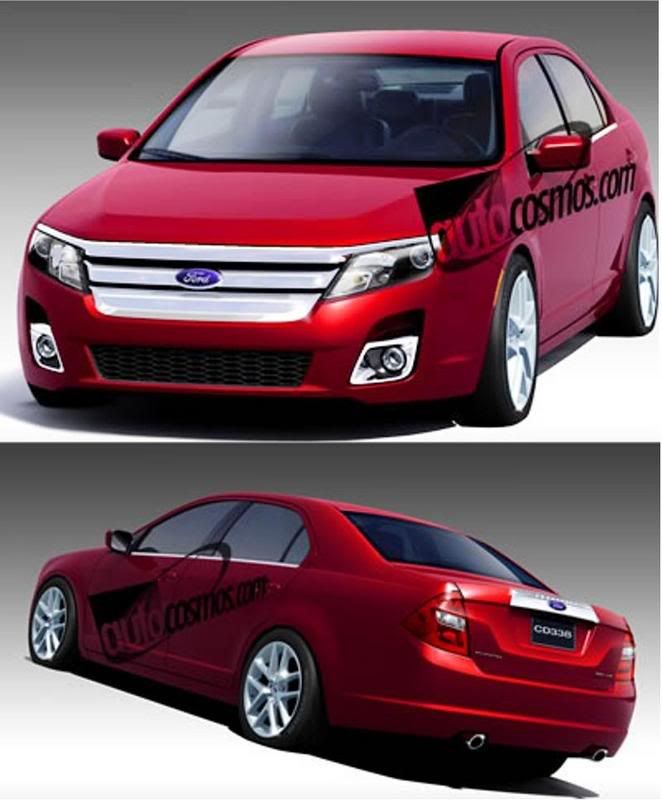
For the 2010 model years, a significant improvement in the Ford Fusion, Mercury Milan and Lincoln MKZ , with the new front fascia and rear models and interior upgrades to power and 2010 model year. Powertrain choices are similar to his debut in 2009, Ford Escape, the new 2.5 L and 3.0 L V6 Duratec I4 PIP series, with the new Ford 6F35 six-speed transmission. The 3.0 L Duratec maintenantr provides 240 hp (179 kW) with a capacity of E85 fuel,wientras I4 provide 175 hp (130 kW). 3.5 L Duratec 35, which produces 263 hp (196 kW) is standard on the Fusion Sport. 3L V6 and I4 are the control and adjustment affected aggressive deceleration fuel cut-off characteristics to improve the fuel economy
Ford Fusion 2010 Pictures

Super Sport Car Evolution